

CVs – Templates, mistakes, and tips on how to write them correctly

CV templates and pre-prepared templates are excellent tools that allow you to write this document in just a few minutes. However, to truly capture the attention of a future employer and secure your dream job, you must pay attention to several details and nuances. What are they, and what should you consider when writing a CV?

What is a CV?

A CV is one of the documents you will need when you decide to look for a new job. It contains basic information about you, your work experience, skills, education, hobbies, and interests, presenting you to a potential employer. Essentially, it is your “career in a nutshell” – a concise summary of your qualifications for the position you are applying for.

Writing a CV is not difficult, but it is important to pay close attention to grammar, style, formatting, and the information you include. Otherwise, you may fail to make a good first impression and could miss out on your desired job.

How CVs have changed over time

The term “curriculum vitae” is believed by experts to originate from the 15th century, with Leonardo da Vinci credited as its inventor. In 1482, he wrote a letter listing his abilities and sent it to Ludovico il Moro, the then Duke of Milan.

Even during the Renaissance, people recognized the importance of individual success and began presenting it to others. The first CVs were simple and unformatted. Skills, abilities, and work experience were listed in chronological order, and unlike modern CVs, they were not as concise.

Everything changed with the arrival of the 20th century when people began introducing standards and requirements for CVs. The primary reason was to simplify employee recruitment. The same century also saw a shift in CV creation, as handwritten documents were replaced by those typed on typewriters.

The last major change came at the turn of the millennium, with the preference for electronic documents. And although it is now possible to create creative and visually elaborate documents, most employers prefer a simple, structured CV containing essential information.

CV templates: What sections do they include?

Every CV template should include several basic sections to give a future employer a better understanding of you. These sections are:

Personal details

This is the section at the very top of the CV. You should include the following information:

  • First and surname
  • Address
  • Phone number
  • Email

Always double-check your personal details. This is especially important for your phone number and email, as these are how a potential employer will contact you if interested.

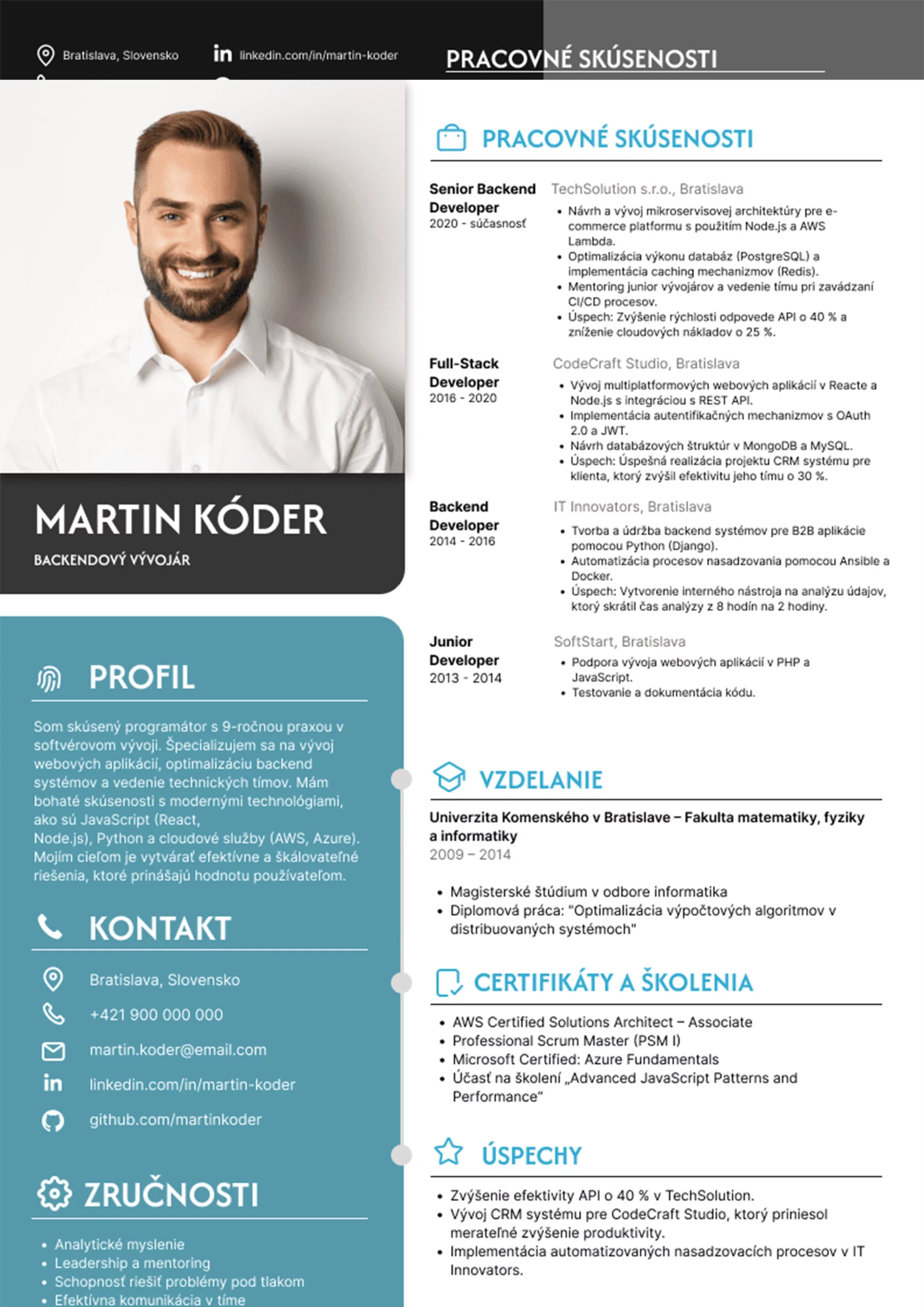
Some people also add a photograph to this section. While not mandatory, a photo can make a CV feel more personal. If you choose to include one, select a professional image. Avoid selfies or informal photos from parties, social events, and similar occasions.

Work experience

In this section, you can elaborate on your work experience. If you have held multiple positions, it is customary to list the last three or four. Others can be mentioned during the job interview, in a cover letter, or in your portfolio, to which you can provide a link for recruiters.

Work experience should be listed in reverse chronological order. This means you start with your most recent job and work backward.

Remember that a CV should be concise and to the point, so avoid writing too much about your work experience. Simply include:

  • Job title
  • Company name
  • Time period in the role
  • A brief description of the role in one or two sentences (optional)

Instead of a brief job description, you can list the scope and responsibilities of the role or the experience you gained in bullet points.

Did you know that…

Cover letter can increase your chances of getting an interview by up to 50%. But only if it’s written correctly.

Education

As the name of this section suggests, it is intended to present your education. You write it in the same way as your work experience – in reverse chronological order. The first entry should be your university education, followed by your secondary school.

For each school, include the years you attended and the qualification you obtained, such as A-levels, a bachelor’s degree, or a master’s/engineering degree.

You can also incorporate courses or training you have completed into the education section.

Skills

This section allows you to stand out from other candidates and showcase your strengths to recruiters. Highlight what makes you unique and emphasise your strongest attributes. However, be careful not to include irrelevant information. Try to determine which of your skills would be most useful for the specific job position.

You can list, for example:

  • Language skills
  • Knowledge of computer programs
  • Communication skills
  • Organizational abilities
  • Leadership skills

Do not overdo it with skills. Mention three, or at most four, and provide additional details, such as a situation where you used them, how they helped you, or where you acquired them.

Hobbies and interests

This is an optional section, but it is worth including in your CV. It serves a similar function to a photograph – it personalises the document and helps you stand out from other candidates. Ideally, it should remain concise and not go into too much depth. Simply list some of your hobbies and interests.

What is considered appropriate to mention? Almost anything you enjoy doing, such as sports, volunteering, travelling, or creative activities like photography or painting.

Additional sections

If your CV is not too long, you can add further sections. Suitable additions include references from a previous employer, awards, or certificates. If you do not have any of these, submit your CV as it is – with just the basic information about your education, work experience, and skills.

Recommend
We recommend:

The order of these sections depends on the type of CV you are writing. If you choose a chronological CV, you will list your work experience after your personal details, followed by your education and skills. Conversely, if you choose to write a combination CV, you will list your relevant skills first, followed by your work experience and education.

What is a structured CV?

Nowadays, you can write several types of CVs. The most basic and commonly used is the structured CV. It is characterised by a simple layout and contains only key information, including:

  • Personal details
  • Work experience
  • Education
  • Technical and language skills
  • Abilities

Additional sections, such as hobbies, may or may not appear in a structured CV

A structured CV is distinguished by its clear and logical structure, containing only relevant information. It is well-organised and has a formal, no-nonsense appearance.
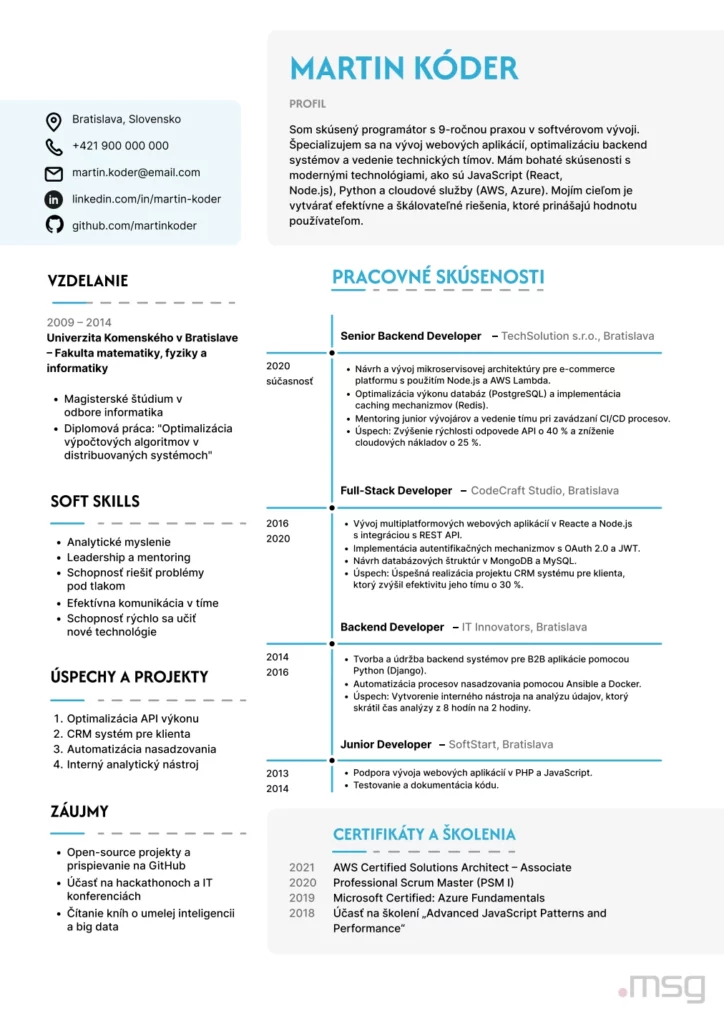
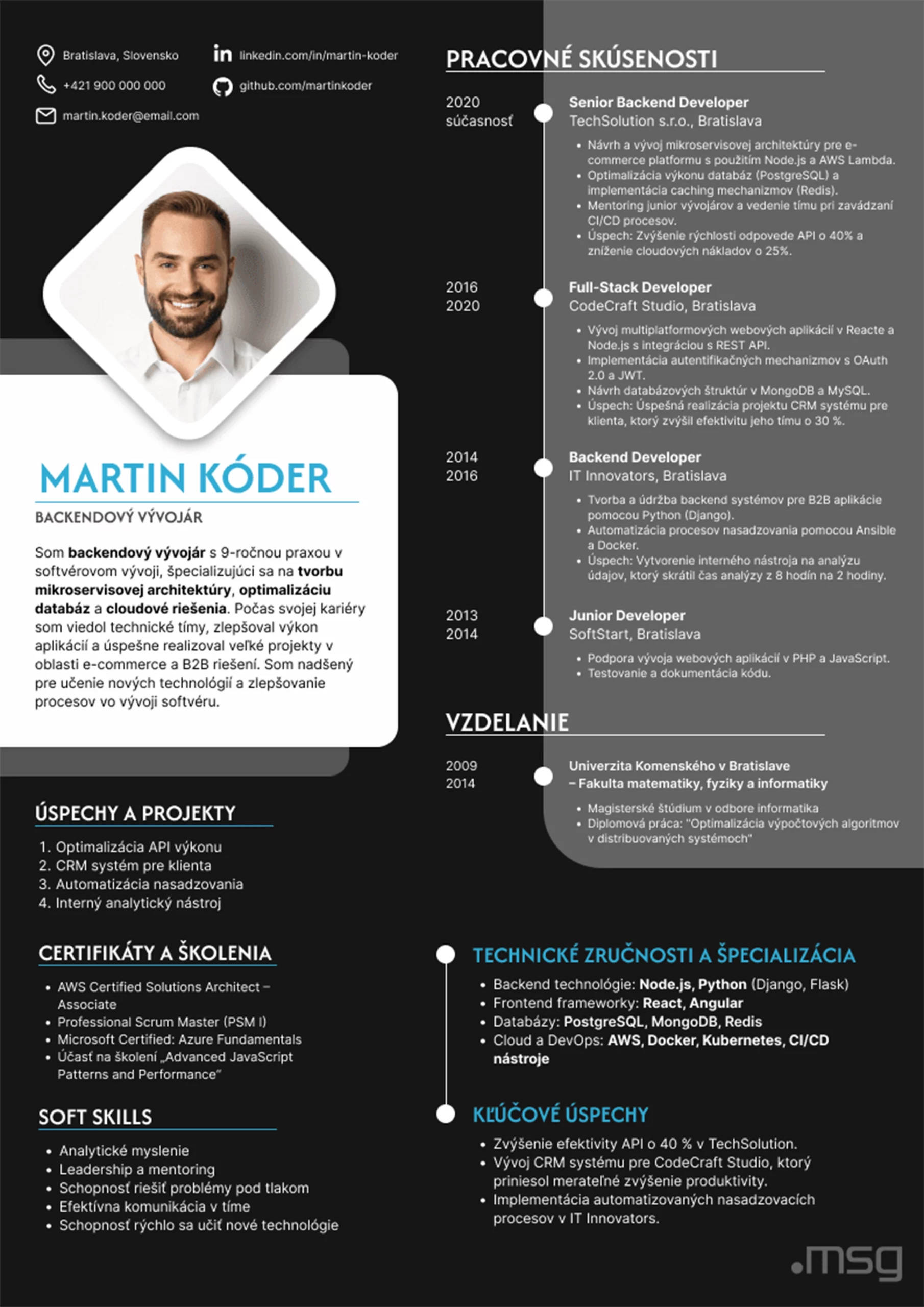
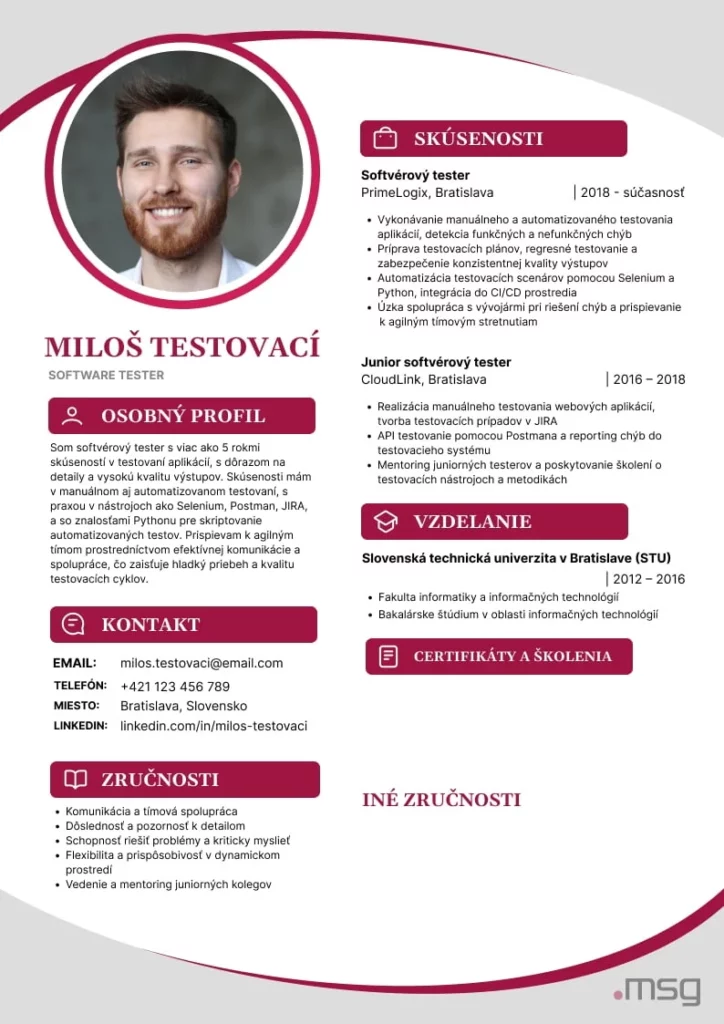
Structured CV template

What types of CV structures are there?

When writing a structured CV, in addition to the division between classic and modern CVs, you will encounter three other types:

Chronological CV

This is primarily used to present your work experience. For this reason, the work experience section is placed directly below your personal and contact details. This is followed by your education level, skills, and, if necessary, other optional sections. Since the chronological type focuses mainly on your work history, you can allocate more space to it. However, do not overdo it to ensure the document remains easy to read.
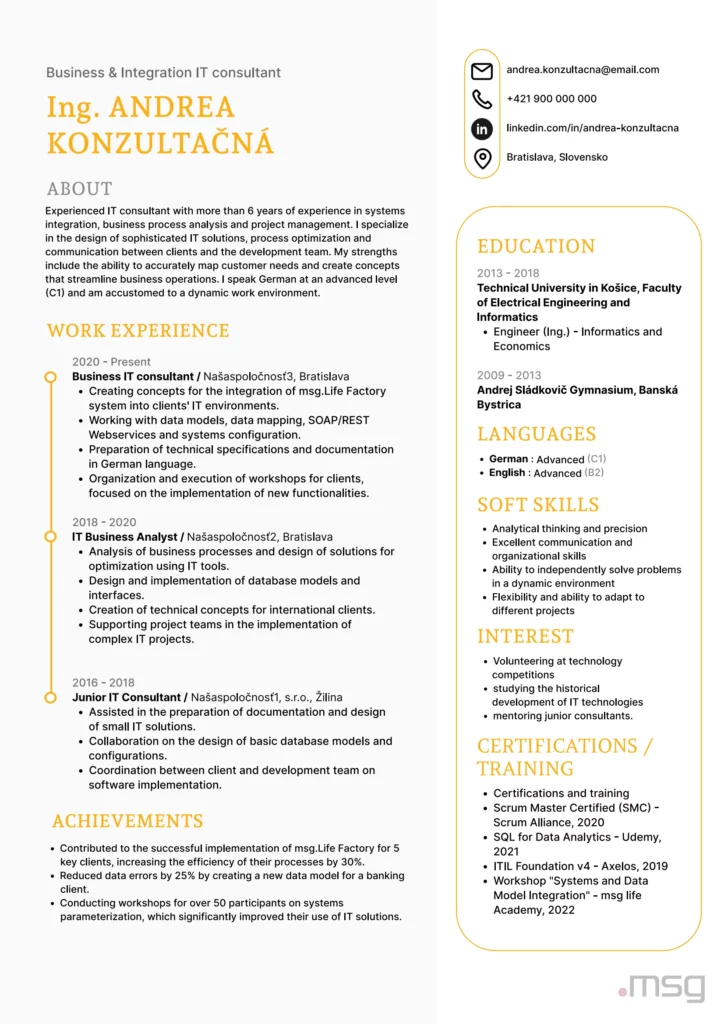
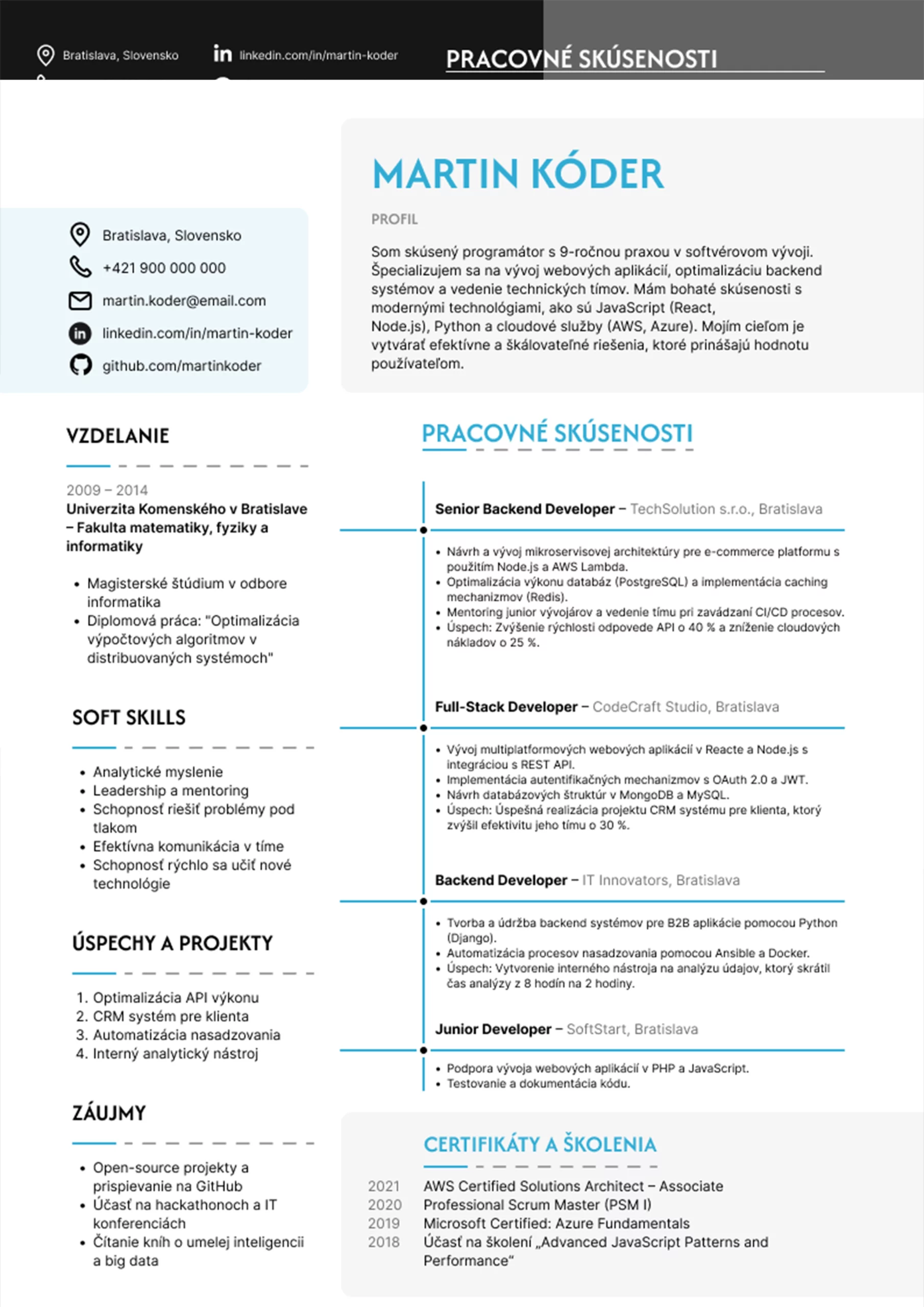
Chronological CV template

Skilled-based CV

Some sources also refer to this as a functional CV. Its main purpose is to highlight your skills. A list of skills with a brief description is placed directly below your personal details. This is followed by your education level, work experience, and optional sections.
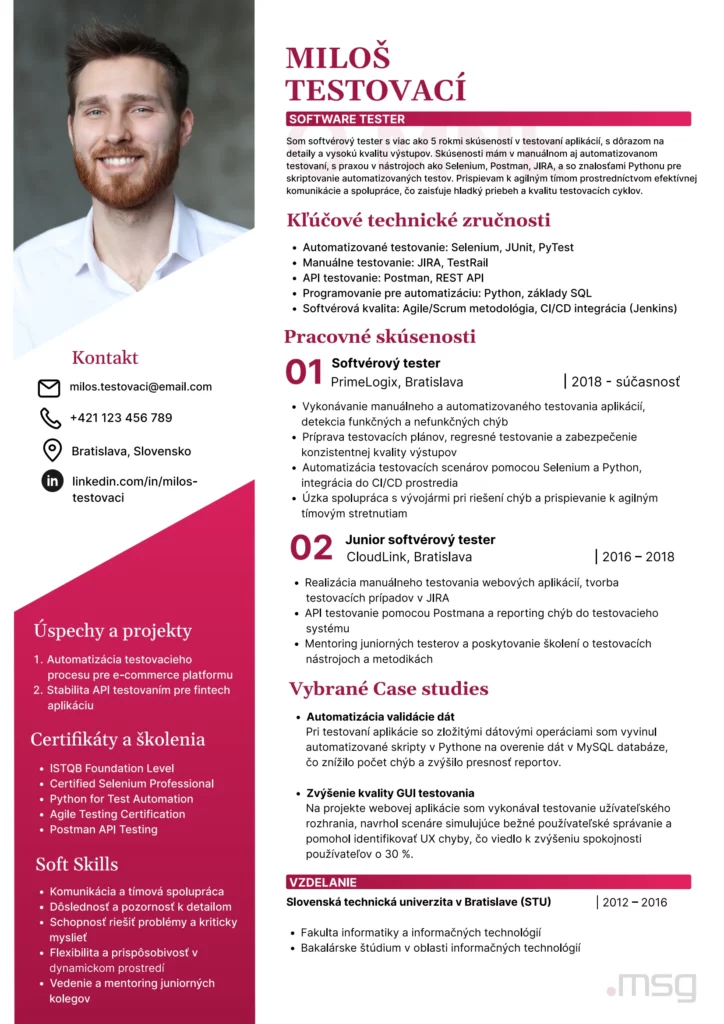
Skilled-based CV template
Functional CV template

Combination CV (Hybrid CV)

This is useful if you cannot decide between a chronological and functional CV template. It is characterised by emphasising both work experience and skills, giving equal space to both. Its structure is such that, after personal details, skills are listed first, followed by work experience, education level, and optional sections.
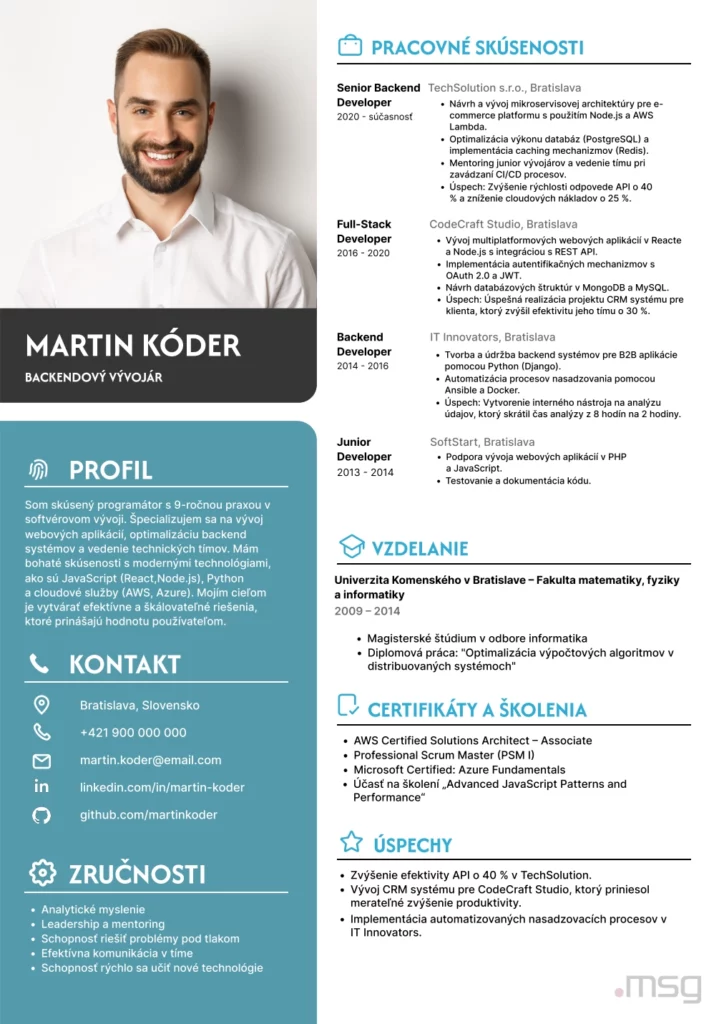
Combination CV template

How to write a CV

Writing a CV is not difficult. Just follow a few rules:

  1. Always allocate enough time for writing and do not rush.
  2. Read the job advertisement carefully to incorporate relevant information into your CV.
  3. Use CV templates to help with formatting, so you can focus on writing rather than layout adjustments.
  4. Write in bullet points. Avoid long, complex sentences.
  5. Have someone else proofread your CV to catch any typos or errors you might miss.

Mistakes in a CV

Errors in a CV come across as very unprofessional and can ruin a first impression. The most common mistakes include grammatical and stylistic errors. Another frequent issue is incorrect formatting (varying font sizes, multiple colours, etc.), excessive length, and irrelevant or false information.

Skills in a CV

Professional experience and education are important, but employers often look for additional skills you can offer. Therefore, do not forget to include them in your CV and always mention what could help you secure the job.

You can also indicate your proficiency level in certain skills. For languages, for example, the scale from A1 to C2 is commonly used.

Formatting a CV

When formatting your CV, follow these rules to ensure it looks professional:

  1. Use only one font type, one size, and one colour (ideally black).
  2. If you want to separate sections, you can use bold text or a slightly larger font.
  3. Avoid using coloured backgrounds, images, or other decorative elements.
  4. Your CV should be no longer than two to three pages, including references.
  5. Focus on your achievements – for example, in work or education.
  6. Save the document in PDF format.
  7. Ensure consistent line spacing throughout the document.

CV templates for everyone

Today, there are many CV templates available, varying depending on profession and situation – whether you are a student, a programmer, or looking for work abroad. If you fall into one of these categories, you will find templates below to help you with your writing.

Student CV template

A CV template for university applicants, as well as a template for secondary school students, focuses mainly on academic achievements and education. Do not hesitate to write a little more about these.

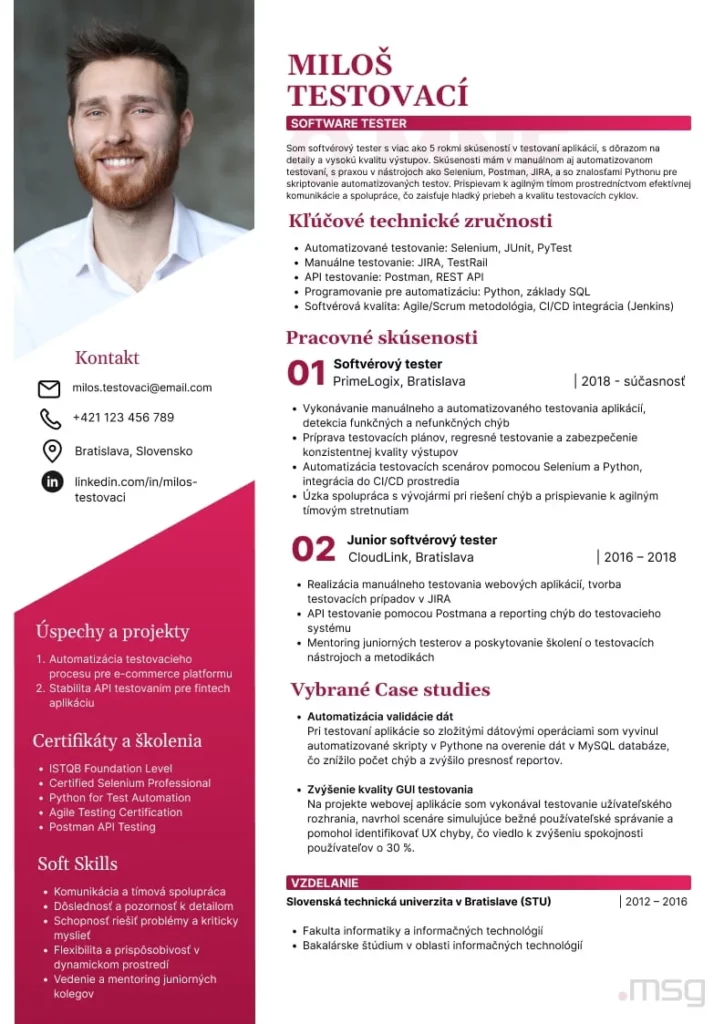
Programmer CV template

Interested in a programming job? In your CV, be sure to highlight technical skills and work experience. Education and other relevant abilities are also important. For more information, see our article: Programmer CV: How to Write a developer CV + IT CV Templates.

CV template in English

Whether you plan to work abroad or stay in your home country but have a foreign employer, you will likely need a CV in English and possibly German. This differs slightly in structure from a CV in your native language.

Employer references in a CV

You can attach references from a former employer, manager, or other superior to your CV. Remember that they should be concise and clear. They must also include contact details for the person providing the reference so recruiters can verify its authenticity and learn more about you.

Choose a template and write a professional CV

Writing a CV may seem complicated at first glance. However, if you know what mistakes to avoid and what to include, everything becomes much simpler. Moreover, you now have access to various CV templates to help your document look professional.


FAQ

1. What types of CVs exist?

There are three main types of CVs: chronological, functional, and combination. The chronological type focuses on work history, the functional type emphasises skills, and the combination type merges both approaches.

2. What information should a CV include?

A CV should include your personal details (name, contact information), a brief profile or career objective, work experience, completed education, skills, and possibly certificates or awards.

3. What should an ideal CV look?

An ideal CV should be clear, professional, and tailored to the position you are applying for. Use clear headings, bullet points, and a readable font.

4. Can I use CV templates?

Yes, templates are a great way to save time and gain inspiration. Ensure the template is modern and adaptable to your needs.

5. What is the ideal length of a CV?

A CV should typically be one to two pages long, depending on your work experience. Recent graduates may only need one page, while experienced professionals may require two.

6. Is it important to include a photo in a CV?

In some countries and industries, a photo may be beneficial, but in others, it is better to avoid it. Always follow the norms and culture of the field you are applying to.

7. How can I increase my chances of getting an interview with my CV?

Focus on relevant skills and achievements, use keywords from the job advert, and make sure your CV is free from grammatical errors and typos.

8. Can I include references in my CV?

References are usually provided upon request, so it is not necessary to include them directly in the CV. However, you can state that they are available upon request.

9. How often should I update my CV?

It is recommended to update your CV after every significant change, such as a new job, acquiring new skills, or completing education. Keep it up to date so you can respond quickly to job opportunities.
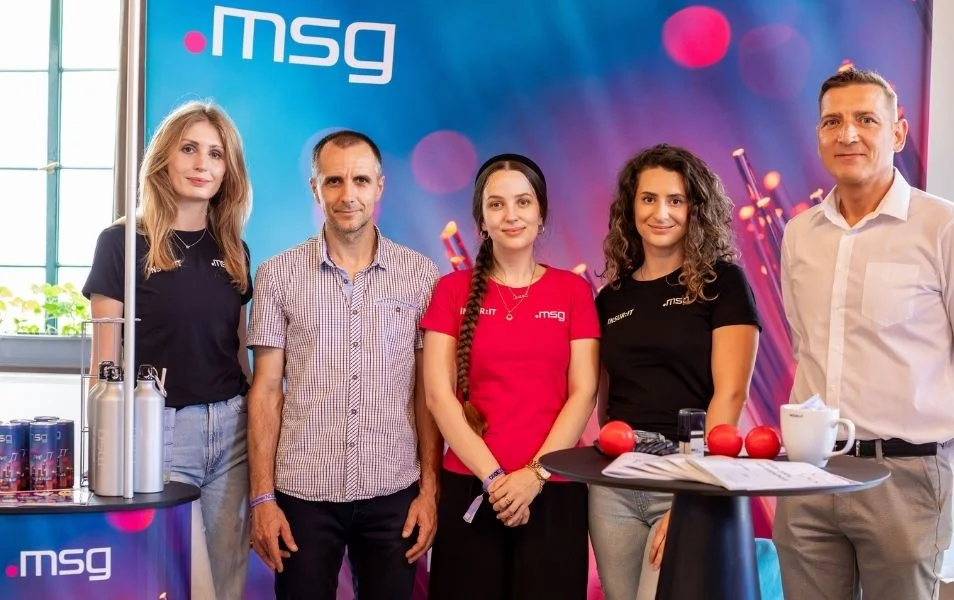
Meet msg: Discover the world of IT and insurance with us!

At msg life Slovakia, we believe the IT world is full of opportunities for anyone eager to learn and grow. This year, we’re participating in several events where we’ll show you what we do, the technologies we use, and how you can join our team. Where can you meet us?

26 March 2025 – NoC IT: Night of exploring technologies

WHEN: Wednesday, 26 March 2025, 17:00 – 22:00

WHERE: Faculty of Electrical Engineering and Information Technology, Slovak University of Technology in Bratislava (FEI STU), Bratislava

Night of Chances IT 2025 (NoC IT) is an event for IT enthusiasts, offering lectures and workshops with experts from various IT fields. The goal is to provide attendees with new knowledge, skills, and networking opportunities. And of course, msg life Slovakia won’t be missing out. 😊
Recommend
We recommend:

Our talk, How insurance companies beat the casinos: decades of building software that makes billions, will show you why the insurance business is one of the most lucrative in the world and how AI is entering it.

WHEN: 7:15 – 8:15 P.M.

WHERE: CD150

Our speaker will be Jakub Novak, sys admin at msg life Slovakia, who, at just 21 years old, has already gained valuable corporate experience and launched his own projects. He constantly explores ways to bridge technology and business – not just through innovation but real profit. Beyond system administration, he mentors, brainstorms ideas, and proves that good code is great, but even better is code that generates revenue.


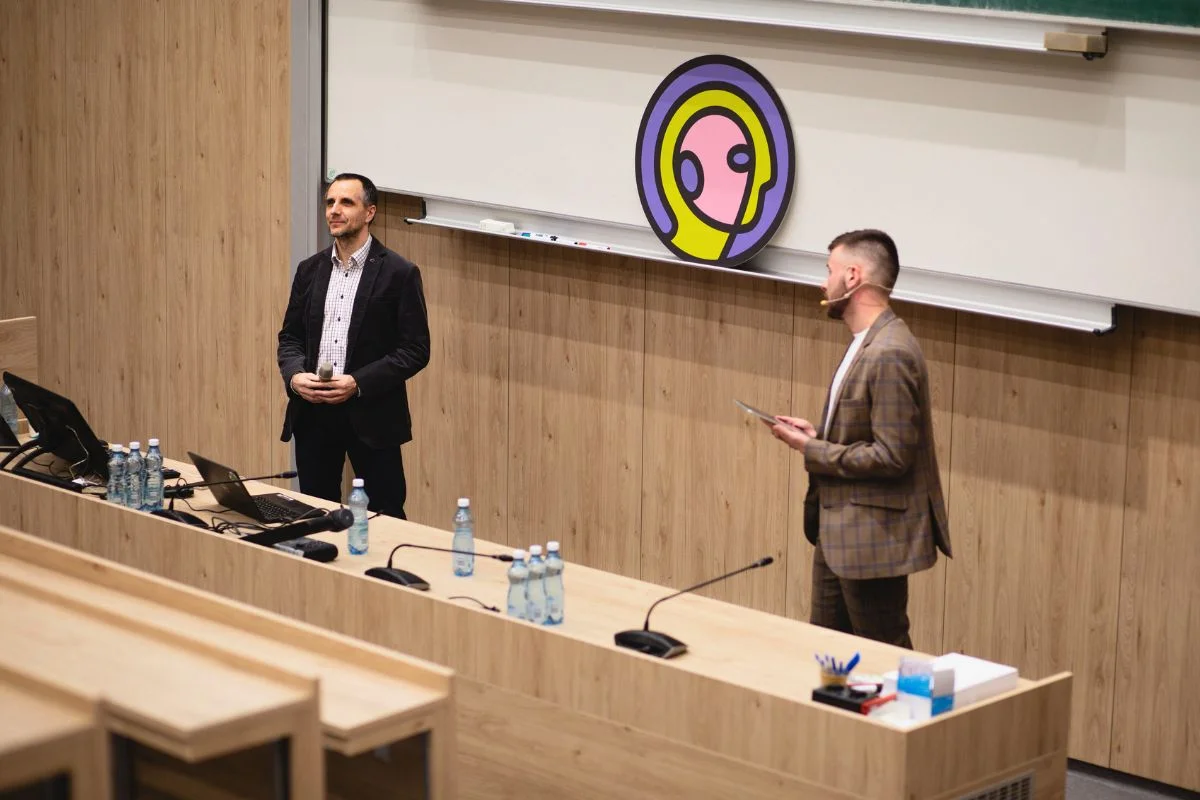
Jakub and Michal gave a lecture at FEI STU on developments in the insurance sector.

Agile project management is changing how IT teams approach software development. Instead of lengthy planning and rigid processes, it emphasises flexibility, collaboration, and rapid feedback. One of the most popular agile frameworks is Scrum, which breaks work into short iterations (sprints) and allows teams to adapt to changing requirements efficiently.

Recommend
We recommend:

If you want to not only understand the scrum methodology, but also to experience it, come to the SCRUM Xperience, where you can try out what a real scrum sprint looks like in action under the guidance of Michal and Peter from msg life Slovakia. Expect team tasks, dynamic collaboration and real challenges that will test your ability to work in an agile environment.


WHEN: 18h00-19h00, Scrum Experience: Come and see for yourself!

WHERE: FEI STU, CD150

Learn more about agile project management in our article Agile Project Management.

Sign up for our workshop or lecture! Get tickets here.

Enjoy an amazing NoC full of fun and win great prizes! 🎉 Just buy a ticket, attend the event, and you’re automatically entered into the raffle. The grand prize? A PlayStation! 🎮 The winner will be announced live at the event. Don’t hesitate – secure your ticket and join us. Luck might smile on you! 🍀

2 April 2025 – Business breakfast: IT in insurance on the menu

WHEN: Wednesday, 2 April 2025, 9:00 – 11:00

WHERE: FEI HUB, Faculty of Electrical Engineering and Informatics STU in Bratislava

If you’re curious about IT and insurance trends, don’t miss our April Business Breakfast at FEI STU.

Join us for a pleasant morning meetup over great food and get to know us better! Our msg life HR managers will share how we operate, the job offers we offer, and how you can kickstart your future in IT. The informal atmosphere lets you ask about anything – from recruitment and onboarding to salaries and growth paths.

Beyond good food, you’ll network and discuss working in IT. If you’re wondering where to go after (or during) university, don’t miss this. See you at the breakfast table!

24 April 2025 – Girl’s Day: Supporting women in IT!

WHEN: Thursday, 24 April 2025, 09:00 – 14:00

WHERE: msg life Slovakia Bratislava, Kosice, Zilina

Women in IT are not just an asset – they’re essential! Technology shapes our world, and we believe women in IT drive innovation, diversity, and better solutions. That’s why we support girls and open doors to tech. This year, msg life Slovakia joins Girls Day 2025, where you’ll glimpse the reality of IT – programming, testing, data analytics, and AI. We’ll show you tech is for you too!

During Girl's Day, the girls attended several lectures given by successful female colleagues/IT experts
During Girl’s Day, the girls attended several lectures given by successful female colleagues/IT experts

On 24 April 2025, we’ll offer inspiration, hands-on experience, and real stories from our female colleagues who’ve found their passion and career in IT. We support diversity. We support talent. We support the future of IT. And IT without women? We can’t even imagine it.

Recommend
We recommend:

Check out the Girl’s day program in our branches, sign up and have a great day with msg!

Hack stereotypes in Bratislava!

Enter the world of IT in Zilina!

The future belongs to you in Kosice!


30 April 2025 – IT Marketplace: Work in IT regardless of background

WHEN: Wednesday, 30 April 2025, 08:00 – 14:00

WHERE: Faculty of Management Science and Informatics, University of Zilina (FRI UNIZA) – Ground floor, RA building and reception

As students submit their engineering theses on 30 April, why not take away even more? At the IT Marketplace at FRI Zilina, msg life Slovakia will be there too. Get expert advice from our IT pros, practical tips from HR, and maybe even your first job offer.

Want to know how to break into IT without a technical background? At the IT Marketplace, we’ll share how we’ve helped people from marketing, HR, translation, and logistics become testers, analysts, or programmers. Hear real stories, learn which courses and skills can help you enter IT, and explore your options with us!

See you at FRI UNIZA’s IT Marketplace II – thesis in one hand, a great career opportunity in the other!

5 June 2025 – CODECON Bratislava: IT conference for tech enthusiasts

WHEN: 9:00

WHERE: Old Market Hall, Bratislava

CODECON Bratislava 2025 is one of Slovakia’s largest IT conferences, bringing together developers, architects, analysts, and tech leaders to exchange knowledge, learn trends, and explore coding innovations. Expect expert talks, live coding demos, hackathons, and networking with IT’s best. Whether you’re a junior, senior, or tech lead – there’s something for everyone.

CODECON offers the opportunity to meet experts directly from the IT community.

The event will offer valuable insights into AI, cloud solutions, cybersecurity, DevOps and many other subjects that are influencing the future of technology. It will also offer opportunities to network with companies looking to recruit new talent.

Stop by the msg life Slovakia stand to chat with our developers, learn about our work, and discover career opportunities. Whether you’re seeking growth, advice, or just a tech chat – we’d love to see you!
Plus, registration is free! Sign up today.

Don’t miss these events – come meet msg life Slovakia! Let’s talk about your future in IT!

Portfolio template for a programmer: How to create a professional portfolio step by step

A portfolio template significantly simplifies the process of creating one and saves a lot of time. It gives you an idea of what it should include and how it should look. Are you planning to create your own but don’t know where to start? Get inspired by our practical tips and build your online portfolio step by step so that it looks professional and stands out.

What is a portfolio?

First and foremost, it’s important to understand what a portfolio actually is. Nowadays, the term is often used to refer to various websites, LinkedIn profiles, or even CVs—though this isn’t entirely accurate. Put effort into it, as it serves as a calling card for every skilled professional – whether you’re a developer, designer, or creative.

A work, career, or professional portfolio is a tool that helps Java Developers showcase work experience, skills, and accomplishments. Compared to a LinkedIn profile or CV, it is usually more detailed. You can describe individual roles and milestones in greater depth – even in a few sentences or paragraphs.

A portfolio gives you much more space than any other document you might send to clients or employers. It often includes samples and detailed descriptions of your work – such as links to completed websites or applications you’ve built. Another option is incorporating photos or even videos where you discuss a project in more detail.

The difference between a CV, LinkedIn and a portfolio

To better understand what a portfolio is, let’s compare it to a standard CV and LinkedIn profile.

CV

In most cases, a CV is concise and straightforward. It includes a few basic sections, such as personal details, education, work experience, and skills. Information is listed in bullet points or short sentences, with some sections (e.g., education and work history) arranged in reverse chronological order. A programmer CV shouldn’t contain too much information, which is why it’s often supplemented with a cover letter or portfolio.

LinkedIn

In many ways, LinkedIn resembles a CV. Details about individual roles or skills are usually more succinct. However, a LinkedIn profile can provide potential employers with more insight into you – especially through published posts or articles. Even so, it’s a good idea to complement it with a portfolio.

Portfolio

A portfolio typically takes the form of a website, online presentation, PDF document, or video. Its design depends on your preferences. Unlike a CV, which should be minimalist, an online portfolio allows you to unleash your creativity. Just ensure the final product is logical and easy to navigate. The information can be more extensive, but avoid overly long paragraphs. Include only the key details – a few of your best projects will suffice – you can always discuss the rest in an interview.

Recommend
We recommend:

Feel free to include reviews from satisfied clients, references from previous employers, or even shorter case studies about projects you’ve worked on in your portfolio.

How can creating a portfolio help with job hunting and attracting clients?

Now that you know what a portfolio is, let’s explore how it can assist you in your job search.

A well-crafted portfolio makes a strong first impression and presents you effectively to clients or employers. It also provides additional information that you’d otherwise have to include in a cover letter or follow-up email (such as links to finished apps, websites, or other projects).

Another big advantage of a portfolio is that, unlike a CV, it doesn’t follow a strict template. You can tailor it to your exact needs, helping you stand out from other applicants.

A portfolio also demonstrates your professionalism. A website, online presentation, or PDF document showcases your experience far better than a simple list in an email or cover letter.

What should a portfolio include?

A portfolio should primarily focus on your work experience – this is where you should dedicate the most space and attention. Beyond basic details like job titles, employment periods, and companies, mention your responsibilities, key achievements, and what you learned.

Also include something about yourself – your interests, skills, and education. However, these details are secondary, and since they’re usually covered in your CV (which you’ll send alongside your portfolio), they don’t need to be as extensive.

What projects to include in a Java developer’s portfolio?

If you’re a Java developer and just starting to work on your portfolio, first focus on your projects – from the initial brief to the final implementation. The best ones will demonstrate your technical skill level and whether you’re a suitable candidate for the job. Often, the biggest challenge is selecting the right projects that will impress potential employers.

Your Java portfolio should include:

Real-world projects

If you’ve ever contributed to open-source projects on platforms like GitHub or GitLab, be sure to mention them in your portfolio. This shows that you can understand others’ code and work well in a team.

Personal projects

Do you have a personal project you’ve been working on? Whether it’s applications, frameworks, API services, or anything else, feel free to add them to your portfolio. This signals to potential clients that you’re genuinely passionate about the field and continuously improving your skills in your free time.

Commercial projects

This includes all work you’ve done for employers or clients. Examples might include corporate applications, internal tools, database work, and similar projects.

Portfolio for beginners

Even beginners can create a strong portfolio that presents them in a positive light. If you’re applying for your first job and unsure what to include, here are some suggestions:

  • Student or hobby projects – If you’re studying a technical subject like computer science, you’ve likely worked on at least one project that could appeal to a potential employer. Another option is mentioning your bachelor’s or master’s thesis if it involved programming or software solutions. If you’ve switched to Java development later and studied a different field, include your personal coding projects.
  • Code challenges – You can showcase your skills through coding challenges – programming tasks or problems you’ve solved. Popular platforms for such challenges include LeetCode, HackerRank, and CodeWars.

How to present your projects?

There are several ways to showcase your completed projects. Each format has its advantages – a brief description is ideal for a quick summary, a code repository demonstrates your technical precision, and a live demo lets employers or clients see the result in action. Combining multiple methods can enhance your portfolio’s credibility.

Brief project description

The simplest way to show employers what you’ve worked on. The description should include the project’s purpose, technologies used, challenges you faced, and the results. You don’t need excessive detail – just the key points. You can elaborate more in the results section.

GitHub repository

A great way to present your code. A well-organised repository with a README file (project documentation) provides essential details about the project, technologies used, etc.

Demo applications

If you’ve built an app and want to show it to potential employers or clients, first choose a hosting platform like Heroku, Render, Netlify, or Vercel. Then, add a link to the live demo in your portfolio.

Technology stack

You can also present your application or any other project by listing all the technologies, programming languages and tools you used to create it, such as Spring Boot, Hibernate, REST API, Docker, and others.

Tests and documentation

These make your portfolio appear more professional. Documentation helps others understand your code, while tests prove its quality and functionality. Mention unit tests, integration tests, or end-to-end testing.

Project presentation via a website

On a website, you can describe your projects in more detail – either as a traditional article or a case study. Case studies are particularly popular as they demonstrate real-world applications of your work.

You can present your portfolio in detail on the website
You can present your portfolio in detail and clearly on the website.

How to create a professional online presentation?

Building a strong portfolio isn’t difficult, but you’ll first need to decide which format works best for you.

  • Personal website – A website looks professional and trustworthy but requires more time and often financial investment. Templates and portfolio samples can simplify the process by handling the web design.
  • LinkedIn and GitHub – You can also showcase your projects and work through LinkedIn and GitHub profiles. The advantage is that they’re free, quick to set up, and easy to update.
Recommend
We recommend:

Curious about how to create an all-star profile on LinkedIn? Read our article: <a href="https://msg-life.sk/en/articles/career/linkedin-find-job/
“>How to find a job on LinkedIn? Fill out your profile to the max

  • Medium/Dev.to blog – If you have more time, you can write a blog about your projects, new skills, and experiences. You can integrate it into your LinkedIn and GitHub profiles or feature it on your website. Popular blogging platforms include Medium and Dev.to.
  • YouTube or podcasts – You can use these to showcase your past projects or offer mentoring – another great boost for your career.
  • PDF document or presentation – An ideal choice for anyone who doesn’t want to spend hours creating or updating a portfolio. You can easily send a PDF document or presentation to an employer along with your CV.

What do recruiters and hiring managers look for?

During the selection process, recruiters and hiring managers evaluate several factors. In a portfolio, they pay particular attention to code readability, clarity, and structure. They also look for the use of best practices, such as SOLID, DRY, or Clean Code, and the relevance of projects. They assess which technologies you work with and whether they are currently in demand in the market.

For hiring managers, the quality of documentation and written content is also important, as well as your activity in the IT community – whether you follow or participate in conferences and meet-ups, or contribute to open-source projects.

Recommend
We recommend:

If you are going to a job interview, we have prepared the most common interview questions and answers for both the prospective employee and the employer.

If you’re a freelancer, your portfolio is your primary sales tool. Recruiters and clients look not only at the technical level of your projects but also at their business impact – what specific problems you solved and what results they delivered. How you present your work is also crucial – clear descriptions, real code samples or functional demos, and the way you communicate solutions to clients.

Common mistakes when creating a portfolio

When building a portfolio, you can make several mistakes. One of them is failing to keep it up to date – it should reflect your most recent work. Ideally, update your portfolio every six months.

The most frequent mistakes include:

  • Unclear or incomplete GitHub
  • Outdated or weak projects
  • Lack of real work examples
  • Overly broad focus
  • Missing explanations and context
  • Chaotic appearance or illogical organisation of information

Build your professional portfolio today

A portfolio can perfectly showcase your work experience and skills. It provides hiring managers with additional information they won’t find in your CV or LinkedIn profile. Take inspiration from our tips and create a professional portfolio today using tools like GitHub, GitLab, GitHub Pages, Jekyll, or Hugo. With it, you’ll have a better chance of landing your dream job.

Portfolio template FAQ

1. What projects should I include in my portfolio?

Include projects that best represent your skills and the technologies you work with. These can be personal projects, work for clients, or contributions to open-source projects.

2. How should a portfolio be structured?

The portfolio should have a clear and logical structure. It is recommended to include a homepage, a projects section, an about me section, contact information, and possibly a blog or articles where you share your insights.

3. What technologies should I use to create a portfolio?

It depends on your preferences and skills. You can use HTML, CSS and JavaScript for a static portfolio, or popular frameworks like React, Vue.js, or CMS like WordPress for more dynamic solutions.

4. How should I present my projects?

Each project should have a short description, the technologies used, and links to a live demo or repository (e.g. GitHub). Adding images or videos can also help visually showcase your work.

5. Is it important to have an online portfolio?

Yes, an online portfolio is essential because potential employers and clients can easily find and review it. Consider hosting on platforms like GitHub Pages, Netlify, or your own server.

6. How often should I update my portfolio?

It’s recommended to update your portfolio regularly, especially after completing new projects or acquiring new skills. Keep it current to reflect your latest expertise.

7. Can I use templates to create a portfolio?

Yes, there are many free and paid templates you can customise to fit your needs. Ensure the template is responsive and looks professional.

8. What mistakes should I avoid when creating a portfolio?

Avoid cluttered designs, outdated information, and missing contact details. Make sure all links work and that the portfolio is clear and intuitive.

9. Can I include personal projects in my portfolio?

Yes, personal projects can demonstrate your creativity and passion for programming. Ensure they are relevant and professionally presented to catch the attention of potential employers or clients.


How to write a developer CV + IT CV templates

A developer CV should be clear and concise. It gives a potential employer an overview of your work experience and the skills you can use in the IT field. But how do you write it in a way that will help you land your dream job? We’ve put together all the key information and a clear guide to help you do just that.

How to write a programmer CV?

A Curriculum Vitae (CV) is a document that introduces you to a potential employer and makes a first impression. You should therefore take the time to prepare it and include all relevant information about yourself.

The CV should be polished but concise. Provide recruiters with basic information about yourself, your education, work experience and skills. You can also briefly describe your interests or hobbies, but don’t go into too much detail.

Less is more. Write only what is really relevant. Avoid ‘waffle’ and unnecessary information that could spoil the first impression. If you want to elaborate, include a covering letter with your CV.

A developer CV shouldn't be long
An IT CV should contain only relevant information

What format should I choose for my CV as a developer?

Before you start writing, find out what an IT CV should look like. The design should be simple, with a white background and black font. The most suitable fonts are Times New Roman, Arial, Calibri or Cambria in size 12. Section headings can be slightly larger.

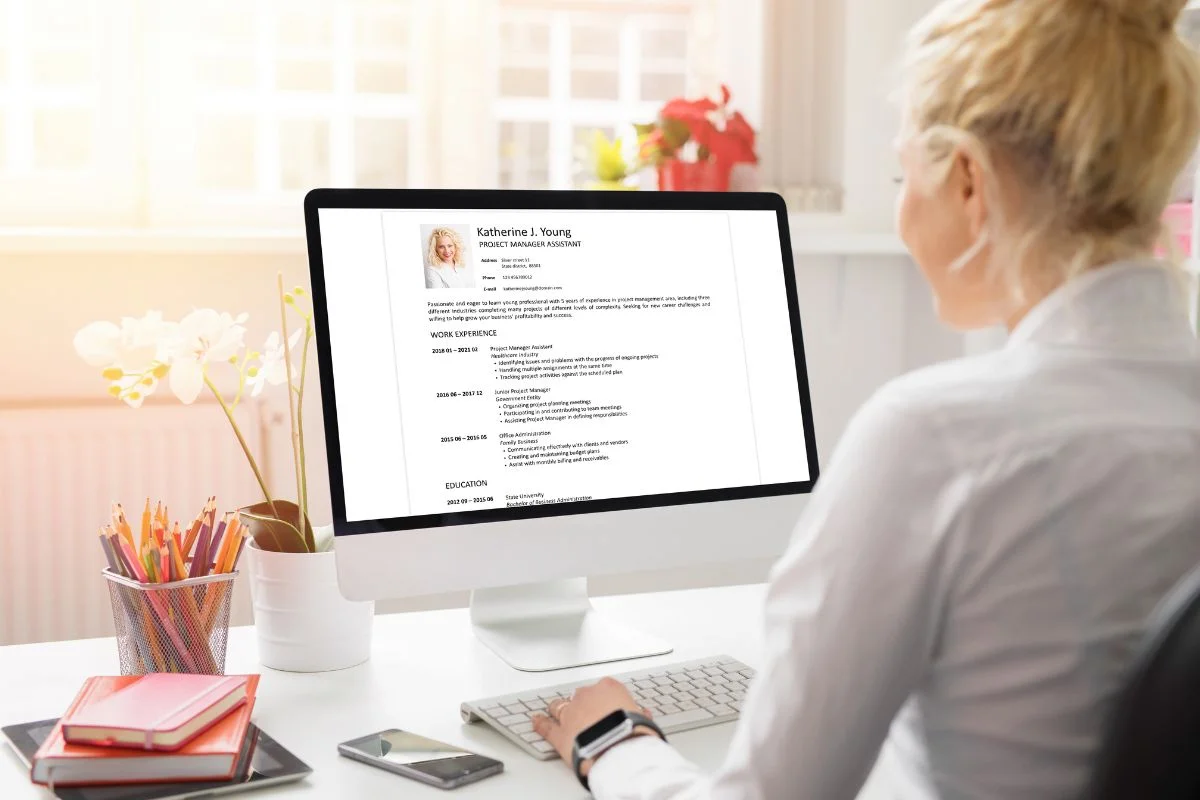
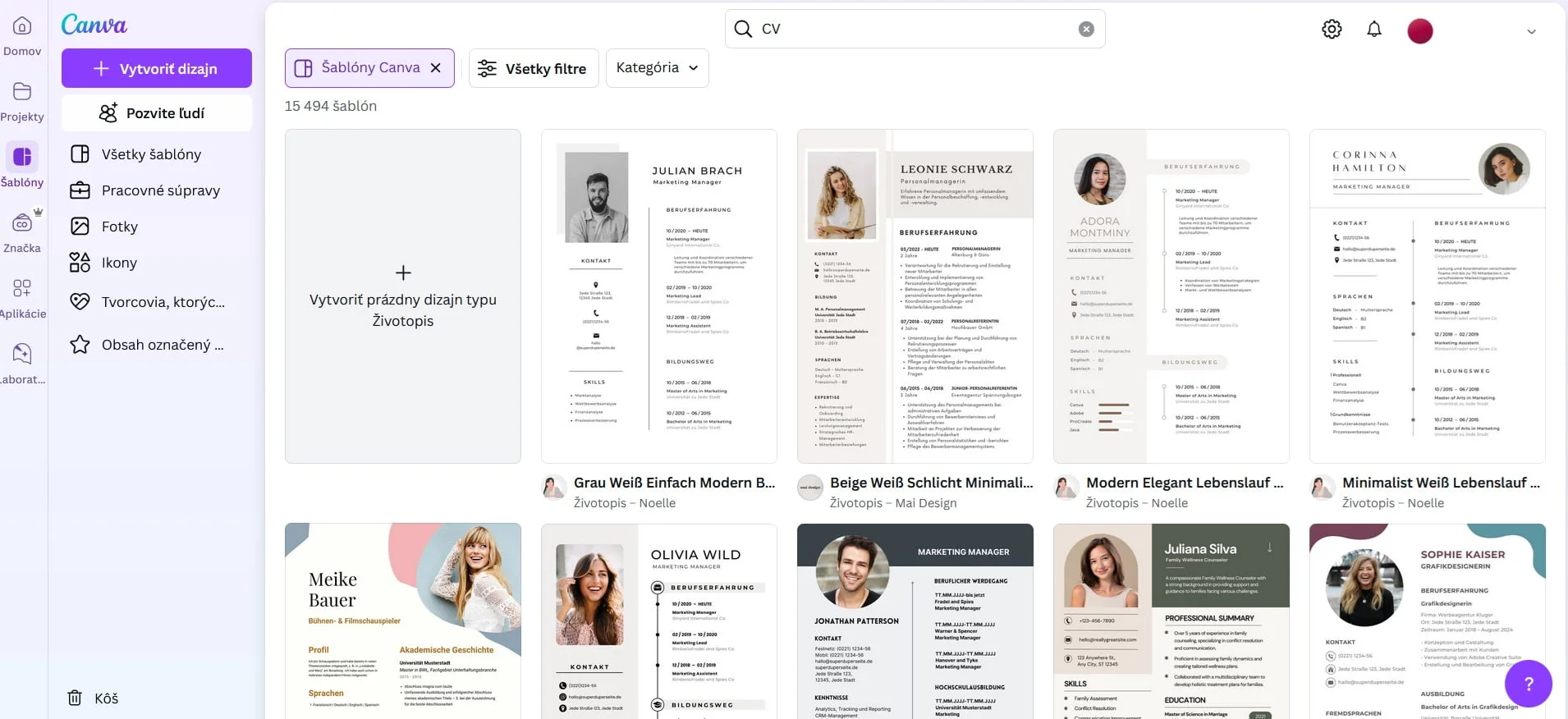
If you write your CV in Word, set your margins to 1 to 1.5 cm and your line spacing to 1.15 to 1.5 cm. You can leave larger spaces between paragraphs so that the document doesn’t look cluttered and is easy to read. You can also create your CV in a graphic editor such as Canva. Just choose a template and overwrite the details. Alternatively, you can start with a blank canvas and create your programming CV yourself.

When you have completed your CV, save it as a PDF. This format ensures that sentences, paragraphs and headings stay in place regardless of the device on which the document is opened.

Did you know that…

For better clarity, you can separate the different sections of your CV with a horizontal line.

What structure should I choose when writing an IT CV?

To keep your IT CV clear, follow one of three basic structures:

1. Chronological structure

This is the most common structure and is suitable not only for IT but also for many other fields. It is based on your work experience, which is given the most space. Other sections, such as education or skills, are more concise.

The chronological structure is the best choice for a developer or IT specialist. When creating it, stick to the following division:

  • bio (optional),
  • personal and contact details,
  • work experience (describe it in no more than two or three sentences),
  • education (indicate school, course and period of study)
  • skills (list only),
  • optional sections such as interests, hobbies, etc.
Example of a developer CV
A professional CV is also known as a functional or skills-based CV.

2. Professional structure

In English, this type of CV is also called a skills-based CV. It aims to highlight your skills and strengths, leaving your work experience in the background. It is ideal for recent graduates or those with large gaps in their work history.

The professional structure consists of the following parts:

  • bio (optional),
  • personal and contact details,
  • skills (choose a few main ones and describe them in detail),
  • education (state briefly),
  • work experience (describe briefly and concisely),
  • optional sections.

Did you know that…

You can learn more about the appropriate structure of a CV in the article: Structured CV: What are its characteristics and what does it look like?

Structured IT CV is the most popular
An IT CV can have different structures

3. Combined structure

The combined structure combines a chronological and a professional structure. This means that skills and work experience are given equal weight.

The combined structure includes:

  • bio (optional)
  • personal and contact details,
  • relevant skills,
  • work experience,
  • education,
  • optional sections.

What to include in an IT developer CV?

An IT CV should contain a few basic sections, which can be supplemented with additional optional sections. These include:

Short bio

A short bio is not a required part of a developer’s CV, but it is a handy introduction that quickly gives recruiters important information about you. Since not everyone writes one, it can make you stand out.

The bio should be short, to the point and clear. It is usually 3 to 6 sentences long, and can look like this:

“I am an experienced developer who loves new technologies and is interested in software development. I specialize in website and mobile app development, with expert-level Python and JavaScript skills. I have more than 10 years of experience as a Java developer, I take pride in details, I am reliable and I like to work in a team.”

The bio should match the requirements of the advert. Emphasize the strengths that potential employers are looking for so that you stand out at first glance.

Did you know that…

You can add a photo to the top of your CV (usually next to your BIO). This will give the document a more personal and friendly look. However, be careful when choosing a photo – avoid blurry shots or selfies. If you don’t have a professional photo, dress formally, stand in front of a white wall, and ask someone to take your picture.

Personal and contact details

This section is an essential part of any programmer’s CV. This is where you list your:

  • first and last name,
  • date of birth,
  • address,
  • phone number,
  • e-mail,
  • social media/web link.

Social networking sites are optional. However, if you are active on LinkedIn, be sure to include it – recruiters can learn more about you from it.

Did you know that…

Read more about how to fill out your Linkedin profile: How to find a job on LinkedIn? Fill out your profile to the max

Work experience

In this section you can show a potential employer that you have enough experience to get the job.

In your CV, start with your job title, followed by the company you worked for, your dates of employment and a brief description of what you were responsible for. Keep the job description brief and clear.

Example:

Java Developer
msg life Slovakia
2020 – 2024

– development and programming of computer and mobile applications,
– website development,
– design and implementation of software components,
– cooperation with software testers and project architects,
– application of agile software management methods.

Provide only relevant information that recruiters are likely to be interested in and that confirms that you are the ideal candidate. For example, if you have more personal projects in your portfolio, you can list your website or project URL on GitHub.

Education and certificates

You don’t need to write too much about your education. Just mention the school, the subject or course you studied and the time you studied it. If you have space, describe what you studied in one or two sentences.

You can also include courses, certificates or awards in this section.

Skills

Education is followed by soft skills and hard skills, which are key skills for employers. They are often more important than education itself.

Soft skills that you can list as a developer and are in demand on the job market can be:

  • teamwork,
  • communication skills,
  • creativity,
  • patience,
  • detail orientation,
  • the ability to solve complicated problems,
  • responsibility,
  • openness to learn new things.

Hard skills:

  • proficiency in programming languages (Python, Java, C#, PHP, Ruby, Node.js, HTML, CSS, JavaScript),
  • OS management (Windows XP, MacOS, iOS),
  • software development,
  • knowledge of algorithms and data structures,
  • mathematical and computational skills,
  • machine learning and the use of AI,
  • cloud computing.
Did you know that…

Read more about the hard skills developers should have in the article: 6 most important software developer hard skills.

You can list a variety of skills on your IT CV
Show a potential employer what skills you have

Optional sections – interests and other information

If your IT CV isn’t too long, you can also add optional sections such as leisure activities you enjoy. You can link these activities directly to the job posting.

For example, if a company is looking for someone who can think outside the box, mention the creative activities you do. This will show that you can look at things from a different perspective and come up with unconventional solutions.

Sample developer CV
Sample developer CV

IT developer CV template

A template can help you write an IT CV where you simply fill in your details, save it and send it to the potential employer. There are many templates available today.

You can create a universal CV on Profesia.sk. If you’re looking for something different, try Canva, which offers both basic and advanced templates. You can also find inspiration in our article.

Attachments to IT developer CV

You can attach three basic types of attachments to your IT CV:

  • Motivation letter – allows you to describe some of your work experience and skills. It also shows why you are interested in the job and why you are the best candidate.
  • Cover letter – serves as an introduction to the CV. You can use it to give recruiters a brief introduction to who you are and what your strengths are. It is sent either as a separate document or directly in the body of the email.
  • References – provide evidence of your qualities and skills through testimonials from previous bosses, managers or others in a position of responsibility.
Did you know that…

You can create a universal CV on Profesia.sk. If you are looking for something different, try the tool Canva which offers both simple and advanced templates. You can also find inspiration in our article.

Attachments to IT developer CV

You can attach three basic types of attachments to your IT CV:

  • Motivation letter – allows you to describe some of your work experience and skills. It also shows why you are interested in the job and why you are the best candidate.
  • Cover letter – serves as an introduction to the CV. You can use it to give recruiters a brief introduction to who you are and what your strengths are. It is sent either as a separate document or directly in the body of the email.
  • References – provide evidence of your qualities and skills through testimonials from previous bosses, managers or others in a position of responsibility.

What to avoid when writing a developer CV?

Avoid these unnecessary mistakes when writing a developer CV:

  • Changing fonts – once you’ve chosen a font, use it consistently throughout your document. If you want to set off certain sections, increase the size of the text or use a bold font.
  • Too much colour – IT recruiters expect a simple and clear CV, not a document full of colour that can look chaotic. So don’t go overboard with colours. It’s best to use a white background and black font.
  • Irrelevant information – read carefully what the employer is looking for in a candidate and tailor your CV accordingly. For IT roles, emphasize your technical skills and relevant education.
  • Typos and mistakes – grammar errors or missing letters look unprofessional and indicate that you haven’t taken enough time to prepare your CV. Employers may get the impression that you are similarly sloppy with the code text. Always have someone else proofread the finished document.
  • Versatility – Every job is unique and requires different skills or knowledge. It is therefore important to read the advert carefully and tailor your CV to the employer’s requirements. For example, highlight the skills the company is looking for in candidates.

Get your dream job with an IT CV

Writing an IT CV follows a few basic rules. If you follow them, you can be sure to produce a quality document that will help you get an interview and land your dream job. Get inspired by our tips and start working on a clear, concise and easy-to-read CV today!

How to write a good CV and what mistakes to avoid?

How to write a CV? A question asked by many people looking for a new job. The CV is a key document that can make or break your chances of getting a job. It gives potential employers a better insight into you and your work experience. So don’t underestimate its importance and invest enough time and energy in it.

What is a CV?

A resume, often referred to as a curriculum vitae (CV), is a document that contains your personal and professional information. It usually includes :

  • first and last name,
  • address,
  • contact details (phone, e-mail),
  • Information about your education (school and university, courses, certificates),
  • professional experience (previous positions held and dates),
  • skills and competences (language, technical and other skills relevant to the job)
  • other information (volunteer activities, awards, interests and other details that might interest a potential employer).

A well-written CV is your calling card, so make sure it is clear, concise and free of grammar errors.

CV is a key document in the job search
A resume is often referred to as a curriculum vitae

The main purpose of a CV is to introduce you to a potential employer and show them your experience in the field. It is usually short and contains only the most important milestones in your life. This is why it is often accompanied by a motivation or cover letter.

Nowadays, CVs are mostly in electronic form, and there are many templates and ready-made forms that make them much easier to prepare.

Recommend
We recommend:

There are several tools that can make the process of creating a CV easier. For example, if you don’t want to start from scratch in a text editor like Word and want to create an attractive document, try Canva. It has a number of interesting templates to choose from. However, if you are looking for something simple and minimalist, a template from Profesia.sk will suffice.

How to write a good CV for a job?

Want to know how to write a CV that will impress employers and increase your chances of landing your dream job? Many people make the mistake of creating cluttered documents with lots of graphic elements, unconventional fonts, and multiple colour combinations. However, this is often not the best solution.

A quality CV should be:

  • simple,
  • short,
  • concise,
  • transparent.

Give information about yourself in bullet points, using just a few words or short sentences. Avoid long sentences or paragraphs. Recruiters usually scan them and don’t have time to read them in detail.

What about the design? The best solution is a white background with black text, ideally in Times New Roman size 12. The exception is in creative fields where original design is expected. Again, keep it simple and avoid overly graphic elements.

A CV for a job should be simple and concise
Recruiters only scan CVs, so write them in a structured way

What to include in your CV?

A CV is made up of several parts, each containing different types of information. To make sure you don’t miss anything, follow the structure below.

1. Personal data

A CV starts with your personal details, which should include:

  • first and last name,
  • address,
  • phone number,
  • email address,
  • date of birth (if you want to include it)

You can also add a photo to your CV to make it more personal. However, avoid selfies or other unprofessional photos. Portraits against a monochrome background are ideal.

Recommend
We recommend:

You can also add your LinkedIn profile to these details. There, the recruiter will also find additional information that didn’t fit on your CV, your activity, case studies, portfolio or other content you create or share on this professional social network. At the same time, you can network and look for jobs on LinkedIn. For more info on why be on LinkedIn, read our article, What is the LinkedIn platform and why have a LinkedIn profile?

2. Work experience

This is one of the most important sections, so pay close attention to it. List your experience in reverse chronological order, i.e. the most recent job should be listed first.

Indicate in this section:

  • the title of the position,
  • the period from when you started to when you left (only the month in which you started and ended your employment),
  • the full name of the company,
  • a brief description of the job (please give only the main duties).
Recommend
We recommend:

If you have had many jobs during your career, detail the last three or four positions. Mention the others only briefly so that the CV is not too long. You can provide more detailed information during the interview.

3. Education

As with work experience, this section should be written in reverse chronological order. List your highest level of education first (e.g. university), followed by lower levels (e.g. high school).

State:

  • the name of the school,
  • period of study,
  • the field or programme of study (if relevant).

You can also use this section to list courses, training and certificates you have completed. This will show your employer that you are active and learning beyond your formal education. Be concise and include information that is relevant to the position you are applying for.

5. Knowledge

This part of your CV is designed to show recruiters that, in addition to the theoretical knowledge you have acquired at school, you also have practical skills that can be used in the job. For example, you could include knowledge of:

  • operating systems,
  • various programs (e.g. Word, Excel, Photoshop, Canva),
  • typing,
  • programming languages.

For each skill, indicate the level, e.g. expert, advanced or beginner.

Language skills form a separate category, often separated by a subheading or a horizontal line. For each language, be sure to indicate the standardized level of proficiency – from A1 (beginner) to C2 (expert). As with all sections, it’s definitely not worth getting confused! At the interview, employers will usually switch to English and check your language skills in person.

6. Interests

This section is optional, but it can spice up your CV and add a personal touch. It makes the document seem more human. However, only list hobbies that are relevant, appropriate or otherwise related to the job.

In this section you can include:

  • the sports you play,
  • creative activities such as drawing or taking photos,
  • interest in culture,
  • travelling and discovering new places.

Be careful not to give overly personal or inappropriate information.

7. Driving licence

Important information, especially for jobs that involve regular travel. You only need to indicate your licence group (e.g. B). No other details are usually required.

8. Additional information

At the end of your CV, you can briefly mention the qualities and skills that distinguish you. For example, focus on qualities that might be important to an employer:

  • ability to work under stress,
  • flexibility and adaptability,
  • a love of challenges,
  • meeting deadlines.

This information should complete the picture of you as a reliable and capable candidate.

CV mistakes – avoid these faux pas

If you want to know how to write a CV that will impress, you need to be aware of the most common mistakes people make when writing a CV. These include:

  • Giving irrelevant information – this unnecessarily lengthens the CV and often looks unprofessional. If there are skills or qualities you will not be using in the role, do not include them in the document. Also avoid overly personal details such as marital status or political affiliations.
  • Messy design – a CV should look professional. Be minimalist and uncluttered. Avoid cluttered templates, different fonts, multiple colours, etc.
  • Typos – always proofread your text to remove grammatical errors and typos. Ideally, have someone else read it too.
  • False information – only give true information that you can back up with a diploma, certificate or references from previous jobs.
  • Universal CV – each CV is tailored to the specific company and job you are applying for. Don’t send the same document everywhere – it won’t impress the recruiter.
  • Too many pages – the ideal length for a CV is between 1 and 3 pages. Don’t stretch the text and focus on the essential information.
  • Unprofessional email – An email address is important contact information. If you have an email with a nickname or funny name, create a new one. The best choice is an email in the form of your first and last name.

How to write a university CV?

When applying to university, you often need to include a CV that is different from a normal job CV. Instead of work experience, focus on:

  • learning achievements,
  • sporting achievements,
  • projects,
  • extracurricular activities.

List these data in reverse chronological order.

If you have worked somewhere during your studies, you can also mention this work experience, especially if it is related to the field you want to study. If you are applying for a postgraduate degree or other higher ‘scientific’ qualification, you can also include the title of your dissertation.

Recommend
We recommend:

References for your university CV can be provided by a teacher, professor, or coach who knows you well. They can mention qualities such as discipline, conscientiousness, activity, skills, e.g., that you are a good presenter or a team player. This can significantly strengthen your application. You can find out how to write references in our article: A sample reference letter from employer: how and when to include a job reference on a resume?

CV attachments

Some information should not be included in the CV as it may increase the length of the document. When CVs are first screened, recruiters can evaluate them very quickly and read the additional information later. For this reason, we only include the basic and most important information in the CV and include additional information such as a covering letter or references separately in appendices. The following attachments are often included with the CV:

Cover letter

The cover letter can be a separate document or part of an email. It serves as an introduction to your CV and any other attachments you are sending. It should be brief and to the point.

You can attach several attachments to your CV
The motivation letter provides more detailed information

Motivation letter

The purpose of a motivation letter is to introduce yourself and explain why you are the right candidate for the job. It gives you space to fill in and expand on some of the information on your CV. It is usually only sent if the company asks for it.

References

You can attach references as a separate document or include them directly in your CV or motivation letter. They should be written by someone from your previous work environment, ideally someone in a senior position such as a manager or boss. Only include references if the employer asks for them or if you think they can help you.

CV formatting

Send your CV in PDF or DOCX format so that it can be easily opened on any device. Use one or two fonts (e.g. Times New Roman) and a font size of 12. You can separate sections with larger or bold subheadings, but don’t go overboard with formatting.

Recommend
We recommend:

The individual sections of your CV should be clearly divided and organized. You can read more about how to write a structured CV in the article: Structured CV – what it is and what it looks like?

Of course, if you plan to create your CV in Canva or another graphic editor, you can refine the format and design much more to your liking. However, don’t forget to keep a logical structure, use only 1 or 2 fonts, and keep the design minimalistic. For example. write the CV chronologically from the most recent information to the oldest.

Focus primarily on your achievements and strengths that might interest a potential employer.

Classic vs modern CV – which alternative is better?

There are two types of CV, depending on how they are processed:

  • The classic CV – a simple, concise and clear CV written mainly in bullet points. This style is used in almost all sectors, such as administration or public services.
  • The modern CV – redesigned and more detailed. Particularly suitable for creative fields such as graphic design or marketing.

We have also compared these types of CVs in the article: The classic CV template: How does it differ from the modern one and which is better?

Create a professional CV that’s sure to get you an interview

Now you know how to write a CV. Put this theoretical knowledge into practice and create a CV that will catch the eye of potential employers. As you write, watch out for small mistakes that could make you look unprofessional. Make sure you get the font and design right, but don’t forget the content. This should highlight your achievements and the value you can bring to the company.

Student resume: how to write a resume for a first job or college + sample

A student resume is a practical tool for anyone applying to university or looking for a job alongside their studies. Writing such a resume is not difficult, but it differs from the classic resume in many ways. Find out what it should contain and how to write it to avoid unnecessary mistakes.

What is a resume needed for when applying to university?

You may ask why a resume is important for a high school or a college student? There are several reasons for this:

The first is an interest in studying at university. Most schools require a resume with your application to find out more about you and your experience. Colleges are not only interested in your grades in individual subjects, but also your extracurricular activities and work experience. If you’ve worked in a field related to your dream college, your chances of getting in increase.

You can prepare your student CV using the practical editors
You can also write your CV in Word

The second reason why an undergraduate needs a resume is a job alongside your studies. Many high school and college students are looking for summer jobs, first part-time jobs or internships, and to get them they need to provide an employer with a clear document that includes all important information – work experience, education, skills, etc.

Why choose a structured resume? This format is ideal because, as an undergraduate, you probably don’t have extensive work experience to describe in detail. Plus, temporary jobs or internships usually don’t require a complex resume with a highly customized layout, like those seen in modern designs.

Recommend
We recommend:

It is perfectly fine for a student CV to be short and concise. Do not try to make it longer than necessary with irrelevant information. Not only will no one read it, but you may also come across as unprofessional.

How to write a college student resume?

Are you wondering how to write a resume for a temporary job or college that is formal and contains all the important information? We have prepared for you some practical tips and tools to help you.

Canva resume example

Today, you can create your resume in a variety of handy tools that make the whole process fast and the result looks original, modern and professional. These tools include Canva, which offers countless interesting templates — some minimalist, others more elaborate. Choose a style that fits the field you want to work in.

choosing a CV template in Canva

In the case of administration, public administration or the economic field, it is ideal to choose rather simple and austere design. On the other hand, if you’re into writing, web design or photography, don’t be afraid to experiment with bolder and more creative templates.

Recommend
We recommend:

If you’re using Canva to create your CV, keep in mind that most of the templates are tailored for the US job market. American CVs are slightly different from Slovak ones, so make sure your document contains everything that Slovak recruiters or potential employers require.

Internet job portals for resume template

The Profesia.sk portal provides a simple resume template, where you fill in the necessary information in the relevant sections, save the document in PDF format and send it to the potential employer.

You can also find many other portals on the Internet that offer quick resume creation, such as Kickresume.com or Kariera.sk.

You can prepare your student CV using the practical editors

College resume in Word doc

You can also write your resume in Word, but this option is the hardest. You will have to create the whole document from scratch yourself. If you want your resume to look its best, you’ll need to get the formatting right – spacing, font size and color, as well as sectioning.

Graphic editors, patterns and college student resume examples

You can also use various graphic editors or Google templates available on the Internet. These templates can be downloaded, filled in, saved and submitted. There are more than enough options nowadays, so you don’t have to worry about making your resume lengthy or difficult.

What format should I choose for my undergraduate resume?

Resume creation tools are important, but the correct structure of the document is equally important. In general, there are three basic structures.

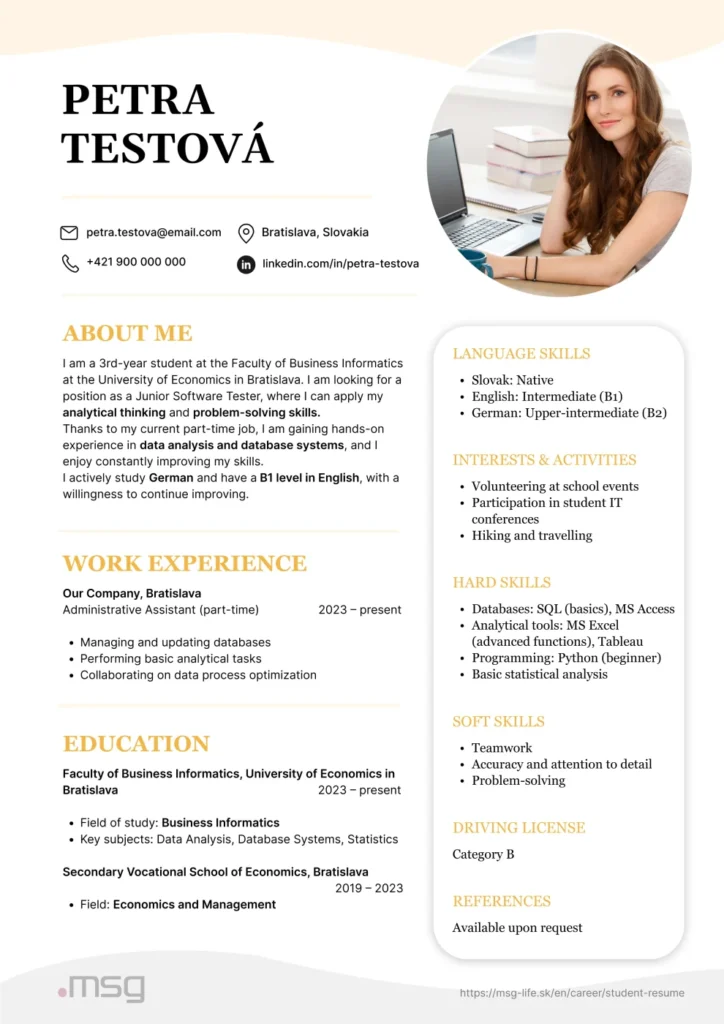
student resume CV example


Chronological structure – When work experience comes first

This format is most commonly used by candidates applying for full-time positions. It focuses primarily on work experience and career success, which are presented in detail. Sections like education or interests are typically secondary.

A chronological resume begins with personal information, followed by work experience, education, skills, and optional sections.

Functional structure – The best format for your resume template

This structure is the opposite of the chronological format — it emphasizes skills and strengths, while work experience takes a back seat. It’s ideal for high school and college students who don’t yet have extensive professional experience.

A functional (or skills-based) resume starts with personal information, followed by key skills with detailed examples — for instance, from internships or competitions — then education (don’t forget to include academic achievements, thesis titles, or project summaries), work experience, and optional sections.

Combined structure – a hybrid compromise

As the name suggests, this format combines elements of both previous types. It gives equal weight to skills and work experience, making it a good option for students who already have some professional background.

A combination resume starts with personal information, followed by skills, work experience, education, and optional sections. This format is more demanding to structure well, as it requires balancing all the key sections evenly.

Sample resumes for undergraduate students

A resume for high schools students differs from one written by college students. This is mainly because high school students have less experience and are usually mainly interested in summer jobs rather than internships or jobs they could continue after graduation.

If you study, you should create strong bullet points in which you include the following information:

  • short introduction/bio – summarize the most important information about yourself
  • personal and contact details
  • skills and strengths
  • education – please indicate the school you are currently attending, together with the year you expect to graduate
  • work experience – if you have any
  • optional sections – as required

In order to make your resume interesting, it is important to highlight different types of skills and strengths. Mention some of your soft skills such as:

  • communication skills
  • organizational skills
  • teamwork
  • creativity
  • empathy
  • responsibility
  • critical thinking
  • ability to work under stress

Don’t forget to include hard skills which may include:

  • basic IT skills (e.g. working with word processors, knowledge of Photoshop)
  • language skills
  • basic accounting
  • data handling
  • sports abilities
Did you know that…

…one of the factors that can influence the selection of a candidate for a job is a reference? A reference from a teacher or trainer provides a potential employer with an assessment of you and serves as a confirmation of the skills and abilities you have listed on your resume.

Types of resumes for a high school student

The information you put on your resume varies according to what type of writing you do. For example:

  • College application resume – highlight your grades in relevant subjects, extracurricular activities, and work experience
  • Part-time job resume – make it clear you’re still a student, and focus on your work experience and skills (both hard and soft)
  • Internship resume – this depends on the internship, but it’s a good idea to emphasize academic achievements, extracurriculars, courses, and relevant skills.
Curriculum Vitae for high school and college students

Structured resume – sample for college students

Most college students already have some work experience, so their resume doesn’t feel too empty. Still, it’s a good idea to choose a skills-based structure that focuses on strengths. A well-structured resume includes:

  • A short summary about you
  • Personal and contact details
  • Hard and soft skills
  • Education
  • Work experience
  • Other optional sections
Recommend
We recommend:

The reason why a professional structure is the best choice is that even if you have work experience, it’s usually just temporary jobs or internships. That’s why the most important part of your CV is your hard and soft skills.

Resume types for a university student

The resume you send should reflect the type of opportunity you’re applying for:

  • Internship resume – include hard and soft skills, academic achievements, extracurricular activities, volunteering, and relevant courses
  • Job resume – if the job aligns with your major, focus on your education, relevant courses, academic performance, extracurriculars, and skills.

Tips for writing a student resume

If you want your resume to be the best it can be, follow these recommendations:

  • Clearly state that you’re still a student so employers understand you have other responsibilities.
  • Only include relevant information that might interest a hiring manager.
  • Make the most of your skills – briefly explain them and how they apply to the job.
  • Don’t make things up – if you don’t have certain skills, leave them out. You can always say in the interview that you plan to learn them.
  • Don’t overdo the design – clean, simple, and readable resumes work best.
  • Proofread your resume several times, and ask someone else to review it for errors or details you might have missed.

How to build hard skills through training and learning

To catch an employer’s eye, your resume should highlight hard skills — the technical abilities you can apply to get the job done. These are not innate but learned through training and education. You can build hard skills through:

  • courses
  • online tutorials
  • internships
  • trainings
  • language schools
  • mentoring

Common IT hard skills include, for example, proficiency in programming languages, knowledge of algorithms and data structures, computational and mathematical skills, and many others. Remember that you should only include hard skills in the job description section on your resume.

Hard and soft skills are key on a student's CV
Hard and soft skills are key on a student’s CV

How to build soft skills through habits and class engagement

Soft skills are abilities that are often acquired naturally, but can be developed over a lifetime – they can be both innate and learned. They are qualities and traits that characterise you. While they may not seem as essential as technical skills, many jobs require strong soft skills.

As a student, you have many opportunities to grow them:
Teamwork, presenting projects, receiving feedback, and engaging in class discussions all help. Sometimes, you’ll need to build soft skills through habit — for example, to improve time management, create a weekly schedule and stick to it.

Classic soft skills include, for example, team leadership, teamwork, ability to work under pressure, creativity, critical thinking, and more.

Structured CV: What makes it distinctive and what does it look like?

In the article you will learn:

  • What is a structured CV and what makes it distinctive.
  • What types of structured CV do we know.
  • What to watch out for when writing it.

Structured CV – a phrase that everyone who has looked for a job at least once in their life has come across. It is required by many employers, and a template for it is provided by several programs that will make it easier for you to create. But how does a structured CV differ from other types and what to look out for when writing one? We’ve got all the key information to help you get to the interview.

What is a structured CV?

A structured CV is a simple document that contains all the information found in any type of CV. This means that you should include:

  • your personal data and personal profile,
  • work experience,
  • level of education,
  • technical or language skills,
  • additional information about your strengths.

So what makes a structured CV different from others? The most striking feature is that it is clear and concise. You write the information concisely and in words – usually describing it in just a few words or shorter sentences.

Most of the information is presented in bullet points, with each section of the CV separated by a distinctive subheading or horizontal line. This makes the document easy to read and the recruiter can find all the necessary information in a fraction of a second.

Recommend
We recommend:

The structured CV is brief. It should not contain long paragraphs of text. If you wish to provide more information, you may attach a cover letter. Alternatively, include a few important details in application letter.

What makes a structured CV distinctive?

Creating a structured CV is much easier when you have a clear picture about it. The following characteristics will help you do this:

  • Clear and logical structure – as we have already mentioned, this type of CV is written in bullet points and short sentences. You only include the essentials, such as the title of the jobs you worked at, the period of time you worked there, the name of your high school or university, your language skills, etc.
  • Relevance – by writing only briefly about each job or educational background in a structured CV, you avoid the risk of providing unnecessary and irrelevant information that could come across as unprofessional.
  • Data organisation – you can organise the data in the structured CV in several ways. Whichever you choose, they are all clear and ensure that the document is not messy and reads well.
  • Presenting achievements and skills – by presenting information only in bullet points and not in long sentences, you allow your achievements and skills to stand out. The recruiter will immediately notice your work experience, education, etc.
In what way does the structured CV stand out ?
The information in the structured CV is clear and concise
  • Formal appearance – when you look at a structured CV template, you’ll notice that it’s simple. As a rule, it has a white background with a black font in a uniform size. This makes it look professional and suitable for almost every industry and job.
  • Customisation – A structured CV may not offer the creative possibilities of a modern CV, but that doesn’t mean you can’t customise it. Feel free to add optional sections such as personal interests or references. However, always make sure that the information you provide to a potential employer is relevant.
  • Attachments – A structured CV is usually accompanied by attachments that reveal more about your work experience or personal qualities. These include, for example, a motiovational letter. In it, you should mention why you are interested in the job offer and what you can offer to the employer. Other attachments can be references and a cover letter, which you write either as a separate document or in the body of the email.

What are the advantages and disadvantages of a structured CV?

When you decide on this type of CV, you should know what are its biggest advantages and disadvantages.

Benefits include:

  • It is clear and simple– it gives all the information about you directly and without unnecessary “cotton wool”.
  • It is suitable for almost all job roles – most industries now prefer a minimalist and simple CV, such as this structured one. This is because recruiters don’t have time to read long paragraphs, such as in a fictionalized CV.
  • It’s very easy to write – listing work experience or skills in bullet points can be done by absolutely anyone. What’s more, today there are a number of programs that can help you create a document.
  • It has a professional design that you’ll never go wrong with – as long as you don’t combine different sizes, colours and font types, you don’t have to worry about your CV looking messy or unprofessional.

On the other hand, a structured CV also has its disadvantages, which are:

  • Sometimes it’s too brief – recruiters may miss important information about you that could help them decide whether to hire you for the job. It’s therefore ideal to supplement it with additional attachments such as references or a cover letter.
  • It is not original – although a structured CV is very practical and recruiters will get a lot of important information from it, it is not original at all. Your document will be no different from those sent by other candidates. Therefore, it can be difficult to impress and stand out from the crowd.

Structured CV – template and basic structure

According to the type of structure, we divide the structured CV into three basic categories:

  • chronological biography,
  • professional CV,
  • Combined CV.

We’ll talk more about each.

Chronological biography

The chronological structured curriculum vitae is one of the most widely used. It is characterised by its focus on your work experience, which it prioritises above all others. That’s why this information is more comprehensive and is at the top, usually just below personal details such as phone number or address.

Under work experience, education is listed, followed by skills and abilities, and then additional information you would like to use in a future job. However, all of this information is only given very briefly.

The advantage of a chronological structure is that it is established and highlights your work achievements. On the other hand, the disadvantage is that it is used by almost everyone and is therefore the least original of all.

A sample chronological biography looks something like this:

  • personal and contact details,
  • work experience,
  • education,
  • skills,
  • additional optional sections – interests, driving licence, etc.
Recommend
We recommend:

Some people include a shorter introduction of four to five sentences in a structured CV. In it, they introduce themselves in a quick and interesting way and give a few details that can give the recruiter a better idea of their experience and knowledge. Such an introduction comes across as very human and can set you slightly apart from others. If you don’t want to write it directly in the document, process it in the form of a cover letter.

Professional CV

A professional CV, sometimes referred to as a functional CV, focuses mainly on your skills, such as knowledge of a foreign language or operating programs. It also focuses on your strengths, which may include meeting deadlines, ability to work under stress, flexibility, and so on.

You should choose two to four skills to describe in bullet points on your CV. You can mention how you used them in your last job, where you acquired them or how you would like to use them if you get the job.

A professional CV has several advantages. Among them is that it is more original than a chronological one. By highlighting your strengths right at the beginning, you slightly distract from the weaker job section. The downside, however, is that some recruiters may not be satisfied with brief information about your career.

This type of CV is particularly ideal for:

  • high school and university graduates who have no hands-on experience in the field,
  • people with significant gaps in their working lives (they have not worked for several months or years),
  • people who have decided to change careers and this is their first job in a new field of work.

And what are the elements of a structured CV? The template generally looks like this:

  • personal and contact details,
  • a summary of the skills and a short description of them,
  • education,
  • work experience,
  • optional sections.
A professional CV is great if you don't have much experience
A professional CV has several advantages, especially for a graduate

Combined CV

The combined CV represents a happy medium between the chronological and the professional structured CV. It is characterised by giving equal space to work experience and skills. It’s a great choice for those who have a career path without major gaps, while possessing multiple practical and relevant skills.

The strength of the combined structure is that it provides comprehensive information from both areas, not just one. However, the disadvantage can be more complicated to prepare, as this type of CV is the most comprehensive of the three.

To maintain a balance between the two parts, it is good to stick to this structure:

  • personal and contact details,
  • relevant skills,
  • work experience,
  • education and study experience,
  • optional sections.
Structured CV - Combined CV template
What a combined CV looks like

At the same time, try to make the skills and work experience sections similar in length.

Recommend
We recommend:

Remember that information in a structured CV (regardless of the structure chosen) is always presented in reverse chronological order. This means that you mention the last job you held or the last school you attended first, and work your way up to the very first one.

Which structure to choose?

The choice of structure is up to you and your needs. Most people choose a chronological structure focused on work experience, as this is the form most often expected by recruiters in Slovakia.

However, if you’re a recent high school or college graduate, or if you haven’t worked in the field before, bet on the career structure. If you want to elevate both your personal skills and your professional achievements, choose a combined structure.

CV formatting

Formatting is key because it affects the look of your CV and the first impression you make. So stick to these rules:

  • Choose one font to use throughout the document.
  • The font size may be different in subheadings that separate different parts of the document.
  • The subheadings can be a different colour, but don’t complicate it unnecessarily.
  • A structured CV should be one, maximum two pages long.
  • Save the finished document as a PDF that opens without problems on any device.
  • Make sure you have equal alignment and consistent spacing throughout the document.

In what areas is a structured CV used?

Today, the structured CV is used in almost all fields, including administration, government, banking, management and services. It is particularly advantageous for recruiters who can go through it very quickly and find out what your strengths are and whether you are a suitable candidate.

The one exception where a resume with a clear minimalist structure might not be the ideal choice is in creative fields. In those, potential employers may expect a document that is more elaborate in design.

Try creating a structured CV

A structured CV is clear, logical and simple. It gives recruiters all the key information about you and helps you land your dream job. Use the tips we’ve given you to quickly and easily create a professional CV that’s eye-catching and free from unnecessary mistakes.

Podcast #4: New Year’s resolutions – goals and time management for 2025

Have you made your New Year’s resolutions? In January’s episode of the Na Vlne Kodu podcast (in English “On the Wave of Code” podcast), we take a look at why we sometimes fail to achieve what we set out to do and how to follow the step-by-step process to make sure we manage fulfilment of the resolutions with joy and without stress. Our guest for the second time is Dominika Neprasova from the online platform Ksebe.sk.

Today we are going to talk about a topic that is especially important at the beginning of the year, when many of us are setting new plans and resolutions. Some New Year’s resolutions we keep, others we don’t. That’s why we have prepared a special for you called From Plans to Reality: Goals and Time Management for 2025.

We’ll take a closer look at why we often fail to achieve our goals, whether it’s a flaw in planning, lack of motivation or lack of time, which we often make excuses for. How do we set New Year’s resolutions and goals so that we don’t lose motivation after just a few weeks, but have the energy and joy to keep going throughout the year?

Our guest Dominika Neprasova – a psychologist who specializes not only in career, but also in personal development, self-development, stress management and finding a balance between work and private life – will answer all these questions.

Don’t miss this inspiring discussion with our HR manager Ivka to help you achieve work-life balance in 2025. We wish you a pleasant listening or reading experience.

Recommend
We recommend:

Na Vlne Kodu Podcast (in English “On the Wave of Code” podcast)

Na Vlne Kodu is an IT podcast from msg life Slovakia, which regularly brings you topics from the field of psychology, HR and news from the IT world. Listen to other episodes of the Na Vlne Kodu podcast.

Dominika, let’s take a closer look at our plans for this year to make everything work. If there was a perfect planner, what would it contain? Coffee in the morning, a Netflix break in the middle of the day, and a spa in the evening? What do you say, wouldn’t that be great?

It would be great, but where is the room for responsibilities? We should not forget about those, because we always have them. Everyone’s vision of the perfect plan or planner can be very subjective and everyone should set it up for themselves.

Is it better to plan new goals right from the beginning of the year? Can it backfire if we don’t? Or can we set them at any time throughout the year?

The New Year tempts us to set new goals, visions, resolutions, because the year is changing and something new is beginning. This evokes in people that they should make a change in their lives.

But whether we set goals at the beginning of the year or during the year is completely equivalent. We don’t have to push everything to January 1, 2025, we can spread our goals out and start at any time. Whether or not we set them is up to us, it won’t backfire.

Why are New Year’s resolutions so difficult to keep?

The internet is full of articles about New Year’s resolutions. Many people talk about them and attribute symbolic or even magical power to them. I would use an interesting metaphor from a psychologist colleague of mine: if you want to get a rabbit into a cage, you have to give it little carrots all the way. You can’t lure it to one big carrot at the end of the road. Because if the rabbit doesn’t experience how sweet the carrots are all along the way, it won’t be interested in the big one at the end and may look at it with suspicion.

The key to great success is experiencing these small successes on a regular basis. New Year’s resolutions often fail because we don’t take one step at a time. We set goals that are too big, we chase after them, and the pressure builds. Many times they are beyond us – we make too many resolutions. This then leads to feelings of guilt, of failure, it can demotivate us. It’s one big vicious circle. I’m not saying that New Year’s resolutions are bad, but how we approach them is important.

Recommend
We recommend:

Listen also: In our podcasts, Dominika and I have already discussed topics such as Work-life balance and healthy work-life boundaries.

How many New Year’s resolutions do people actually keep? Is there any way to quantify that percentage or do you have experience of how many people are successful?

I’ve seen various stats, but I wouldn’t like to pigeonhole things too much because it’s a very individual issue. I think it is important to think about why people make resolutions and what they want to achieve. It’s not about how many of them they actually do or don’t fulfil, it’s about why they make them in the first place and what the purpose of that behaviour is.

Realistic goals help us break tasks down into manageable steps and see incremental improvement, which boosts our self-confidence. Should we take it easy or jump straight to the big challenges?

Every wall or house is built brick by brick. That is the best metaphor for anything that requires some work and is intended to lead to some result. Big challenges can discourage us, exhaust us, but when we take one step at a time, we immediately have more motivation, energy and desire.

It’s less discouraging because if we fail at something small, it’s still better than failing at something big. It’s taking a few steps in a row that has really positive effects. And that’s just one tip that motivates us to keep our resolutions.

If I have a lot of goals and big ambitions, is it better to divide them into smaller steps? Usually we tend to go for everything at once, because we want everything – preferably here and now.

Exactly. But when I want everything, right away and all at once, it’s not a long-term solution. We will always get to that long-term goal in simple steps and systematical work. There are some things we can’t rush, they just take time. Moreover, and I like to say this a lot in therapy to clients – the journey itself is the goal.

If I have many goals, how do I know which one is most important to me?

Deciding where to start is one of the most difficult questions. And I don’t just mean in New Year’s resolutions, but in other areas as well. What do you prioritize by? I say to my clients that we are the authors of our goals and we should naturally know why we formulate and set them. If we don’t know, we can work with a psychologist to figure it out.

I find questions such as “What is my goal, why do I want to achieve it?”, ” If I don’t succeed, will I be sad or will I get over it with ease?”, “What is the purpose of my behaviour, why do I want to achieve it?” to be helpful. I very much like to ask this question in therapy: “If I asked you a year from now the same question I’m asking you now, would you have an answer to it? Would you have achieved your goal?” It’s very difficult, but it can be broken down into small pieces. Step by step, we can then arrive at answers we didn’t know before.

When is a goal too distant to reach?

Some goals are impossible to quantify, but I would say that a goal is too distant to reach if the mere thought of it or its formulation creates feelings of anxiety or inadequacy in us. When it occurs to us that I can’t do it, that I’m going to fail here. Alternatively, that I’m going to need too much effort and I’m tired of it, and I haven’t even started working towards that goal yet. In such cases, we can talk about the goal being really too far away to reach, beyond our capabilities.

How to estimate whether a goal will motivate us in the long run or will exhaust us very quickly?

We can never know for sure, because our motivation can change. But whether or not it will motivate us in the long run does not depend on that particular goal, but rather on our setting, our beliefs.

Motivation is our internal matter. We have to know why we do things and when we know that, we are naturally motivated. When we stop enjoying it, the motivation goes down and we just move on to something else. There’s no need to stay in places that we no longer enjoy or find fulfilling.

How do you stay motivated for the long term? Can you recommend some practical tips to help us stay on track? What helps people stick to their goals so that they don’t sabotage themselves in achieving them?

Above all, don’t overdo the beginning. Take your time and proceed slowly. Imagine not only the goal itself, but also the journey that awaits you. Set your goals in moderation so that they are realistic and achievable.

In therapy, I really like to work with clients on self-love: to be kind to yourself and not just listen to the inner critic that pushes you down and tends to sabotage things. And it also helps a lot when you make a plan and reward yourself at the end.

When our motivation drops, is it better to surround ourselves with motivated people or watch a motivational video? What can get us going again?

It depends. For someone, watching a motivational speaker or a successful person will help. Conversely, someone finds it frustrating and feels even worse. Their inner critic is loud – I don’t have it this way, why can’t I have it that way?

I think we should start with ourselves. That is, when our motivation drops, we need to understand why it happened to us and what we can do about it, how it affects us, how it makes us feel. And then in the next steps we can be inspired by some motivational speakers, for example. But let’s always start with ourselves – I think that’s the most cathartic thing to do. Because looking first at others before ourselves can be effective, but not always.

How to plan our days when we’re not feeling our best? How to overcome ourselves?

There is an oxymoron, a contradiction, in the question itself. Why should I outdo myself when I don’t feel my best? Why should I perform if I have to slow down? People nowadays lose compassion for themselves and fail to take care of themselves. Why can they take care of others but not themselves? Even on a plane, I should put the mask on myself first and then other people.

The goal is not to burn out and still be productive. The goal is to feel satisfied and happy. To be kind to yourself. Because otherwise we’re prone to burnout. And we do not want this.

What do people who achieve their goals do differently than most of us?

These people have clearly defined goals. These goals make sense to them, they know why they are doing it. And these goals are incremental, not big, megalomaniacal. At the same time, these people have a specific plan to achieve them. They enjoy the journey itself, and they enjoy the mistakes and missteps they make along the way. Because that’s part of the game too. They have good time management and know how to prioritize.

And very importantly, they relax and allow themselves to make a mistake and fail. They accept that not every performance has to be 100%. They know that they can make mistakes and that things can go wrong. Because that’s part of life too.

There are many techniques to succeed. Which time management techniques do you find most effective?

As you say, there are many time management techniques defined by experts. I like the classic to-do lists the best – to-do lists where a person ticks off what they’ve done, what they haven’t done, puts it on paper so it doesn’t get stuck in their head. I find it the most efficient and it’s worked for me all my life.

At the same time, the most effective way of time management is to plan my activities, i.e. when I will do what, so that I have order and structure, I can think about my rest and activities with other people. And Pareto’s 80:20 rule works quite well too – not wanting 100% of everything, but keeping some balance in it all.

Recommend
We recommend:

Our tip: We’ll be covering the topic of time management in more detail in the next episode of the Na Vlne Kodu podcast.

Dominika, which time management technique will suit our listeners best?

I can’t determine what will suit ours listeners because it’s very individual. But there are several techniques – for example, the Pomodoro technique or the Time Boxing technique. Personally, I was very interested in the GTD – Getting Things Done technique, which focuses on completing individual tasks.

GTD consists of five simple steps that teach a person to plan effectively, prioritize and set realistic goals. The first step is RECORDING, or writing down every task that comes to mind. The second is CLARIFYING which task is accomplishable TODAY in specific steps. The third is to ORGANIZE, that is, to categorize the tasks and put them into contexts – for example, this is a task from the Work category, this one is from the Home category, this one is from the Friends category, and so on. The fourth point is to REFLECT, that is, to run through your list from time to time to see which tasks are done for the week or which are a priority and have not been done yet. Well, the last step is to ACT – it’s time to get down to work, don’t think too much about it, don’t organize, don’t plan, just start working.

I also recommend the book Getting Things Done by David Allen. It is really exceptional. Do you think it is good to plan every hour of the day or rather to work with a looser time frame?

Again, it’s very individual. Both methods have their advantages and disadvantages. They can also alternate depending on what our days look like. I really like to have one busy day at work full of therapy sessions and then an easy day when I come in for a podcast, for example. It very much depends on the personality, but also on the context or what is going on at the moment.

Dominika, could you explain what is digital detox or dopamine detox and what do you think about these trends?

Yes, these are very fashionable concepts. There was even a Digital Detox movement started in America in 2010 in response to the growing use of smartphones and other smart devices, as well as the growing importance of social networking and the constant access to the online world.

Digital detox is designed to reduce stress and over-stimulation. Digital detox is also related to compulsive behaviour that is caused by the use of technology. Common digital stressors include spending long hours in front of the TV, excessive consumption of online media content, or excessive smartphone use. This is a very important topic that I think rises to the top of what clients in therapy, or people in their lives in general, are dealing with.

How should we divide our time so that we also pursue personal goals, not just work?

We have control over how we make choices and what we pay attention to. And although it may sound complicated, if we care about something, we can squeeze it into our schedule quite easily. For example, if we want to go exercise, we can do it before or after work. In collaboration with a colleague or boss, we can allocate work efficiently. In my opinion, it’s not such a big deal to divide our time when we are aware of what we want, why we want it, where it can get us, and what we need to do to get it.

Is it a good idea to keep work and personal life strictly separate or should I give myself more room for spontaneous decisions?

What would you gain if you strictly separated them and if you didn’t separate them? Spontaneity can arise in both cases, there are pluses and minuses. It always depends on the individual person and what suits them better.

Sometimes work and personal life overlap, other times we strictly separate them. When we’re dealing with something serious in our family, either positive or negative – planning a wedding, having a baby, or being sick – that’s when we have the motivation to separate the two more strictly. If something like that is happening to us, it’s okay if it overlaps, as long as it’s okay for us.

What can happen if we neglect personal goals in favour of professional ones?

This can be a big problem. A lot of people come in frustrated that they wanted to achieve something else. They feel like they’ve failed, that their life is meaningless, that they’re dissatisfied and everyone else around them is happy.

However, it is important to remember that I AM responsible for my life and my decisions. If a personal goal is important to me, how is it possible that I have forgotten it? How is it possible that it has been overridden by something else? I need to go back to this in self-reflection and figure out if it was my honest personal goal, or if it was pressure from those around me and I just thought it was my goal. When I take the time to think such thoughts, they can reveal the answers to my questions.

If we feel that time is just passing by, how can we set boundaries and divide our responsibilities?

We have to prioritize – what do I need to do, what can wait, why do I need to do it today, can I put it off until tomorrow, where do I start, what do I continue. Time never stops. Sometimes it seems to go faster than it should, we can’t control it. What we can control, however, is how we set boundaries, how we prioritize, and how we divide those responsibilities. That is our greatest responsibility. And time – forget about it, let it go.

Finally, Dominika, I would like to ask you to summarize the points. How can we set our goals correctly so that we can easily manage them? So that we do not have unrealistic expectations and so that we move nicely step by step throughout the year to where we want to be?

Start with the right setup in mind. As we said – small goals, one step at a time or Pareto’s 80/20 rule. Then create an action plan of what you want to achieve, how you want to achieve it, and why you want to achieve it so it makes sense to you. Start practicing compassion and kindness towards yourself so that if something does accidentally go wrong, your world doesn’t come crashing down.

Allow yourself to make mistakes and missteps and fail. Take life easy so it’s not just about chasing goals and achieving them. I understand that everyone wants to fulfill their potential, develop and achieve their goals. But we have a limited number of years in this world, and if it’s always just about that, many times ordinary moments and little things slip through our fingers and sadly, they won’t happen again.

Only we can influence our success. What is the first step we should take this year to make it happen?

It is very important to realize that I am responsible for my life, my behaviour and experience, and for the change itself. Without this awareness we will not move far and we will be disappointed. When people come to therapy, they expect the psychologist to tell them how to change and ideally to make that change for them. But that’s not how it works. We hold the change in our own hands, and we need to start with that awareness.

I keep my fingers crossed for everyone facing some change. The symbolic beginning of it does not have to be a new year. We can start at any time – whether it’s January 1 or October 31. Everyone has their time.

Dear listeners, thank you for joining us today and listening to the episode –

From Plans to Reality: Goals and Time Management for 2025. My guest today was Dominika Neprasova. Dominika, thank you for accepting our invitation and sharing your valuable experience and advice with us. I hope that we will meet again on other topics.

Thank you very much, Ivka. My fingers are crossed for all listeners in their New Year’s resolutions and I look forward to the next podcast!

My name is Ivana Hricova and I hope that after today’s episode you will find it easier to set your plans and manage them with ease. In the new year of 2025 your msg life Slovakia wishes you endless strength, determination, courage in every step you take. May every day become an opportunity for your growth, success and the fulfilment of your dreams. We believe that this year will be yours. And remember that every small step forward brings you closer to your big goals!

Podcast #3: Generation Z and their view on work, technology and values

The values and attitudes of Generation Z are bringing about changes in the work environment and in social relations. In the third episode of our Na Vlne Kodu (in English “On the Wave of Code”) podcast, we dive into the world of Zoomers through our guest Jakub Novak from msg life Slovakia.

In today’s episode, we take a closer look at Generation Z, who grew up with mobile phones in their hands and the internet as an integral part of their lives. Members of Generation Z are just entering the workforce and are dramatically changing consumer behaviour and social trends. They are bringing new perspectives on technology, culture and the work environment, which is changing the way the rest of us operate. And how does this generation perceive the world? Are Zoomers really that different from those of us who grew up without TikTok and other social media? Our guest today is Jakub Novak from msg life Slovakia, who is a representative of Gen Z. Today, he will help us better understand their worldview and also answer the question of how to collaborate effectively across generations. The interview is conducted by our HR manager Ivana Hricova. We wish you a pleasant listening or reading.

Recommend
We recommend:

Podcast “Na Vlne Kodu”

Na Vlne Kodu (On the Wave of Code) is an IT podcast from msg life Slovakia, which regularly brings you topics from the field of psychology, HR and news from the IT world. Listen to other episodes of the Na Vlne Kodu podcast.

Jakub, please introduce yourself and the philosophy of your generation. What are other generation names?

I’m Jakub Novak, I’m 21 years old and I’ve been working at msg for less than two years as a system administrator. I signed my contract with msg life on the day that was also my last day in high school. And like you said, I’m part of generation Z, which is just entering the job market and changing the work environment. Generations are divided by age, or by the year you were born. The basic ones are Generation X, Generation Y and Generation Z – that’s my generation. And the generation that follows my generation is the Generation Alpha, which is expected to last until 2025, if I remember correctly. I’m not the youngest anymore…

Recommend
We recommend:

Read also: Generations Z, Y, X and baby boomers

Zoomers are said to have their own vocabulary, that is, special expressions that we may not always understand. Can you give an example?

I have to admit that I don’t know all of these terms. Yes, we have our own vocabulary, but not every Zoomer always understand it. But if I were to test you, I’d start with the word salty. Do you know what it means?

Like in salted caramel? Not even close, I guess…

No. It means that someone was grumpy or insolent. For example, if I say that a colleague was salty at a meeting, it means that he was being resentful. Or try to guess the term flexing.

Honestly, I have no idea what that could mean.

To flex on someone is to show off. When somebody is flexing, they’re showing off with something: “He’s flexing again with his Japanese.”

OMG, I would never guess that! Anyway, how much time do you spend on Instagram?

I’m trying to limit it. There was a time when I spent a lot of time on Instagram. Nowadays, I have my timer set to 1.5 hours a day. I try not to use up that timer because even that is an insane amount of time spent on social media in my opinion.

Generation Z grew up with a completely different approach to technology, social media and education. As a representative of this generation, what actually sets you apart from us older, maybe more experienced ones?

It’s the technology that sets us apart. We basically grew up with it, because it is in the last 10 to 20 years that the biggest development in technology has taken place. When I was born, some of today’s technologies didn’t exist. I saw some of the technologies being born and evolving and I was one of the early users. Since Zoomers literally grew up with technology, they probably know it a little better than you, who had to learn to work with it and adapt to it.

‘We didn’t have to adapt to technology — we grew up with it.’

Many of us use different emoticons, you Zoomers the most. Which emoticon is the most typical for you?

This may sound a bit critical, but if I had to put our generation into one emoji, I’d use facepalm – that’s the emoji with a hand covering the face or eyes.

Is it true that your generation can’t survive without Wi-Fi for more than 10 minutes? Is that true for you too?

I guess it depends on the situation. If I have a work emergency or an open ticket that I need to resolve urgently and my internet goes down, that’s a problem for me. But outside of work hours, it is not. A lot of times I’m very happy when I don’t have a signal and can’t connect to the virtual world. When I know that I cannot access social media, the internet. I am glad to have this moment of peace when I don’t have to check my phone because I know that no notification will come.

Zoomers are also called the digital natives generation. Have you heard of it?

As you put it, no. But I hear quite a lot about the fact that we are a digital generation. And that we’re a rotten generation precisely because we’re a digital generation. But we grew up on technology that was developed by people who were already alive. So yes, we are a digital generation, but it is not our fault.

‘We are the digital generation. But we grew up using the technology that your generation developed.’

What about books? Do you prefer ebooks or printed books? What was the last book you read?

I personally don’t like the electronic form of books. I don’t like e-readers and reading on the tablet or computer. I really spend a lot of time behind a monitor and it’s taxing on my eyes. When I want to read something, I want to feel the paper in my hands. There are a few books I am reading now, they are non-fiction. Yesterday, I read a book called Learn to read people like a book. It’s about understanding emotions and personality types.

Generation Z is said to be very mindful of mental health. Is this something important to you or is it just a trend on social media?

In my opinion, it’s not a trend. It is a problem of our generation – at least from what I perceive around me and what has happened to people around me. It’s been in the news a lot that various forms of depression and anxiety disorders are on the rise. I think one of the reasons is technology. I’ve read about studies that have looked at the link between technology and anxiety or depression. Almost everybody shows off on social media. And people often compare with what they see there. But it doesn’t always reflect reality it’s rarely what it looks like. However, if I don’t take this into account and spend too much time comparing myself to what I see, it can cause a mental imbalance.

What does the working world look like through the eyes of your generation? Is work more than just a job for you? Are you looking for meaning, balance, self-fulfillment?

For me personally, it is very important that the work is meaningful. I see a lot of people around me, not only from my generation, who go to work, do 8 hours and go home. When people don’t like their work, efficiency goes down and the results are not as good as when it is done by someone who is passionate about it. Personally, I’m always looking for some meaning in what I do. Even in my position, because I work with quite complex systems, I see meaning in being able to create some value – some order or structure in information, the data, the management. And that’s what gives me that meaning and drives me forward. Not that I come in, stay there as long as I have to, get some money, go home at 4 p.m. and don’t want to hear about work anymore.

“I always need to find meaning in what I do.”

Your generation is trying to maintain some work-life balance. How would you define your ideal working day? . Ako by si definoval svoj ideálny pracovný deň?

I have a problem with balance sometimes, because I really love my job. Sure, not everything is interesting, that’s not in any job, but most of the work is really fulfilling for me. Sometimes I have to force myself to stop working. Sometimes I start doing something and suddenly it’s two in the morning. I try not to do that, but still, it happened to me sometimes. But if I have to define my ideal working time or working day, it’s definitely not just sitting at the computer. When I come into the office, I’m happy to see a colleague if there’s someone that day, because a lot of colleagues work remote or have a hybrid model. So I don’t always see the same colleagues, but at least I see a face that I can talk to! Part of the day I just work alone in the office, trying to be as productive as possible with my phone set in work mode so I’m not distracted by notifications and trying to give my best performance. But then we go for coffee, for lunch, for another coffee and then I work as hard as I can again. So it’s not just about sitting at the computer, it’s also about getting some rest, going to the office, meeting people and talking.

Recommend
We recommend:

We covered the topic of work-life balance in Podcast #1: Work-life balance and healthy work-life boundaries.

They say your generation grew up on motivational quotes on Instagram. Is it true?

Yes, I think our generation grows up sometimes on overly motivational quotes. It’s fine to a certain extent, yes, it does motivate you when you read something that fits your situation, but there’s no need to overdo it.

How does your generation perceive traditional work benefits such as meal vouchers or company parties? Are these just an anachronism for you or do you appreciate them?

I really like corporate events. Since I sit behind a monitor almost all day, I like to get away from it. And just like when someone works with people, they prefer to relax and have peace and quiet, for me it’s the exact opposite. I sit in silence all day and concentrate and then I need to go among people. When we get opportunity to participate in corporate events outside of working hours, whether it’s painting, different workshops, fitness classes, group workouts and so on – I am in. It’s very important to me because I get to see people again and I can connect with them. I very much appreciate that the company organizes such events.

You mentioned that you also work from home. What is your ideal dress code? Do you work in pyjamas?

I don’t work from home much, my job requires me to be in the office (learn more about tips for home office efficiency). However, wherever am I, office or home, it’s never pyjamas. I feel very comfortable in a shirt or smart-sporty clothes. At home, however, there’s no point in wearing a shirt because no one can see me. Most meetings are held without cameras. And I don’t work in sweatpants either, I usually wear some jeans and a t-shirt.

In your opinion, what are the strategies to set up cooperation between different generations? How can we cooperate with each other?

Generational differences can sometimes be complicated because the perception of reality and the world is completely different. I see this with my parents, for example. When I send them a reply to a message in emoticons expressing something, they don’t always understand what I meant. But there are different techniques to improve this. Whether it’s adjusted communication, for example in-person meetings versus online platforms. Older generations are used to face-to-face meetings. My generation experienced Covid, so for a couple of years I functioned only online, without meeing literally anybody. It was hard for me because I really like the face-to-face contact with people. Through a screen it’s impersonal, you can’t read emotions. Personal contact is different. And in terms of other strategies, it’s creating opportunities for team work, where we can communicate with each other so that we’re not each doing separate things. In our team, for example, there’s quite a big generation gap between some of my colleagues. But I personally see support from them. I’m never afraid to come to them saying I don’t know something. They don’t make fun of me and they always help me solve the problem. They don’t patronize me, they always try to guide me on how to do it or where to find the information. Because after all, nobody knows everything. I admit to myself that I don’t know everything. Which is why sometimes I have to come and ask for help, because I don’t want to mess anything up. And I know that my colleagues are experienced and have done it before. I don’t feel any condescension on their part or that they’re trying to put me down just because I’m younger. So we have teamwork set up very well and it’s very nice to work with people across generations. After all, we are in the IT business. The people who developed those technologies are still working in IT, and people like me, who were born when they were developed, are still working with them.

‘I feel supported by my senior colleagues in our team. They always help me solve problems.”

Do you use flexible working hours? What other company benefits do you like?

Flexible working hours is one of the huge benefits that msg life provides. We have fixed hours when we have to be available, it’s from 9:00 to 3:30 p.m.. The rest of the time I can schedule as I need. If I need to move somewhere, that remaining time is off-peak and the transfer to or from work is seamless. If I need to run an errand in the morning, I know that I can just go to that particular place at 8 a.m. because I can get it done and be in the office by 9 a.m.

What is your top benefit?

If I had to pick one – after all, we have dozens of them – for me the top benefit I like and use the most is massage. Because of the fact that I sit or stand most of the day, since we got electronic desks – for me this is one of the top benefits a company can provide. Plus workout. It really helps a lot.

Did you know that…

…at msg life Slovakia we value our employees and respect differences? We offer flexible working hours and the possibility to work remotely. In addition, we have unique benefits for our colleagues, from which everyone can choose their own. Check out all of our 70 employee benefits and join our team. msg life Slovakia is looking forward to meeting you!

Jakub, social media and technology are a natural part of life for your generation. What are their drawbacks?

I think that instead of bringing us closer together, social networks are separating us more and more. It’s too easy to connect with someone. If I can text a person in 5 seconds, why would I spend dozens of minutes moving to see them in person? For me, however, that personal contact is much more important. If I have to choose between going for coffee or texting, I choose coffee. I read the book Digital Dementia by German neuroscientist and psychiatrist Manfred Spitzer, who explains what happens to our brains if we spend too much time not only on social media, but with technology in general. How it affects our brains, creates addiction. I definitely recommend this book to our listeners. In my opinion, it’s definitely not beneficial to spend too much time on social media.

‘Rather than bringing us closer together, social networks are increasingly dividing us. Spending too much time on social networks is not beneficial.’

What about the mobile phone? How do you handle situations when your mobile phone has no signal?

I’d probably say the same thing as with the Wi-fi – it depends on the situation. If I have people with me, that is, if I’m in company and not currently dealing with work or some other obligation, I don’t necessarily need my phone. I don’t need the signal because I’m with people. But if there is a work emergency or some case that I need to solve, it is important that I have the signal.

How much time spent on social media is too much for you?

I personally think any time spent on social media is too much for me. It’s a waste of time. I could use that hour and a half I mentioned for completely different things. But it’s not an hour and a half straight. It’s those few-minute stretches where I open Instagram, look at something, close it again. But when you accumulate that over the course of a day, it’s an hour and a half. It’s too much time.

The world without technology is sometimes better. Just going out in nature, spending time with your colleagues, going for coffee, having lunch together… That’s the best.

Yes, I was looking forward to coming here for a month because I knew how beautiful the road between Ruzomberok and Rojkov would be. With all these colours! And that’s a great experience for me – that I’m passing through this magical autumn landscape, coming here, talking to you. It’s completely different than when I’m sitting at home locked behind my computer. The personal contact is different.

Your generation is also known for having a very different approach to relationships and social issues. How do you perceive this? Is it more about digital friendships or do Zoomers like meeting face to face?

We experienced Covid, when we had to be isolated from other people, most relationships at that time were online. I think this whole situation has changed the way our generation approaches social issues, because we’ve gotten used to dealing with things online. It’s easier to hide behind an anonymous profile or say something online even non-anonymously than it is to say it in real life to your face because online I’m not standing in front of you and I can’t see you. And that, to me, is not good. People are not afraid of saying things, there’s less mutual respect and people want to argue, they don’t want to deal with social issues or communication. So if I had to answer that question about what the Generation Z approach to relationships is, I think it’s very individual. I personally prefer personal contact, but I know people who wouldn’t leave the house all day if they didn’t have to. They’ll have groceries brought home and just sit at home because it suits them that way. I am not here to judge them, but it’s not for me.

When was the last time you searched for something on Google without an incognito window turned on?

You know what, I don’t know the last time I had an incognito window on. I need to get back to most of the information I search for, and I almost never search for anything that someone shouldn’t see. So I don’t really use it.

Do you think it’s still important to learn things by heart or is Google all-powerful and you can find everything on it right away?

You can find everything on it, and maybe even right away if you can define what you’re looking for. But to define what you’re looking for, you need to have some knowledge. Earlier we were talking about chatGPT and not knowing how to generate something. I still say it can’t read minds. ChatGPT can do what you want, but it can’t read your mind. And I see that people sometimes have trouble expressing what they want to say. If you can define what you want to find, in the vast majority of cases you can find it immediately.

Do you think that your generation is interested in ecology? Why is it so?

We all see the state of our planet. We are taking over from some other generation that left it in this state. It’s not just a trend to make something look good. Okay, I came here by car. That car has pretty high gas consumption, so I can’t pretend it was eco-friendly. But since I live in the town and mostly need to drive short distances, I’m considering getting an electric car. Ecology is important to us, after all we all breathe the same air. I am concerned that the carbon footprint I leave behind is as small as possible. Also, I don’t like litter on the streets, so I try not to drop any.

Do you also use bicycle to get to work?

I used to ride an electric scooter… Yes, it’s a battery again, you have to charge it. It’s not a foot-powered thing. But for example, when we had a fitness challenge at work in May, I walked everywhere. I did about half a million steps then. That was a month when I almost never started the car. That’s when I found out how much time I have, because if I plan things out, I can plan my whole day to fit everything in. It doesn’t always work, of course – sometimes it’s raining, sometimes it’s windy, sometimes it’s cold, sometimes it’s too hot, but it’s definitely the most environmentally friendly way to get around. But back to the question. I think that it is precisely because we live on this planet and want to live well on it that we should look after it.

Jakub, do you have any recommendations for other generations to be able to communicate effectively with each other?

If I were to summarize, I wouldn’t go completely for recommendations on how to communicate, but I would highlight that it’s important not to judge by age. Yes, I am young, inexperienced, but I want to learn. And that willingness to learn is directly proportional to what I see from the other side. So if I see a condescending attitude, my willingness to learn goes down because I know that person is not taking me seriously. On the other hand, if I see that I get full support in the team, whether from the boss or from my colleagues, I want to learn because I want to prove to myself and to others that I know what I’m doing and that I want to keep improving. And when I said Zoomers want to learn, we also want to work. Of course, I not saying all of us. That’s not the case in any generation. Maybe in our generation there’s a little bit higher ratio of those who don’t want to work. But I personally want to work, but my motivation is different from other generations. Because of the technology and everything else we’ve talked about in the last 30 minutes, my motivation to do something is completely different than some 30-something, 40-something, 50-something year old person. The older generations might have to adapt a little bit in that, but of course, we also have to adapt to you who have been here a little bit longer. Our generation should be more open to advice from the elders and listen to what they say. Young people sometimes think they know everything. I used to think that too, to a certain extent. And when such thoughts come up, I try to ignore them. Even if we don’t want to take someone’s advice, we should at least listen to it.

‘It’s important that we don’t judge each other based on our age, and that we can adapt to each other. We want to learn, and we want to work.’

Yes, exactly. I think the most important thing is that all generations learn from each other. Dear listeners, thank you for being with us in today’s episode of the Na Vlne Kodu podcast, brought to you by msg life Slovakia. My guest in the studio today was Jakub Novak. I hope you had fun and learned something new. Don’t forget to follow us and keep listening! I am Ivana Hricova and until the next time, goodbye.