

Hanka studied interpreting, but now works as a tester in an IT company. In this testing interview with Hanka from msg life Slovakia, you will find out what it’s like to be a tech support mom at home, whether IT is a suitable work environment for women and whether IT really needs more women.
What got you interested in the IT world and when did it become a passion for you? And is it even a passion for you?
Yes, it’s a huge passion for me, a dream come true! It’s been in me since I was a kid. I have two older brothers, and the oldest one has always said that he’s a genius and when he grows up he’s going to program his own robots (laughs). These catch-phrases have been with me since I was very young. I’m not going to say what I said to him at the time… (laughs)
Nothing enthusiastic, I guess…
You’re right, I didn’t believe in him. But he really achieved it. He was very passionate about it. I was a little kid of 8 years old at the time, and I watched him working on the computer. I took his computer from time to time and I was always calling him to help me and show me how to do something.
Was he happy about it?
Not really, but then when I started playing computer games and I had a problem, he preferred to explain it to me so I wouldn’t keep bothering him for a long time. So I’ve been driven to computers since I was a kid, and yet I’ve only been in IT for a little over two years.
Where have you been all this time?
I had this dream of becoming an interpreter. I was learning German from a young age, so I wanted to interpret. But in the last year of high school, we also had computer science and we did some small programming. At that time, I was deciding whether to go into IT or interpreting. I chose interpreting and it took me all over the place, I even started to learn new languages. But then I realized that was probably a mistake and that computers would be much more fun for me.
Did IT accompany you through that interpreting world?
Sure, if someone at work didn’t know how to do something or something wasn’t working, I could always help or fix it. And then I always said to myself: why didn’t I study IT instead!
Women can also make it in IT
You mentioned that you used to play computer games as a child. Were you aware even then that whether IT or “gaming”, both of these disciplines are almost exclusively male environments?
Yes, I was very aware of that. When I was in primary school, all my boy classmates used to play computer games, and when they found out that me too, they could not believe it. They didn’t expect at all at that time that some chick would play computer games.
And was it an advantage for you in some way? Were gamer girls cool back then and did all the boys want to be friends with them?
Yes, since then I was finally popular (laughs)!
Did you feel accepted by the men’s world when you started out?
At the time certainly yes, they were pleasantly surprised and very helpful.
Have you had any moments in your IT career where you felt like you faced some challenges just because you were a woman?
To be honest, msg life Slovakia feels like another world. At the beginning, when I was trying to get into the IT world, it was difficult. It happened many times in my past jobs that I was able to solve something better than my IT colleagues, and it was obvious that those guys weren’t too keen on it. But here in msg life Slovakia it is something completely different, here women are not discriminated against in any way. We’re almost 50/50, so I feel fantastic here and I’ve never felt rejected as a woman.
IT projects for women
Did you go through any educational process before you came to us?
Sure, I went through the training at “Aj Ty V IT”, which is a project that helps women get into the IT world. I was afraid that it won’t work, because it’s not everywhere like it is here in msg life Slovakia.
Have you had any mentors in your career? Is there someone you’re really glad has stepped in and helped you in your work life?
There are certainly many of them who have helped me and guided me on that path. And today I am incredibly grateful to them. I learned so much! I didn’t even hope to do all this myself. So whether it was the girls in the “Aj Ty v IT” project or my colleagues, the heads of departments – they all passed on a lot of information to me and thanks to their patient approach and good advice I am where I am today.
How do you approach networking in the workplace when you’re one of the few women in the workplace? We do have almost the same ratio of male and female colleagues, but it is not like that everywhere.
Actually, I’m the kind of person who gets along better with men rather than women (laughs). I’m more of the kind of person that doesn’t like small talk. I need to concentrate on my work and don’t want to be disturbed. So in a place where there are two hundred men and I’m the only woman, I don’t feel bad, on the contrary, it’s my ideal working environment.
So is the IT world really a dream come true for you?
Absolutely. I worked really hard to make it work and when it did, I couldn’t believe it for a long time. Even today, I still sometimes wonder about it when I realize that I’m actually in IT. I can be most happy about it when I’m at home with my kids. Today’s youth are always playing some games and when they are not good at something, most children go to their father and ask him for help. In our home it is different.
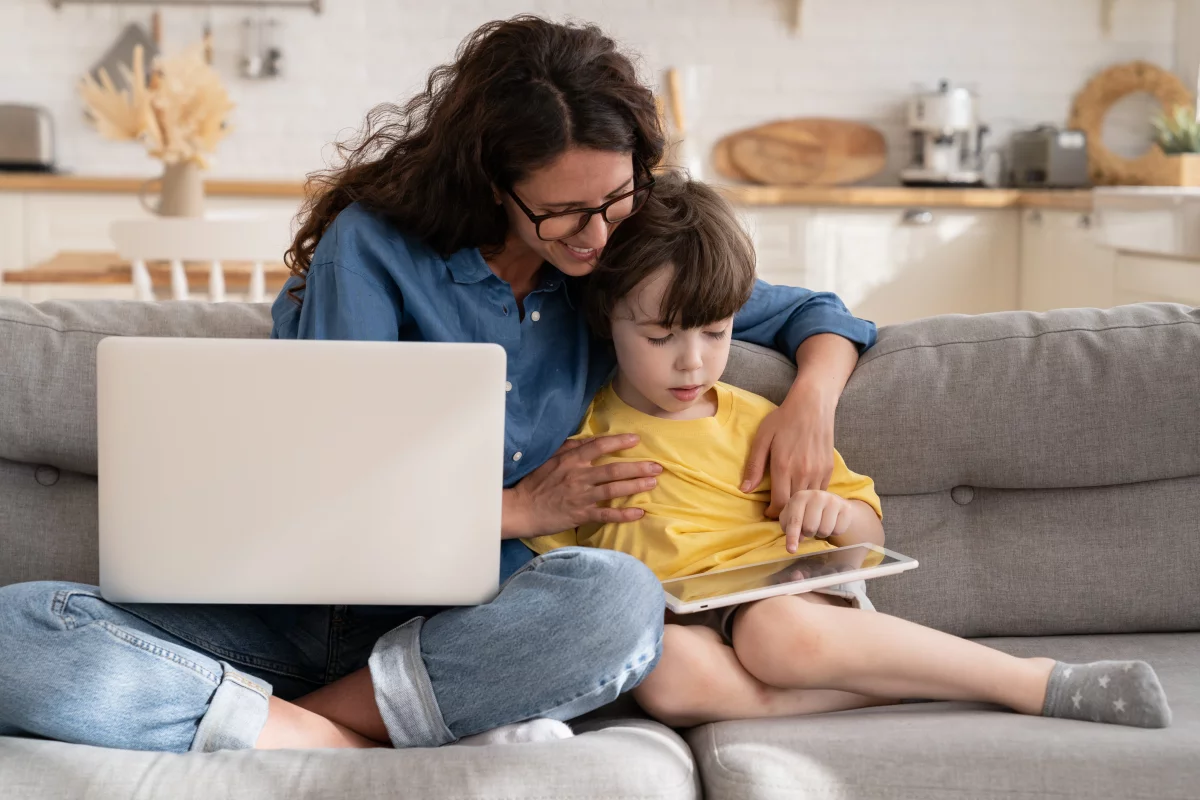
So it’s mom who does the tech support?
Yes, and I enjoy it very much! It’s so cool to them that I can solve the problem and help them. When my son calls me to tell me that he and a classmate are doing a project on the computer and something isn’t going right, I navigate him and we work it out together. Those are the things that I’m really happy about. The IT profession can also be an ideal choice for women on maternity leave.
Do you think that everything is being done to have more women in IT? And does IT world need more women?
Sure, IT needs more women. I think we women generally have that ability to do many things at once. In IT, this is extremely necessary and speeds up work. Nowadays, much more is being done to have more women in IT, in the past this was not the case. A few years ago, it was considered that IT is not for women. It’s been ingrained in society for a long time. But this is already changing, at least that’s how I see it.
Women in IT playfully master the technical environment
Doesn’t the fact that it is very demanding discourage women from working in IT? Learning to code is like learning a new language, literally.
Yeah, it’s definitely one of the things that can scare a person about it, when you’re being ordered around by symbols on a screen. That scares me sometimes too (laughs)! But I think there should be more talk about what the language can do and what you can create with it. Because if we knew how it works and what it can do, we wouldn’t be afraid of it. For many people, it is also how it works, for example.
Internet, a huge unknown. Programming should not be a deterrent. And it’s not when you understand how it works.
This year at msg life Slovakia we are talking a lot about mental health and doing everything we can to promote it among our colleagues. Do you think IT is a healthy working environment for women?
Yes, I think it is. Although not for every woman. It depends on the nature of the woman, for me it is literally a cure for the soul. Of course, there are times when I feel stressed because there is so much going on. But I don’t feel the pressures like in some jobs where you go to the edge of your physical and mental strength and just keep going. Or where nobody cares that you have a sick child and you still have to go to work. That doesn’t happen here. The company really thinks about making sure that we have a good time at work. In some jobs you really have to be careful not to burn out. We can find solution for everything here at msg life Slovakia, I don’t feel any pressure and I feel very well.
The work environment reflects our mental state in many ways. What is crucial for you to feel at ease at work?
In my opinion, the attitude of the employer towards their employees is very important. You need to feel supported as an employee. Whether it’s an evaluation of your work or help with some major life situations. It’s often the little things, like coffee, tea in the workplace. When you see that your employer cares about you, you’re grateful and you make a real effort not to let them down and to repay the company with your performance. Compared to the past, to the companies I’ve worked for, it’s really like a different universe. I really appreciate that I matter here as a person, not just as an employee. It drives me forward and is extremely motivating for me.
I ask this of every one of our colleagues, and I will ask it of you: We have over 70 benefits, which is your favourite?
My current favourite benefit is the home office (read the article Tips for home office efficiency). I have two children and if I didn’t have this option, my life would be much more stressful. Now I know that I don’t have to worry about getting fired if my child gets sick and I stay home. Whenever something happens, I know I can call my boss and we can solve the problem together. This has been a huge help to me, I have had this happen in the past at another company where I had a child in the hospital and was forced to go to the office when it wasn’t necessary to do the job. But I also like our employee benefits like lunches and breakfasts together, teambuilding (see the photo gallery of teambuilding). I like to meet my colleagues, it’s always very nice!
If you are interested in testing interview with Hanka and want to work at msg life Slovakia, check out our job offers.