


Insurance market in Slovakia in the current era of digitalization

Digitalisation has not bypassed the insurance market, which has moved forward by leaps and bounds in recent years. This was mainly due to the pandemic, which forced individual insurers and the state to act and allow clients to process a number of requests without visiting a branch or without a large number of documents. Even though there is still a lot of work to be done by insurance companies in the Slovak market in this direction, we can already see the first significant changes that greatly facilitate several processes, including the selection of products or the conclusion of contracts.

Digitalization of the insurance market in recent years

The coronacrisis has affected the whole world and, in addition to the many problems it has caused, it has pushed many industries forward in terms of digitalisation. The insurance market in Slovakia falls into this category, which until 2020 operated largely unchanged. Everything was solved by visiting a branch, signing a lot of documents and going from one place to another.

This, however, was not the case during the period of restricted movement. Insurance market players had to look for other ways to stay in touch with their old and new, or potential, clients.

Gradually, they started with the digital transformation of their services, which in practice meant that the client could choose a new product online, conclude a new contract, cancel the old one, get professional advice via online chat or phone and much more.

Insurers had to adapt to the new situation in a short time

The spread of covid-19 has caused several downturns and shortfalls in the insurance market in 2020 and 2021. The new, uncertain situation culminated in clients not being as interested in insurance policies that did not cover the new virus at the time. They therefore did not take out contracts and some even cancelled them.

The largest shortfalls were recorded by insurers in guaranteed-return life insurance. This was followed by property and business insurance, which is not surprising as it is business people who have been hit hard by the various restrictions.

Further shortfalls were recorded by the largest insurance companies in Slovakia in assistance services, medical and travel expenses insurance and credit insurance.

The new situation took everyone by surprise, including insurance companies, which had to act quickly. Instead of the lengthy testing phases they usually go through after developing a new product, in this situation they had to go straight to launch. Clients could thus see the first changes and new possibilities for handling multiple services online as early as 2020.

Did you know that…

… interest in products has been declining since 2019? Clients were not as interested in insurance services as they had been in the past. The year 2020 then brought a decline of 2.5%, with the insurance sector achieving a profit of €270 million that year.

Insurance in Slovakia and news on the insurance market

Each insurance product is defined by law and depends on the specific legal system and legislation of the country. This can include different types of insurance, from those required by law to specific products designed for particular situations or groups. In the last two years, the insurance industry in Slovakia has responded to the new needs of its clients. In addition to a variety of new products that include covid-19 risks, they have brought a number of innovations in the context of digitalisation. Which benefits we talk about ?

Contactless services

Contactless services were among the first services launched by insurers as part of the digitalisation. Thanks to them, clients can process their new contracts from the comfort of their homes, without visiting a branch and waiting for a long time or going from one place to another.

As part of contactless services, insurers also provide professional advice, the ability to enter into and terminate a contract, find out about insurance products and much more.

Although insurers did provide some contactless services in the past, they were not at such a high level as they are today. Moreover, there were not as many of them.

a man and a woman in formal dress, employees of an insurance company, looking at charts on papers
Contactless services are now much better in insurance companies

Online processing of life insurance

The ability to arrange an insurance product such as travel insurance or PZP from the comfort of your home is nothing new. Insurance companies have been providing signature-free contracts for non-life insurance for a long time. However, before the coronary crisis, if you wanted to take out life insurance, you could do so by simply visiting a branch and signing a few documents.

However, the 2020 and 2021 restrictions on movement have reduced the volume of new life insurance business for insurers, leading individual institutions to go unsigned on this type of product. This means you can take out life insurance without visiting a branch and signing lots of paperwork, saving you time and the environment.

Video inspections

In the past, it was common practice to require the presence of an expert, usually a technician, to assess damage to a house, home or car. He or she inspected the damage and, based on his or her expert opinion, the insurance company could begin the claims process.

However, such a procedure was not ideal during the coronary crisis. The presence of another person only increased the risk of virus transmission. Therefore, insurers started to deal with checkups in a different way, namely by video.

The injured client will then document the reported damage via their phone or other device that can capture video. He or she then sends it to the insurance company for assessment and processing of the claim.

Video tours are a much quicker and easier way to resolve an unpleasant situation that has happened to a client. Following the relaxation of the measures, some insurers have switched to a dual mode. This means that in some cases a technician has to come to the client for the inspection and in some cases the client just needs to send a video.

It all depends on the insurance company where the client has a contract, or on the insurance event. As a rule, minor damages can be photographed or filmed, while major damages require a professional.

New website

Insurance company websites are much more important than they may seem at first glance. A cluttered website can cause a client not to find what they are looking for or make the whole process unnecessarily complicated.

In addition to clarity, the website should also be responsive so that it can be easily opened on a mobile or tablet. Clients use these devices to process or check insurance policies.

Insurers have realised these facts in 2020. You may have noticed that many of them have changed and redesigned their websites from the ground up.

In addition to improving their websites, insurers have also improved their own mobile applications. They now provide much more functionality and work well on both iOS and Android.

Better online calculators

The new website also includes better online calculators. They are used to calculate both life and non-life insurance. Using them, the client can calculate the estimated amount without contacting the insurance company and then apply for an insurance product based on the calculation.

Online calculators make it easier for many insurers to arrange insurance because they give an approximate idea of the insurance not only to the client but also to the institution. The latter knows approximately what the client is interested in based on the information entered.

Better online communication

Communication with the insurance company has not been entirely easy in the past. Long minutes spent on the phone or waiting on hold before an email are now a thing of the past. Insurance companies strive to be available to clients 24/7. In addition, they strive to accommodate absolutely everyone, so in addition to the telephone connection, they also provide email, mobile applications, online chat or the possibility of communication via social networks.

Digitalization in the insurance industry directly affects the labour market

Digitalization in the insurance industry in Slovakia does not only bring changes in the processing of new insurance contracts. It also directly affects the situation on the labour market. Therefore, due to the advent of online services, the demand for IT workers from insurance companies has also started to rise. An example of this is the Actuary and Actuarial Manager in IT, whose role is to design and develop software solutions for insurance companies. Similar conveniences are gradually replacing administrative staff, who are no longer needed in such high numbers by insurance companies. Read also our article Why work in the insurance industry.

But the fact that the administration would completely disappear is unlikely. There will always be a certain proportion of clients who will be happy to visit a branch and sort out their requirements there. Even clients who do most of their business online will in some cases appreciate the human touch. However, the truth is that the number of jobs in administration will decrease over the years.

The IT field is diverse and more important now than ever before. So if it interests you, you should definitely get better at it. Experience can open doors to interesting jobs.

A woman in a green and blue T-shirt smiles while drinking coffee at a desk in front of a computer
Life and non-life insurance can be solved without a signature

Why is digitalization so important for insurers?

New websites, contactless policy processing and much more – all of this is important for insurers not only in the face of the coronavirus pandemic, but also in the context of the growing online generation.

The generation of those who used to deal with everything directly in the branch with an administrative employee is aging and is being replaced by a generation of people growing up in the age of computers and the Internet. Insurers therefore need to focus on these people and respond to their needs.

Along with digitalisation, insurers are bringing new, more flexible products to the online generation to suit their needs. In addition, they are also trying to provide something extra, as people falling into this category often demand much more from insurers than clients in the past. For example, they expect corporate social responsibility, sustainability or a focus on ecology and environmental protection.

What changes could come in the future?

The insurance industry has undergone a great deal of change in recent years. It has made it easier for many clients to operate and has speeded up many unnecessarily lengthy processes. Despite this, there are a number of areas where it is stagnating and could still improve.

One of them is compulsory insurance. While it has been the practice for years to arrange it online, which is an advantage, many agree that a printed green card is a great waste. It will therefore not be surprising if both insurers and the state start to consider computerising it.

The Ministry of Finance planned to open a discussion on the legislative regulation of PZP later this year. We will see if this happens. However, motorists themselves are not pushing for the digitisation of the green card. This is most likely mainly due to the fact that the most challenging part of the whole PZP, i.e. its processing, has been online for several years. The actual carrying of the green card in paper format is therefore not such a big burden.

However, the Ministry of Investment, Regional Development and Informatisation of the Slovak Republic has been considering the total digitisation of documents for a long time. Such a step should contribute to speeding up the handling of a number of different tasks and solving issues with the public and private sector.

Digitalization is far from over

However, PZP is not the only one. Insurance companies in Slovakia still have a few weaknesses that could be improved to provide a much better service to their clients. However, if they move forward as they have done in the last two years, there is no need to worry about waiting too long. You can help speed up the process by developing software that will make it easier and faster for insurers. Browse our job offers and work in a constantly evolving field.

msg News: Help, presents and good Christmas cheer with colleagues

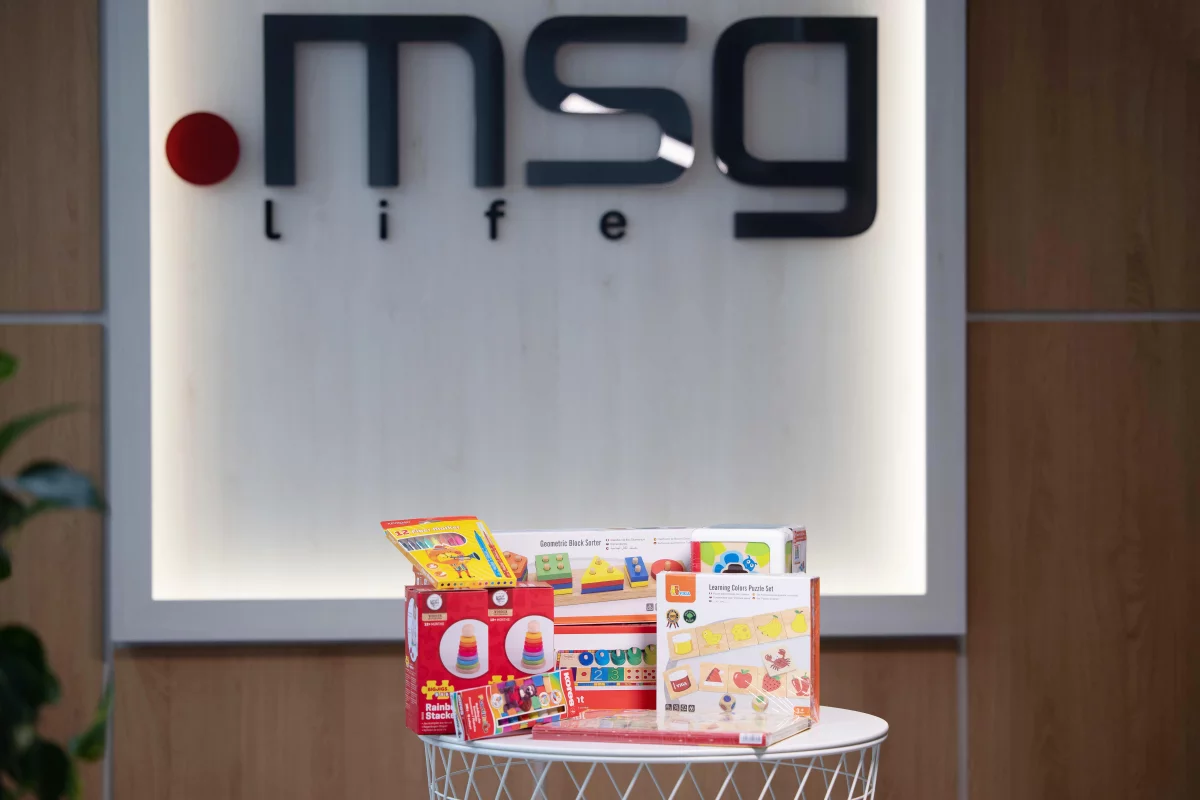
At the end of the year, we at msg life Slovakia can find time for fun alongside our duties. The end of the year is always a very special time at msg life Slovakia. Although we have many deadlines, we always manage to find time for fun alongside our duties. An example of this is not only the traditional Christmas party Weihnachtsfeier, which will finally take place after two years of covid, but also the events St. Nicholas for Children and Secret Santa. We have prepared many surprises for our colleagues in the last weeks of 2022 and here is an overview of some of them. Just like every year, we have not forgotten a little treat for our little ones. In addition to the St. Nicholas treats, the children of our colleagues had the opportunity to take part in face painting, traditional workshops and at the end they met St. Nicholas, an angel, but also the devil. “I remember when we first organized this event. Back then we hosted about 15-20 children. This year we prepared around 90 presents for the St. Nicholas event. This is also another proof of how our company is growing more and more. Every year there is more interest in the events, and we are happy about that.” Zuzka, the office manager, remembers her first company events. On St. Nicholas Day, we delighted our colleagues with a custom-made Advent calendar with a short verse added. During the end of the year, however, we don’t only think about our colleagues or their children, we also like to get involved in various volunteer activities. As part of November’s World Kindness Day, we helped the association “Cesta von”, which works to help children from excluded communities. We hope that they will be able to do so thanks to the shipment of educational and sensory toys that we donated to the Omamy project. We continued to help during the month of December. Our colleagues had the opportunity to donate blood or even give up their Christmas gift to a chosen organization. Helping the sick and abandoned

“We give our colleagues the opportunity to choose their Christmas present before Christmas. This year, we decided to include volunteer companies in the list. Those who want to help or simply have not chosen anything from the list of corporate gifts can donate the amount of their gift to a company that cares for people in need, to purchase material aid intended for war refugees, terminally ill children or abandoned animals. We were positively surprised by the great interest in donations to voluntary organizations. Colleagues donated a total of 3,500 euros. The company msg life Slovakia doubled the amount and 7,000 euros will go to OZ Plamienok, Vagus, Útulok and Help Ukraine,” says Dominika.

Christmas presents on the table in front of the msg life logo
At msg life we donate to employees, children and those in need.

Weihnachtsfeier after two years The Bratislava office was visited by Robert Hess, a member of the company’s board of directors. On this occasion, we prepared a get-together for colleagues with a Christmas lunch and Christmas gift distribution. The following day we continued the celebration of the most beautiful holiday of the year with a Weihnachtsfeier, or Christmas party, at the Saffron Hotel. There was an entertaining programme for colleagues, thanking them for their high work commitment, delicious refreshments but also a Secret Santa to help colleagues get to know each other better, not only between departments but also between branches. The expected high attendance was confirmed and the hall was filled not only with colleagues from Bratislava, but also from Zilina and Kosice. We enjoyed the event and are looking forward to what 2023 will bring!

colourful balloons on the hall floor, decorated tables and a Christmas tree in the foreground
Annual Christmas party msg life Weihnachtsfeier.

How to find a new job in January

Tips on how and where to find a job in a highly competitive job market are often sought, especially when thinking about changes in your life. Are you also thinking about changes in your life? A new year, a new job, new interests… If you are thinking about how to find a job, it is important to look for different opportunities and methods, also to consider where to find a job that will meet your expectations and goals. That’s why many people in the job market are willing to start looking for their dream job right after the New Year’s eve.

When do Slovak people most often look for a new job?

According to surveys, the most common time to look for a job is the beginning of the year (January and February) and the beginning of autumn (September and October). Why is this so?

A new job is our New Year’s resolution

At the end of the year, we are used to making resolutions. We want the next year to be better, more beautiful, more interesting and more financially stable than the previous one. None of us like change, but in the aftermath of Christmas, when we’ve had time to relax, spend more time with family than at work and reflect on our lives, we usually all come to the same conclusion – we want more. If your home environment is stable and you’re happy with your life, what you’re keen to change is either your body (gym passes sell fastest at this time of year) or your work. But finding a job at this time is more difficult because the job market is crowded with competition. Many people decide they want to change their lives, which is why there are many more CVs for job offers than at other times of the year.

After the summer holidays, we reassess our work and life

If we talk about the next period when the labour market is really competitive, it is the period after the summer – September and October. People relax on holiday and succumb to the desire to change something in their lives. The beginning of summer, even in adult people, gives the feeling that a kind of period of obligation has ended and now we have two months of peace. Even though most of us adults work in the summer, the psychological effect of ‘you can’t get anything done in the summer anyway’ reduces our productivity and our desire to work until autumn arrives. And after two weeks in Crete, you might even change your mind about whether your work is meaningful and fulfilling in your life.

When do employers advertise the most?

Unfortunately, we’re going to let you down. January and September are definitely not months in which companies advertise a lot. Companies publish most job ads in May and June, before the summer starts (according to data from ekariera.sk). However, this is also the period when fewer people are looking for a job, which is why there is the least competition in the labour market.

What can help you find a job at the beginning of the year?

In fact, our advice can help you in your job search at any time of the year. We want to give you some advice on how to get a job and stand out above the competition when it’s at its highest.

How to find a new job in a highly competitive job market?

  • Internet

We are not just talking about job search portals or employment agencies. Also pay attention to social media marketing or groups where your colleagues or clients gather. We also recommend that you visit the websites of companies you’d like to work for and keep an eye on them to see if they are currently offering job offers that might interest you.

  • Experience

The fear of not being able to find a job at an older age is understandable. But it’s by no means lost! For many positions (e.g. management, executive), a person with experience is a better candidate – don’t be afraid to demonstrate your skills and abilities on your resume (try to improve your resume by our resume skills tips article) and at the interview.

  • Determination

What recruiters find on your CV or portfolio is only a fraction of what you can do to impress them. If people are equally educated and equally experienced, the recruiter will go with the person who has the most positive attitude. Be determined to change your life, spread positive energy and you will become memorable. You must differentiate yourself from your competitors with esprit and radiance, not just experience and skills.

  • Loyalty

Be careful what you put on your CV. If you’re applying for a job Java developer senior, you don’t need to say you worked as a bartender in high school. It has nothing to do with your current job search. Likewise, if you are in an industry with high fluctuation (e.g. marketing, industrial manufacturing, warehouse work, etc.), think twice about what you put on your resume. The high fluctuation rate gives recruiters the impression that your only motivation is money and that your loyalty to the company means nothing to you.

  • How to prepare for an interview

January is really competitive, so you can’t underestimate how to prepare for a job interview. You don’t want to be the one who can’t even remember what company you came to interview for or what job you are applying for. If you really want to impress recruiters or business owners, you should study basic information about the company, arrive at the interview on time and prepare a set of at least three questions to ask at the end of the interview. We recommend that the questions should be about the company culture and company goals rather than the possibility of a pay raise after the probationary period. Show that you care about your job and helping the company, not just personal gain. We believe you will find your dream job. And if you dream of a career in IT, you’ll find our job offers here.


Java SE platform: What features the Java update brings and the different Java versions 11, 17 LTS, 19 LTS

In this article, you will learn basic information about the origins of Java SE and the features of its latest versions. Java’s ability to improve performance, stability, and security has made it the world’s most popular programming language. According to an IDC report, it is used by more than 10 million developers, representing approximately 33% of software engineers worldwide. Since its release, there are officially 21 supported versions of Java SE released. In this article, we’ll take a look at what features each version of Java brings.

History of Java language: Java platforms and their use

Java is a programming language and platform that was developed in 1995 by Sun Microsystems, a subsidiary of Oracle. It provides a platform for developing application software and deploying it in a multi-platform computing environment. James Gosling is considered to be the father of the Java programming language, who, along with members of the Java team, also called the Green Team, began working on its development in the early 1990s. The aim of this project was to develop a language for digital devices such as set-top boxes, televisions, etc. Nowadays, Java programming language is used in the development of Internet applications, mobile applications, computer games, e-business solutions, etc. Since its inception, the Java programming language has undergone many enhancements and extensions that have provided new programming capabilities and improved the user-friendliness of the user interface. Java versions are constantly evolving, but in general we can define Java benefits in four platforms namely Java SE, Java EE, Java ME and Java FX, where each of them brings specific benefits depending on their application.

Java SE Platform

Java Standard Edition, or Java SE for short, is the core Java programming platform. We can run software on it or use it to develop desktop and server applications. The Java SE platform uses the Java programming language and is part of the family of software platforms with the same name. Java SE provides all the data structure libraries and APIs, such as java.lang, java.io, java.math, java.net, java.util, etc.

What are data structure libraries for

The data structure libraries contain predefined classes provided by the Java System. There are thousands of library classes, each containing different functions. Thus, these classes provide efficient support to programmers in developing their programs. They simplify and streamline the work.

Java Application Programming Interface (API)

Java Application Programming Interface – API, is a list of all the classes that are part of the Java development kit (JDK) that are specific to the Java language and program. Thus, it includes all Java packages, classes, and interfaces along with their methods, fields, and author comments. These prescribed Java program classes provide the developer with a huge amount of functionality that can be used for Java programming.

Did you know that…

… the original Java name was supposed to be Oak, after the oak tree that stood outside Gosling’s office. Later it was given the name Green and finally renamed Java after the name of a coffee variety grown on the Indonesian island of the same name.

Main advantages of Java SE platform

  • It provides opportunities to use the principles of object-oriented programming and superclasses, which are also used for networking, abstraction, higher security, access to databases, GUI (Graphical User Interface) development and analysis in formats such as XML.
  • It contains a Collectors class that allows you to accumulate elements into collections and summarize data according to various criteria.
  • Provides a Base64 class for encryption and decryption.
  • It has APIs that enable more efficient computation and programming.
  • A new class java.net.URLPermission has been added to the Java SE platform, which represents the permission to access a resource defined from a given URL.

However, in addition to the regular Java programming language, there is another specific model of Java, which is Java LTS.

Java programmer working in Java SE platform on a laptop
Java SE is a platform designed to develop and deploy portable code for desktop and server environments.

What is Java LTS 17 and how is it different from regular Java

Java developers are working hard on new and improved versions of Java SE to improve the functionality of the system. Since its inception, Java versions have been released irregularly, so in 2018, Oracle decided to change the regularity of releasing new versions of the Java SE platform. Instead of the original release interval of every two to three years (which often became every fourth year), a new six-month release pattern for classic Java SE platform releases has been adopted, with a long time support (LTS) release coming out every three years. The first version of Java released under this model was Java SE 11. The advantage of LTS releases is that organizations can count on Java releases being available for at least eight years, giving developers plenty of time to consolidate tools and migrate to another LTS version of Java several years later. The LTS model allows technology providers to focus on specific releases while supporting their products over the long term. Each version only receives performance, stability, and security updates during its lifetime, so there should be no major changes to individual versions of Java.

Java latest versions

Almost two decades have passed since the first Java JDK Beta was released in 1995. Since then, 21 Java versions have been created. The first LTS Java version with long-term support was Java SE 7, released in July 2011. The next version – Java SE 8 – was released in March 2014. This version includes some features originally designed for Java SE 7, but were only added in Java SE 8. These include features such as:

  • support for Lambda expressions at the language level,
  • the ability to embed JavaScript code in applications,
  • annotation of Java versions,
  • providing date and time APIs,
  • repetitive annotations,
  • running JavaFX applications.

The next available versions are Java SE 11 LTS and Java SE 17 LTS, with the next release – Java SE 21 LTS – expected in September 2023.

Java SE 11 LTS version

Java 11 is the third LTS release of Java after Java 8. You can download and use this release for free, but only for non-commercial development. For commercial application development, you must purchase a license from Oracle’s official website. Java SE subscribers will receive JDK 11 updates until at least September 2026. The Java SE 11 LTS release brings several important features for software developers. One of the main changes is that you don’t have to compile the Java source file first using the javac compiler. You can run the file directly with the Java command and it will compile implicitly. This feature falls under JEP 330.

Other important features in Java SE 11:

  • New helper methods in the String class, such as isBlank(), lines(), strip(), stripLeading(), stripTrailing(), and repeat(int);
  • Local variable syntax for Lambda parameters;
  • JEP 309. Dynamic class constants. Extend support for a new form of the CONSTANT_Dynamic constant field. The aim of this JEP is to reduce costs;
  • JEP 321. HTTP client. The new API supports both HTTP/1.1 and HTTP/2 and is designed to improve the overall performance of sending client requests and receiving server responses;
  • JEP 328. Flight Recorder. JFR is a profiling tool used to collect diagnostic data from a running Java application;
  • Simplified reading and writing of String using readString(), writeString().
Recommend
We recommend:

The local variable syntax for Lambda parameters is the only release of the language function in Java 11. In Java 10, inference-based local variable type inference was introduced. Thus, the type of a variable could be inferred as var list = new ArrayList<String>( ); JEP 323 allows you to declare the formal parameters of an implicitly typed lambda expression using var . Now we can define:

(var s1, var s2) -> s1 + s2

Java programmer working in Java SE LTS for desktop developers
Oracle has released twenty-one Java versions so far.

Java version SE 17 LTS

An important change within Oracle JDK 17 was the introduction of new and more simple licensing terms that will allow companies to use Oracle JDK 17 free of charge for at least the next three years. Java SE subscribers will gain access to Oracle Java SE support and commercial features such as GraalVM Enterprise, Java Management Service and Advanced Management Console. Java 17 LTS represents the latest release of long-term support for the Java SE platform to date and includes 14 new features that will make the work of developers worldwide easier and more efficient. Among the most significant changes in the LTS version of Java 17 are:

  • JEP 356: Improved pseudorandom number generators. The release provides new interface types and implementations for pseudorandom number generators (PRNGs) to eliminate code duplication in existing PRNG classes.
  • JEP 382: New macOS rendering channel. An internal rendering channel for Java 2D for macOS using the Apple Metal API as an alternative to the existing channel that uses the deprecated Apple OpenGL API.
  • JEP 403: Heavily encapsulated JDK internals of all JDK internals, except for critical internal APIs such as sun.misc.Unsafe. It will no longer be possible to remove the strong encapsulation of internals using a single command line.
  • JEP 411: Removing Security Manager.
  • JEP 415: Context-specific deserialization filters. This change allows applications to configure context-specific and dynamically selected deserialization filters through a filter factory within the JVM that is invoked to select a filter for each individual deserialization operation.

Latest version of Java SE 19

This release is the tenth feature release delivered within the six-month release frequency. This level of predictability allows developers to easily manage the release of upgrades, but it should be noted that Oracle JDK 19 is not a long term support (LTS) release. Changes in the latest Java SE 19 release include a variety of enhancements, ranging from the incorporation of significant new features to small improvements to routine maintenance. The updates and enhancements to Java SE 19 are as follows:

    • JEP 405. Record patterns. This enhancement allows users to insert record patterns and type patterns to create a powerful, declarative and composable form of data navigation and processing;
    • JEP 422. Linux/RISC-V Port paves the way for easier Linux/RISC-V implementations by integrating this port into the main JDK repository;
    • JEP 427. Pattern matching for switches enables pattern matching for expressions and switch statements by allowing expression testing against a number of patterns;
    • JEP 424. API for foreign functions and memory allows Java programs to more easily interact with code and data outside of the Java runtime.
    • JEP 426. Vector API provides better performance compared to equivalent scalar computations by expressing vector computations that compile reliably on the run into vector instructions on supported CPU architectures.

What is Java Development Kit LTS?

Java JDK LTS stands for Java Development Kit Long Term Support. It is a development environment for creating Java applications that offers long-term support and updates. Java JDK LTS means that a given version of the JDK will be supported for at least four years after its release. Support and regular bug fixes, security and performance improvements, and compatibility with new platforms. There are currently three versions of the Java JDK LTS: JDK 8 LTS, Java JDK 11 LTS, and JDK 17 LTS. JDK 19 non LTS(Java Development Kit 19 is not Long Term Support) is released as a Standard Java release September 2022.

JDK 19 vs JDK 17

JDK 19 and JDK 17 are two versions of the Java Development Kit that differ in some of the main features: the Java 19 non LTS is the version of the Java 19 JDK that was released in September 2022, while JDK 17 is the previous version that was released in September 2021. JDK 19 non LTS has some new features such as pattern matching, virtual threads, sealed classes, and records that are not available in JDK 17. Java LTS 17 includes some features that were introduced in previous feature releases, such as text blocks, switch expressions, var, and modules.

Did you know that…

… by efficiently invoking foreign functions (i.e. code outside the Java Virtual Machine [JVM]) and securely accessing foreign memory (i.e. memory not managed by the JVM), this API enables Java programs to invoke native libraries and process native data via the Java 19 development model. The result is greater ease of use, improved performance, enhanced flexibility and greater security.

Oracle has announced plans to reduce the time between future LTS Java releases from three years to two years. The next release of Java SE LTS should therefore be Java 21 LTS, which will be released in September 2023. The new Java will bring even more innovative features, and Java programming will once again be slightly more advanced. This version should provide support until at least 2031. At msg life Slovakia, we currently use Java SE 11 (LTS) for Java programming, which has been very successful for us. However, we will soon be switching to Java SE 17 (LTS) with 14 new features to make our work more efficient, better and faster, and you can try this version of Java too. See our previous articles on Java programming:

Whether you’re an experienced Java Developer Senior or a passionate Java Junior Software Developer, there’s always a place for you on our team. Join us, improve your Java programming skills and work with us to develop innovative software solutions for financial and insurance market leaders. Check out our job offers and send us your CV!

How to successfully keep a New Year’s resolution?

What’s behind the failure of New Year’s resolutions and how to successfully keep them.A new year, a clean slate, another 12 months to improve your life. And just like every year, now it’s seriously going to happen. And you know what? It will! Especially if you approach resolutions rationally.

Why resolutions fail

Do you make a habit of going all out with resolutions and big life changes? You run the risk of failing. Not because having high ambitions and working towards them is bad. But this approach is less realistic and few people succeed in making too big a change on the first try.

Far more important is the consistency of your efforts. Instead of changing your bad habits in the first month of the year, try to make the change last for the long term. More importantly, don’t be discouraged by potential setbacks.

Behind the discouragement is the psychological effect of resignation. If you break a resolution, you may feel that the effort is “reset” and you have to start over. Perpetual starts are frustrating; no one wants to start all over again. But think about this: if you don’t brush your teeth once, are you going to neglect clean teeth for life? Or you don’t keep a party and you only sleep 6 hours instead of 8. Will you tell yourself that sleep is no longer important?

The phenomenon of resignation can be illustrated by the most common New Year’s resolution of both Slovaks and Czechs – to lose weight and eat healthier. According to the STEM/MARK survey:

  • For 26% of respondents, only a few days,
  • for 23% of respondents, 3 months,
  • for 22% of them, a month,
  • For only 7%, a year.

Lukáš Roubík, nutritional consultant, trainer, bodybuilder and co-founder of the Institute of Modern Nutrition, has been busting myths in nutrition for a long time and his recommendation is clear: it’s the effort all year round that counts, not a single rule-breaking.


View this post on Instagram


A post shared by Lukáš Roubík (@lukasroubik)

The psychological and biochemical effect of finishing things

Having too many things on your mind is neither good for your mental state nor for your work efficiency. It’s even one of the paths to burnout (read our article When it’s time to change jobs). The problem can arise with tasks, or in this case, resolutions, that we can’t complete anytime soon. In psychology, this is called completion bias, or task completion bias, and it affects us all.

Harvard Business School examined how completing work tasks affected the motivation and satisfaction of 500 employees from different segments. Employees who started their day with simple subtasks were the most satisfied and motivated.

Our brains are addicted to completing tasks. Every task we check off gives us a dose of dopamine, which we need much more than in the past when overwhelmed with sensory information from social networks. A good tip for keeping, or rather maintaining, your resolutions would be: break them down into sub-tasks and goals.

the hand holding the pen on the table writes to do list by the keyboard and the cup of tea
Break tasks into sub-goals so you can complete them more easily.

Try Kaizen

Kaizen, Japanese for “change for the better”, is a method, philosophy, or even a management technique of gradual improvement. You can apply it to your work and your personal life. As a Java programmer, for example, you want to do things more efficiently, procrastinate less, or have more order in your priorities. If you could increase your efficiency by 1% every day of the year, you’d be 365% more efficient at the end of the year.

The method originated in the 1950s as a form of lean approach to productivity management at Japan’s Toyota. It spread to the West, where the Kaizen Institute was later established to help companies adopt lean management best practices.

Kaizen is defined by continuous improvement, which is something you are no stranger to as a tester or developer thanks to continuous integration and delivery. Among its basic principles you will find:

  • Instant problem solving,
  • The realization that there is still room for improvement,
  • Take improvement as the goal, not perfection.

So before you decide to abandon your resolutions after the first burger and fries or the first missed deadline of the year, give yourself a break for a while. See things from a different perspective and try to find solutions. Next time, have a burger without fries and delegate some of the bag to a colleague with spare capacity. It may not be a 100% improvement, but you’ll still be better than you were yesterday. And that’s what counts.

If you’re looking for a job change in the new year and would like to go into IT, check out our vacancies, where you’ll also find jobs for people with no previous IT experience (e.g. IT tester consultant).

8 ways to make your new year better

Inspiration for a successful new year. Project 2023 begins. Enter it with positivity and determination to make it as successful as possible. We have some tips for you on what to focus on.

1. Choose your physical activity

The pandemic and lockdown have cut many of us off from physical activity. A normal day used to include so-called non-exercise activity, such as walking, climbing stairs, lifting and moving objects. With covid having caused a digital shift in the job market by more than five years, the situation may not change for the better at all, which is why it is important to indulge in movement. This does not mean work hard at the gym for six-pack and crying over romaine lettuce drizzled with pumpkin seed oil. Physical activity and movement are important for our physical and mental well-being. It can be varied and contributes to overall physical and mental well-being. It includes activities such as running, swimming, cycling, aerobic exercise, weight training. Treat yourself to a few long walks each week with (or without) the dog, gardening or other forms of physical activity. It is important for individuals to engage in regular physical activity as it has a positive effect on the cardiovascular system, muscle mass, bones, metabolism and mental health and stress.

2. Approach mental health responsibly

When to go to a psychologist? You don’t have to be on the brink of depression or burnout. Nor do you go to the dentist when all your teeth are falling out, or to the doctor when your body hasn’t taken in nutrients from your diet for half a year. Some problems are dealt with preventively, by prophylaxis. At a meeting with a specialist, you will learn what to do for your mental well-being. It is very likely that most of the time you will be doing the talking. You may find that something is bothering you subconsciously or that you are neglecting something.

3. Get enough sleep

Sleep is too often neglected – for work, for partying, but also for early workouts and late movies. Healthy sleep has a huge impact on your mental health and improves your physical fitness, which is a key factor in maintaining overall health and well-being. When asked about healthy sleep and how many hours of sleep is recommended, this can vary depending on age, an individual’s physiological need and lifestyle. Someone needs seven hours, another requires nine, and there is a certain percentage of people in the population who only need a few hours and can function almost unaffected. The rest of us, however, suffer from sleep deprivation and it can take a toll on our perception, coordination, and judgment. In essence, sleep deprivation is very similar to drunkenness. Some tips on how to sleep better:

  • Try not to look at the screen for at least an hour before bed, both because of the light and the dopamine.
  • Between 10PM and 3AM limit your exposure to strong light, which blocks the production of melatonin.
  • In the evening, use lighting below eye level, minimize using large chandelier lights.
  • Go to bed at the same hour. The body responds to a regular rhythm, and if you keep changing your bedtime, it gets confused.
  • Do not eat before bedtime. Not because it makes you fat, a calorie is a calorie at any hour of the day. More importantly, the body will work on digestion and get less rest.

Equally important are healthy sleeping positions, which can contribute significantly to a comfortable and good quality sleep, minimize the risk of neck or back pain and ensure that all parts of the body are adequately circulated. In addition, we definitely recommend you read Matthew Walker’s Why We Sleep for even more tips on how to get your sleep routine right. However, you’d better not stay up too late because of it!

man sleeping in bed
Get enough healthy sleep – you will be feeling better.

4. Set aside time for conscious thinking

We all think – without it, we couldn’t do most things in our lives. However, the more often we do an activity, the faster it becomes automated. This phenomenon was described in Thinking, Fast and Slow by Daniel Kahneman using System 1 and System 2. There are two types of thinking – one is precise, slow, cautious, the other is automated, abbreviated, efficient. Our brains try to save us time, but many times this effort is counterproductive – for example, when we have little information and the brain tries to cobble it together from previous (sometimes unrelated) experiences. So set aside time to think without sensory perceptions. Engage with your thoughts for at least half an hour a day and see where they take you. You can use this approach in work projects and personal challenges.

5. Change the job that is killing you

Going to work reluctantly is exhausting. Even the simplest tasks become difficult without motivation because it takes forever to start them. But before you decide to change jobs, check out the advice from the experts at Power Coaching. You may find that a change in mindset or reprogramming is needed to be satisfied. Mind reprogramming is the process of changing or modifying existing thought patterns, beliefs, and habits in order to bring about positive changes in behavior, performance, and quality of life. Mind programming is often used in the fields of personal development and psychology. However, if you can’t do it without changing your job, it’s time for a good dose of courage – not only to change your job, but also to change the field in which you work. Did you know that many people at msg life Slovakia had no previous experience of working in IT? Many of our colleagues first worked in logistics, finance, public administration, some even as scientists. But they decided to try their luck and it worked out, because every smart person gets a chance here. Check out our job offers and read stories about our team.

Job

Project Technical Lead

Young man in blue shirt IT technical project manager

6. Learn a foreign language

Learning a new language develops your associative skills. You compare the new language with your native language or other languages you know. You find connections between them, your view of familiar objects, phenomena and situations changes. You discover new ways, because the beauty of language as a means of communication is that it offers multiple possibilities to convey one meaning. There are, of course, pragmatic reasons to learn a foreign language. One of them is work. By learning a foreign language, you increase your chances of finding a job in the job market. Many of our colleagues had no IT experience before joining us, but thanks to their knowledge of German, they quickly found a job. If you want to develop your language skills, there’s nothing easier than choosing one of the language courses available online:

Duolingo, a language learning app with gamified lessons and a rewards system, is a great way to get you started.

7. Expand your skills

New skills will enrich your life, broaden your scope, give you a competitive edge, new enthusiasm for work, opportunities to relax, explore, spend your free time… And we could go on forever. Learning something new is never a bad idea. There are plenty of online and offline courses, groups and associations or mentors available to help you develop skills in a new area or discover your hidden talents. When we write about skillsets, we don’t always think of the working. We also have a life skill set. Are you interested in coffee and want to be able to make it in a way that will “blow visitors’ minds”? Take a barista course and learn all about filter coffee or espresso and the highest quality coffee beans.

the barista pours milk into a cup of coffee in the kitchen and the barista in the background prepares the coffee in the coffee machine
Expand your skills with a barista course

8. Mind comfort zone and its consequences

The mental comfort zone refers to a psychological state in which a person feels comfortable and secure while avoiding situations that might be stressful or unfamiliar. It is the idea of living in the setting that everything will go smoothly and in order. Staying in a mental comfort zone can have a variety of consequences that affect an individual’s personal and professional development. Some of the possible consequences include limited personal growth, loss of opportunities, repetition of behavioural patterns, impaired mental health and stress. The challenge is to get out of our comfort zone and open ourselves up to new experiences and challenges. This doesn’t have to mean immediately throwing ourselves into new experiences or projects. It may also have to do with anticipating the challenges we are preparing for. Adapt Alan Watts’ idea of the law of opposites. By accepting a negative experience, you make it a positive experience. If you accept the negative, you can learn from the situation, analyze it, and take steps to prevent it from happening again. We hope that this year will be a successful one for you in both your work and personal life. Don’t be afraid of change, it’s usually worth it. If you’re thinking about working in IT, our employee benefits may also inspire you!