
Podcast #1: Work-life balance and healthy work-life boundaries

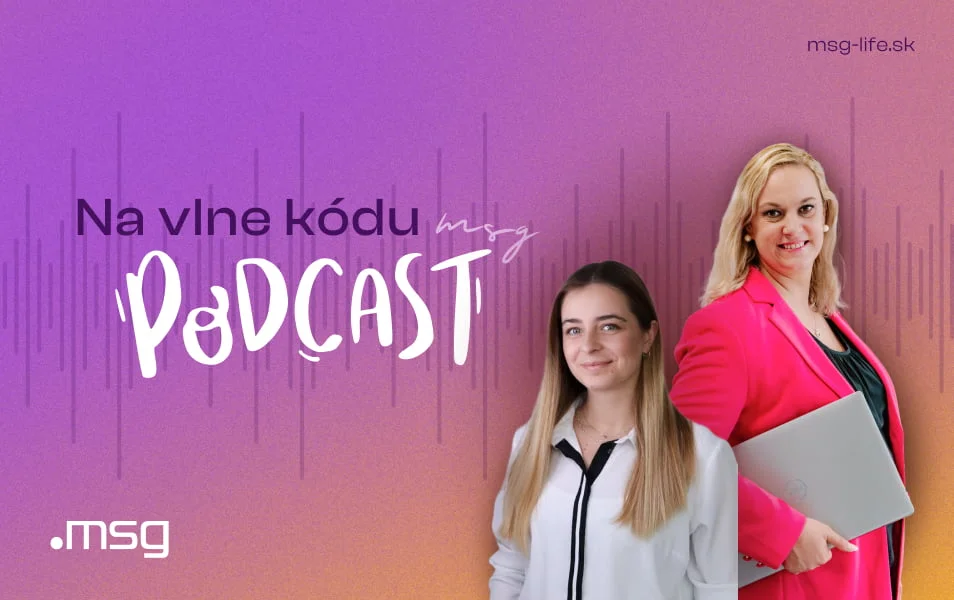
The first episode of our “Na vlne kodu” podcast (in English On the Wave of Code) was prepared in cooperation with the online platform Ksebe.sk. With Dominika Neprasova we talk about how to set boundaries between work and private life, how to avoid burnout or how to say no. We wish you a pleasant viewing, listening or reading.

In today’s episode, we’re going to cover a topic that is increasingly topical in our hectic society. It’s Healthy Work-Life Boundaries. While technology is great, it can make it difficult for us to rest and recover, resulting in overwork and, in extreme cases, burnout.

This theme resonates not only among the wider public, but also in various specific professions – for example, in the IT sector, where constant connectivity and technological pressure can cause problems with We’ll take a closer look at why work-life boundaries are so important and how to respect them. Our guest is psychologist Mgr. Dominika Neprašová from the online platform Ksebe.sk.

Podcast “Na Vlne Kodu”

‘Na Vlne Kodu’ (On the Wave of Code) is an IT podcast by msg life Slovakia. It regularly covers topics from the fields of psychology and HR, as well as IT news. Listen to more episodes of Na Vlne Kodu.

Dominika, thank you for coming. Tell us something about yourself. What made you start focusing on the boundaries between work and private life?

Thank you very much for the invitation. I am a psychologist at the Ksebe platform and also at the Salvus health centre in Bratislava. I am involved in counselling and therapy with young adults and adults, either individually or in a couples context. I am also enrolled in long-term psychotherapy training and in the specialty of clinical psychology, which is like the certification that doctors have in our country.

My psychological journey was first preceded by a career in HR. I worked in this field for four years. I started at the Grafton recruitment agency, then I worked in People Operations, or HR, at a Slovak start-up, where I was responsible for the overall care of employees.

And it was in this context, maybe because of my psychology background, that I started to pay more attention to the topic of worklife balance. People are overworked, they often tend to burn out. They don’t know how to set boundaries, they don’t know how to use the word NO.

These themes also come up in my psychology practice. While for young people the most common themes are relationships, emotionality or self-development, the older or middle generation mainly deals with the topic – how to set up a work-life balance and what themes emerge in it. Everyone has their own themes in their career, such as self-worth, self-fulfilment, self-esteem, etc. And in that whole context, those themes actually intertwined into my current work.

What is the definition of healthy boundaries?

Healthy boundaries define our living space: not only the physical, but also the mental, which is subjective. Having boundaries means keeping your distance from other people, knowing how to say no, stand up for yourself and take care of yourself. This protects us in a dynamic world where we can sometimes be shouted down by the louder ones. Healthy boundaries serve to define us in a certain way, and that can ultimately help us.

‘Healthy boundaries define our living space. They give us the opportunity to express who we are, to say no, and to stand up for ourselves.’

In today’s world, we are often faced with the need to be online all the time. Technology forces us to work harder than is healthy. How does this affect our mental and physical health and our lives? How to prevent burnout?

This is quite difficult to observe. If we don’t have the capacity for self-reflection and self-awareness, sometimes we have trouble stopping. Time is really fast and the stimuli are many.

I often ask my clients what they would find out about themselves if the world stopped now. Sometimes I get answers like – maybe I’d find out I’m overworked. Well, and those boundaries at work manifest themselves, for example, in the way that we can’t keep deadlines, we do overtime because we have to, because the work won’t wait for us. We can’t say no to colleagues, we’ll get involved in 35 projects even though we know it’s beyond our limits.

“Ask yourself: What would you discover about yourself if the world stopped right now?’

Mentally it affects us in that we are tired, overworked, exhausted. It affects our mood a lot. We are often explosive, reacting to every little stimulus. Hand in hand with this go the physiological aspects. A lot of us get sick because when we are under prolonged stress and expectations, immunity breaks down.

For example, one of my clients was always sick. And then we found out that she was actually still stressed. But physiology doesn’t have to be just about immunity, it’s also associated with migraines or headaches, for example. It can also be related to the fact that we sit a lot at work and our musculoskeletal system suffers. Everything is very interconnected and for someone problems appear in both areas, for someone only in mood changes, for example. Psychosomatics are also very common, for example various digestive, stomach problems. The body reacts to stress, and digestive problems are currently at the top of the list of symptoms by which people react to stress in their lives.

Recommend
We recommend:

Read also: Back pain from sitting at a computer: Tips for correct posture and workout.

How does this affect our overall productivity and happiness?

We psychologists are told to take care of ourselves first and then take care of others. This is actually said on the flights as well. We always have to put the mask on ourselves first and then the child. And that is really true. Because if we don’t have energy, we can’t do anything for other people. It impacts our happiness, how we approach our work, how we handle stress and respond to stimuli. It applies also to me, my clients can sense if I’m tired. We just can’t fake our body language.

‘Take care of yourself first. Only then will you be able to take care of others.’

What are the long-term consequences of not having free time, of not being able to make time for ourselves?

We are suppressing ourselves. Each of us needs fulfillment in more areas than just work. We have three roles in our lives. They are work, family and social relationships. If we don’t think of our limits and suppress them, the overwork, the lack of energy, the fatigue, the illness, the exhaustion, the mental collapse to burnout – these are all consequences that are evidently clear, not only in the waiting rooms of doctors when people want PN’s, but also in us psychologists.

People just can’t take it anymore. They don’t like doing the work as much as they used to, and the fire is going out of them. If one is capable of empathy or sensitivity, one sees in people how they change.

Why do you think it’s hard to set boundaries?

FOMO (Fear of Missing Out) syndrome is very common in Generation Z or the younger generation. They don’t want to miss anything, they want to be everywhere, they want to be involved in everything so they don’t miss out. And it spills over into the work sphere as well. When they have the opportunity to work on such a project, to go on such a service and to help in this, they want to realize themselves in every way.

At the same time, there may be mental aspects to it, such as feelings of inadequacy or imperfection. People who can’t set boundaries are often perfectionists, and they have a lot of other issues that get in the way of them setting boundaries. Everyone has their own beliefs in setting boundaries and some private logic that they work from. That is, if I have a private logic that if I don’t do my best, I won’t be good enough, then I’m going to do 120% so that my beliefs don’t come true.

What does burnout syndrome look like in the general public? Is it different for people who work in IT, for example?

On first hearing, I would say there is not that much difference. Burnout syndrome or burn-out syndrome has 4 phases. First we react to stimuli with great enthusiasm, then the enthusiasm gradually decreases, frustration, mood swings, a drop in energy, until it hits the nervous system and the body to the point where we actually drop completely. A lot of people also end up in intensive care or in bed because the body collapses.

Well, although at first glance there’s probably not that much difference, when we focus more on the IT area, it’s really very specific. IT people have very sedentary jobs that are often monotonous and extremely focused. Burnout in them can result just from the fact that they’re spending, say, 12 hours a week paying attention to something very intense.

At the same time, IT professionals are often more introverted. That’s not a stereotype, it’s really about the fact that they choose to work that way because of it. Just the fact that they are not in touch with the outside world, but only with themselves, their head and the job, can lead to burnout.

Recommend
We recommend:

Our tip: In our next podcast, we’ll take a closer look at the topic of Burnout.

Let’s take a look at individual strategies to improve your work/life balance. What are the experts’ recommendations and your personal tips on how to improve our work/life balance?

Working in HR, but also psychology, has taught me that when results speak, those are the ones that speak the loudest. It’s just the best argument we have. Someone is really capable of getting the job done in 6 hours, and for 2 hours they can just spin around in a chair. Someone takes longer, everyone has their capacity.

For example, I am a person who loves my free time. This is also due to the fact that I don’t have a family, I don’t have children, so I have more free time and it doesn’t quite compare. But I’m so burdened by it that I feel it on myself when I don’t have enough of it. When I had a lot of projects when I was a student, I felt like I wasn’t enjoying it at all. All I had in my head was that I had to be there and I had to do it. It was so overwhelming that I said enough is enough and made a change. I made it quite early, I was 25 at the time. For somebody, it comes later when the burden hits them.

It helps a lot to make to-do lists, for example. Plan what I am able to do for the day. It helps someone to realistically check off tasks so they can see them and have tangible proof of what they planned and what they accomplished.

And at the same time, if tasks happen to keep me at work longer, it’s only natural. I’ll drag it out longer, but then I think to myself, and if there’s an opportunity, I’ll leave early the next day. For example, when I had interviews at work until six to seven, which was long after my work hours were over, I would then leave a little bit early that next day. Because the working hours are 8.5 hours, unless somebody has set it otherwise. It is standard working hours.

Plus we have some KPIs or some indicators of the results of our work. If I meet those KPIs, I don’t have to meet them 100%, but at least 85%, the work still has to wait for the next day. So why not take that time for yourself? Why not leave work at that seventeenth hour and spend time with family or your hobbies, or just sit down and relax on the couch?

The theme of toxic hyperactivity or productivity also lives in society. We still have to do something. But we don’t have to. We are overloaded. Even after work, we’re still in a rut. We don’t have to function that way. It’s perfectly fine to sit down, relax, watch a show or go for a walk. That’s also an active pastime. So the most important tips are that we need to think about ourselves because it’s going to catch up with me somewhere anyway, at the same time that work will always have tasks waiting for us and that if we can deliver those results, we have an ace up our sleeve.

How to organize our time better? How should employers support their employees in maintaining a good work-life balance?

It is important to remember that our life is a series of decisions. So it is our decision to set a healthy boundary or to have that work life balance. We decide whether we will still go do xy other activities after work or just relax. We have that fully consciously in our hands. When someone says they can’t, they’re making excuses. We can decide how we allocate that time.

The best indicator of how to set this up in companies is to lead by example. Whether we’re in the HR department or we’re in senior management, we’re team leaders, etc. I’ve worked with a number of managers who have really led by example for their employees. I also had a boss who knew that we were doing 100% during the work day, sometimes up to 120 and sometimes she would send us home at 4 o’clock. And she went home too. She was an example to us both in that she didn’t let herself get completely worn down by the work, and she also built up in us the awareness that work-life balance is very important.

If managers were able to set an example for employees, employees might view boundaries differently and the overall company culture would be affected. Because it is different to say that we have the corporate benefit of work-life balance, only then what is the reality? Is that really what the leaders of that company, or the corporate culture bearers, are doing? Or is it just a marketing ploy to attract employees?

Recommend
We recommend:

Read also: Interview with a psychologist: Do companies have a responsibility for employee mental health?

What practical tools can we use to better manage our time? What would you recommend?

The most important and practical tool is to realize that I can decide how I am going to manage my time. At the same time, I have to realize what themes enter into it when I can’t have that work-life balance, for example. If someone tells me they can’t do that, we go over the themes together. Because not knowing how to have a work-life balance is actually purposeful behavior. It brings something to us that we can’t steady it, and that’s what I go after with those clients.

Practical tips include, for example, planning a program for myself to look forward to after work. That I’m going to put that spin on it, that I’m going to quit my job and I’m going to dedicate myself to this. Because if we can choose to be at work longer, we can choose to be at work a little bit shorter. Of course, with the limitations that work has.

Something different works for everyone, it’s hard to answer in general like that. I don’t really work that way anyway, because people can read tips on the internet on how to work with boundaries. But once we realize that it’s about those conscious decisions, one can change the rhetoric. That I don’t have to, but I can. Even that perception will affect how we think about it. When we change our thinking, it will affect how we behave and ultimately how we feel. It’s like a formula or a lineage of those steps that are interconnected and we can influence them nicely for ourselves.

“Change your mindset from ‘I must’ to ‘I can’. When you change the way you think, your behaviour and how you feel will change too.”

Do you think we use the word NO enough? What rituals can we cultivate to help us properly define healthy boundaries?

The word NO is extremely important, but we use it extremely little. In particular, our generation, and perhaps partly the previous generation, has not been led to say the word. I have many friends who already have children. If they are with their grandparents and they say NO to something, those grandparents will say she is an ugly little girl, NO is not said. This is exactly what we have coded into us. That’s why it’s extremely difficult for us because we don’t know how to use the word NO.

Saying NO is very important and in many situations even self-preserving. I don’t want to go to the extreme, but I can think of many different situations when saying NO is really necessary.

There’s a pretty good tip to start saying NO when it’s very sharp for us because we didn’t know how to use it before and suddenly we’re supposed to do it. When I want to communicate something, for example healthy boundaries, quite in the middle are the so-called “I” statements, through which I speak through myself.

I don’t have to say NO, I’m not going to do this. What I can say is that I’m totally uncomfortable doing this work because it causes me stress, puts me in a bad mood, or I know that I might be prone to failure and I’d rather avoid this work or get involved in some other project. It’s like such a roundabout way of saying this, but at the same time it’s not, because JA’s statements bring us back to ourselves and to the awareness of what we need, what we want and what we are experiencing.

‘We are not used to saying no. However, it is very important to do so. However, we can communicate healthy boundaries through ‘I’ statements.’

NO is really an extremely big topic. Even when clients come to me with other topics, we always get to that NO. This is because the inability to say NO is associated with other topics. Even in that work context, I can imagine it quite beautifully. I can’t say NO to my boss because she just needs a little help with something, even after hours. But I won’t say NO to her because she’s my boss. People are afraid of being replaceable. In a work context, we are also concerned about salary, about having a job. We have to support ourselves, a family, so it’s kind of that lash over us that just don’t say NO.

But I think if we say NO, people will respect us a little bit more. Because if we’re always nodding at somebody, people get used to it and they completely violate our personal space and respect goes down a little bit. If someone keeps saying yes to us, we get so used to it that then we’re totally waving to that person.

Can you share some specific examples from practice? Do you know people who have successfully managed to set work-life boundaries? How did they manage to do it?

A lot of times people get it when they come into therapy. Because they come when they feel that something is wrong, when they are dissatisfied, sad, nervous and so on. If we examine those areas of life that I was talking about, we come to the conclusion that the problem is somewhere at work, for example.

As an example from my practice, I have one client who needed to change jobs. She couldn’t set healthy boundaries in her original one. But not because she couldn’t, but because the culture and environment prevented her from doing so. Also, admitting to change and finding a new job is actually building that healthy boundary against a toxic work environment.

Another client, for example, had a huge self-evaluation in the topic of the thesis. When she didn’t do something 100%, she felt that she had completely failed, that she was inadequate, imperfect. She was able to build healthy boundaries by realizing that anyone can make a mistake at work. It doesn’t mean she is bad or imperfect. She was able to separate herself and her self-worth from her work, and that’s what helped her build that healthy boundary.

I also had a client in a management position where the topic of healthy boundaries was about how to find and build them outside of work. He didn’t set boundaries at work because he didn’t know what values to pursue after that job. We named what he would enjoy, what he would like to pursue and then he didn’t need to be at work for 15 hours because he knew he could go play golf afterwards, for example.

The examples are really different, but if I have to underline something, it is the fact that everyone has their own themes involved. For example, if we don’t know how to say NO, which makes it difficult to set healthy boundaries, it can also be the obedient child syndrome. That I don’t want to disappoint others, I don’t want to upset others’ expectations, I want to be liked, I want to be accepted. This particular theme is very common.

Dominika, if you had something else to recommend to our listeners – maybe just one piece of advice for maintaining those healthy boundaries, what would it be?

It may sound pathetic, but I would say there is only one life. If we sacrifice it just to work, we lose a lot of those nuances or other aspects of life that are waiting for us. Work always will be and always has been. Those emails and phone calls will just wait for us. At the same time, if we realize that if we don’t have those boundaries and if we don’t have the energy for ourselves, we can’t keep putting it out and we can’t put it into that work.

If we are to be productive at work, work-life balance and healthy boundaries can help us do just that, because the work itself will reflect that perfectly. Whether we have the capacity for it, whether we are nice to our colleagues or whether we argue with everybody, are irritable, it will show in that work. And so in other areas of life, in our relationship with ourselves and so on.

‘There’s only one life. Do you really want to sacrifice it for work?”

And what tools and resources would you recommend to support a better work-life balance? What about, for example, IT professionals who are feeling overwhelmed, overworked and looking for a way to find balance?

At work, it would definitely be frequent breaks for that physiology, for that movement, but also for that mental reboot. If they work from home, certainly some socialization. If the IT professional or the female professional has the capacity to do that, then contact with a community, with a human being, is really very necessary. Well, and just try to find some hobbies of their own, so that they’re not just behind a computer, for example.

Dear listeners, thank you for joining us today. We say goodbye to you Mgr. Dominika Neprašová and for msg life Slovakia Ivana Hricová. Remember, it is okay to set boundaries and take care of your health. Continue to follow us on social media such as Facebook, Instagram, LinkedIn and also our website msg-life.sk, where you can find out more about other episodes from the field of HR, psychology or news from the world of IT. Our next topic will be Working from home and its impact on well-being. Have a great day and don’t forget to relax and switch off.
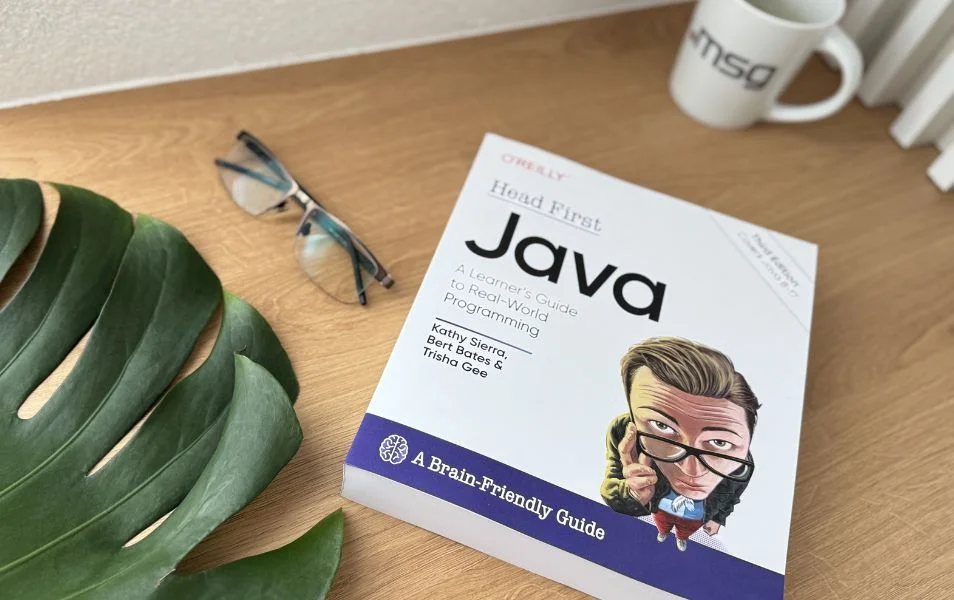
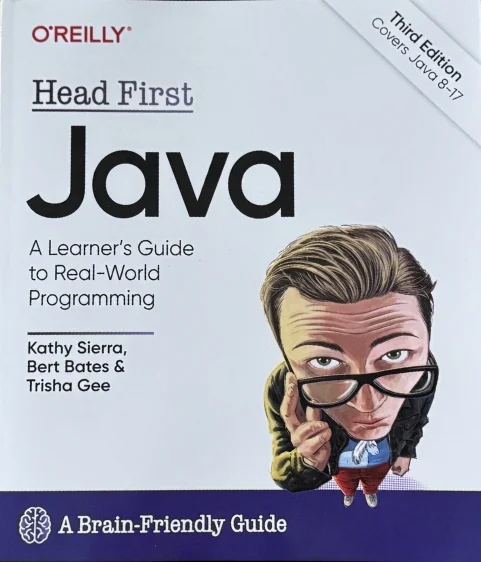
Book Review of Head First Java (3rd Edition)

The Head First Java book is intended for anyone who wants to learn Java programming or who has basic knowledge and wants to extend it. The third edition of a book usually shows that the previous editions have found a lot of readers and have made the book popular. The same is the case here, and the third edition, released in June 2022, attempts to replicate the success of the Head First Java book series. The book has been updated for Java 17 and as the previous edition only covered Java 8, this is quite a significant leap.

Book review of Head First Java (3rd edition)

The Head First Java book impresses at first glance with its size, on almost 700 pages we find not only a lot of text but also a lot of pictures, funny notes, antique photos, crosswords, puzzles and important notes in the margins of the book. This book excels in its presentation and speaks to readers in its easy, informal style, resulting in an easy-to-read book. The authors of Head First Java use the principles that our brains are tuned primarily to visual information and not text. Therefore, they combine text and images, and this helps make important information from the chapters easier to remember. It is no coincidence that it is said that a picture replaces hundreds of words. It also offers many activities, because the brain is more willing to learn and remember when we are actively doing something than when we are reading about it. The exercises are challenging but manageable because that’s how most people prefer to do it. In addition, redundancy is used with gusto in the book, and much of the information is presented repeatedly in different ways and forms to encode the content in more than one area of our brain. Head First Java 3rd edition book review The Head First Java book builds gradually in the following chapters, on previously explained points, which means that the information is dispensed gradually. However, the book cannot simply be used as a reference guide. In terms of content, the book begins with an introduction on how to use it effectively, and in the following chapters explains the features of the object-oriented Java language, covering objects and classes, primitive variables and references, object state and behavior, operators, loops, and even programming a game similar to boats. He will then explain the JAVA API (libraries), moving on to more advanced concepts such as inheritance, polymorphism, and relationships between objects. Then comes object management, mathematical operations, sorting and data manipulation. Advanced topics include data streams, serialization, Swing and JavaFX overviews, parallel processing. Finally, the book transparently mentions a list of Java features that didn’t make it into the book. The code in the Head First Java book is well explained and helps in practicing the acquired Java knowledge. Although the information in the book is correct, the dynamic developments of recent years have made many of the concepts obsolete and they are no longer used today. For example, I will mention Swing, which has been completely replaced by JavaFX technology and it is quite rare to encounter a GUI implemented on Swing technology today. Of course it is not a problem to skip these parts and continue reading.

Conclusion

Head First Java 3rd edition is an amazing book, packed with Java information in 700 pages. The authors have paid a great deal of attention to the presentation format in particular. I really like the variety of exercises, including crossword puzzles. It can be highly recommended to beginners who want to teach themselves Java in a fun way.

Discover What Cyber Security Really Means — And Why It Matters in 2025

A cybersecurity is no longer just an IT concern — it’s a frontline defense in a world of phishing, smishing, ransomware, and AI-driven attacks. If you’re searching for what cyber security is, how to start a career in it, or what kind of salary and certifications you can expect in 2025, this guide delivers it all. From understanding zero-day exploits to exploring the difference between cyber security and information security, you’ll find practical insights and expert-backed strategies. Learn how modern frameworks, monitoring tools, and smart human behavior protect against growing threats — and how you can be part of that solution.

What is cyber security?

When you hear the term cyber security definition, it refers to protecting digital systems and data security — from unauthorized access, damage, or theft. Whether it’s guarding your personal bank account, keeping a hospital’s database secure, or stopping a national power grid from being hacked, cybersecurity is essential to keeping modern life running smoothly.
Cyber security is the protection of networks and systems
Cyber security focuses on protecting devices from hacker attacks.

Cybersecurity vs. information security: What’s the difference?

These terms are frequently confused, but there is an important distinction between them:
  • Cyber security focuses specifically on protecting digital data and systems connected to the internet or networks.
  • Information security (or infosec) is a broader concept — it involves safeguarding all types of information, whether digital or physical. That could mean protecting paper files in a locked cabinet just as much as shielding a cloud database.
So, while cybersecurity is a subset of information security, it deals with the increasingly complex threats we face in the online world.

Types of cybersecurity

Cybersecurity covers a variety of specialized fields, each focused on protecting different parts of your digital environment. Understanding these types helps you see how layered defenses keep computer security threats at bay.

1. Network security

This type focuses on safeguarding the integrity and availability of your network and data. It involves managing firewalls, virtual private networks (VPNs), intrusion detection systems (IDS), and encryption to prevent unauthorized access or attacks. You can imagine it as a digital checkpoint that monitors the traffic flowing into and out of your network.

2. Endpoint security

Endpoints are devices like laptops, smartphones, and tablets. Endpoint security safeguards these entry points from threats such as malware, ransomware, and phishing attacks by using antivirus programs, device encryption, and strong authentication.

3. Application security

Applications can be weak points if not properly secured. This type focuses on identifying and fixing software vulnerabilities through regular updates, code reviews, and testing to keep attackers out.

4. Cloud security

As businesses move data and services to the cloud, protecting that data becomes critical. Cloud security involves securing cloud infrastructure, controlling access, and monitoring for suspicious activity to ensure data remains safe off-site.

5. Identity and access management (IAM)

IAM guarantees that the right individuals gain access to the appropriate resources at the right moments. It uses tools like multi-factor authentication (MFA), role-based access controls, and password management to keep identities safe.

6. Security architecture and engineering

This field focuses on embedding security measures directly into IT systems during their design and development phases. By leveraging established frameworks and industry best practices, it builds strong, multi-layered defenses – like designing a high-security facility from the ground up. The aim is to create systems that are not only secure but also adhere to relevant compliance standards. Every category of cyber security contributes significantly to a well-rounded defense plan. When integrated, they work together to safeguard against ever-changing digital threats.

What is a cyber attack?

A cyber-attack refers to a purposeful action taken by individuals or organizations aiming to disrupt or compromise the confidentiality, integrity, or availability of digital systems and data. Attackers exploit security flaws, weaknesses in hardware, software, or human behavior to infiltrate networks and access data without authorization. Cyber threats can be opportunistic or targeted, aiming to steal data, cause disruption, demand ransom, or even sabotage critical infrastructure security.

Common types of cyber attacks

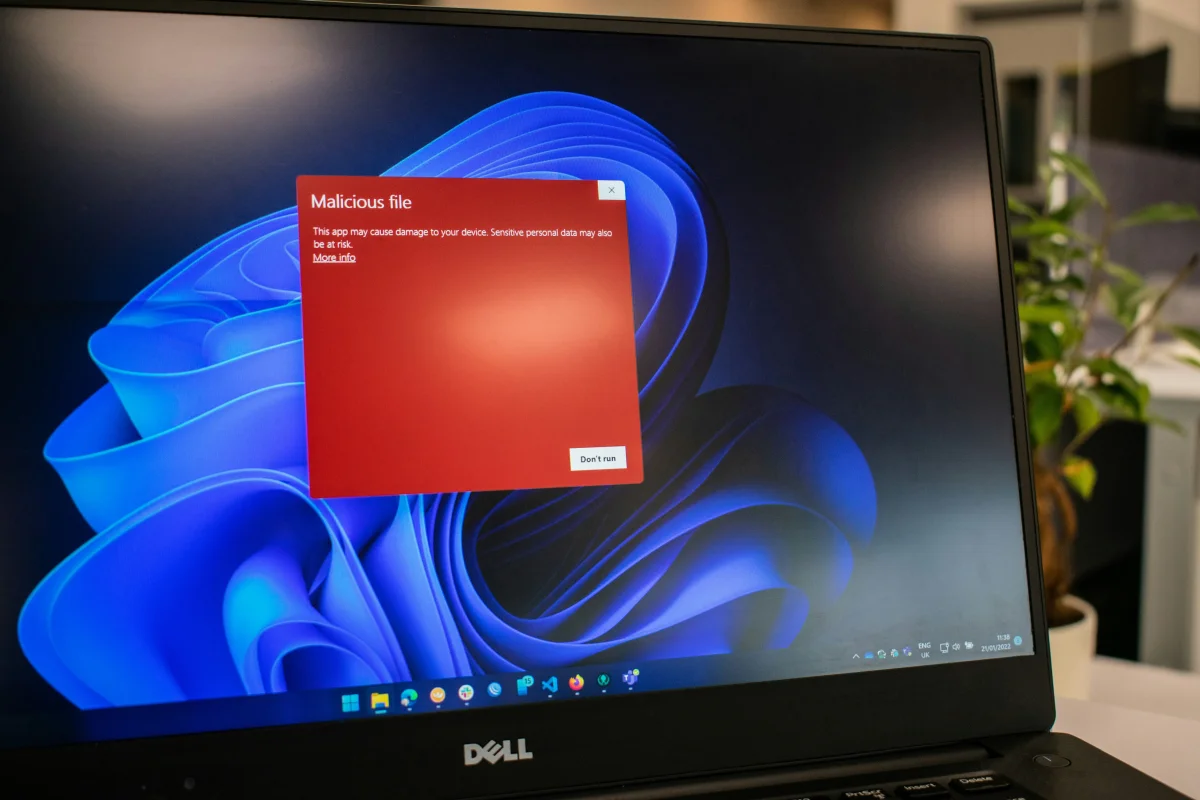
  • Malware attacks – Malicious software such as viruses, ransomware, trojans, and spyware are designed to damage, disable, or gain control over your devices. For example, ransomware encrypts your data and demands payment for the decryption key.
  • Phishing and social engineering – Attackers manipulate users into giving up credentials or sensitive data by impersonating trusted entities via emails, messages, or fake websites. This is one of the most common entry points for attackers.
  • Denial of service (DoS) and distributed denial of service (DDoS) – Attacks overwhelm systems or networks with excessive traffic, making services unavailable to legitimate users. DDoS attacks amplify this by using multiple compromised machines to flood the target simultaneously.
  • Man-in-the-Middle (MitM) attacks – Here, attackers secretly intercept and potentially alter communications between two parties without their knowledge, often to steal data or inject malicious code.
  • Zero-day exploits – Attackers exploit previously unknown vulnerabilities before software developers can issue patches, making these attacks particularly dangerous.
  • Advanced persistent threats (APTs) – These are long-term, targeted attacks where hackers maintain a hidden presence in a network to steal data over time, often employed against large organizations or governments.

Security breach vs. security incident: What’s the difference?

  • A security incident is any event that could suggest a violation of security policies or a threat to data protection. It includes suspicious activity, unsuccessful attack attempts, or technical anomalies.
  • A security breach is a confirmed event where unauthorized access to data or systems occurs, often leading to data theft or loss.
Understanding this distinction helps organizations prioritize responses and communication.

Cyber security threats: The human factor & beyond

While firewalls and antivirus software play an important role, many of the most dangerous cyber security threats don’t target machines — they target people. Understanding the most common types of threats is your first step toward avoiding them. Building strong cyber security awareness among employees is crucial since human error is often the weakest link.

1. Phishing: Still the #1 threat

One of the most widespread attack methods, phishing involves fraudulent emails or messages that trick you into revealing sensitive information — like passwords or bank details. These messages often look like they come from trusted sources, such as banks or coworkers.
Recommend
We recommend:

Always verify the sender’s email address carefully and steer clear of clicking any links that seem suspicious.

2. Spear phishing: The personalized trap

Unlike general phishing, spear phishing is highly targeted. Attackers gather information about you or your organization and craft convincing, personalized messages. This increases their danger significantly and makes them much more difficult to identify. Example: For instance, you could receive an email from someone impersonating your company’s CEO, urgently requesting a money transfer.

3. Smishing: Phishing via SMS

Yes, it can happen via text too. Smishing (SMS phishing) sends malicious links or requests to your phone. The message could appear to come from your bank or a delivery company, urging you to respond immediately.
Recommend
We recommend:

Avoid clicking on links sent via text from unfamiliar numbers.

4. Social engineering: Hacking the human mind

This threat is all about manipulation. Social engineering attackers may impersonate tech support, HR, or delivery personnel to gain physical or digital access.

5. Malware: The silent intruder

Malware — short for malicious software — comes in many forms: viruses, spyware, ransomware, trojans. After being installed, it has the ability to steal your data, monitor your actions, or encrypt your files to hold them hostage.
Did you know that…

…one of the most famous malware examples is WannaCry, a ransomware attack affected over 200,000 computers in 150 countries in 2017?

The hidden cost of cyber threats

The consequences of cyber security threats go beyond data loss. They can:
  • Shut down business operations
  • Lead to regulatory fines
  • Destroy customer trust
Most importantly, they can be prevented — but only if you have a good cyber security strategy.

Challenges of cyber security: Why it’s more than just tech

Cyber security isn’t just about firewalls and passwords. It’s a constantly moving target, shaped by evolving threats, expanding digital landscapes, and human behavior. The biggest challenge? Staying one step ahead — always.

1. The expanding attack surface

Every new app, smart device, or cloud service you use increases what’s known as the attack surface — the number of potential entry points for cybercriminals. With the rise of remote work and Internet of Things (IoT), you’re more exposed than ever. Risk: One weak link (like an outdated device or unpatched software) can compromise an entire network.

2. Human error: The weakest link

You can invest in the most advanced cyber security solutions, but they can’t stop a user from clicking a fake invoice or reusing a weak password. Example: A single employee falling for a phishing email can bring down an entire company’s system. Did you know, that… …according to IBM, human error accounts for over 95 % of cyber security incidents?

3. Sophistication of attacks

Modern cyber security threats are no longer simple viruses. Today’s attackers use AI, automation, and even deepfakes to create believable social engineering attacks. Deepfake technology can be used to impersonate executives, tricking employees via video or audio messages into taking dangerous actions.

4. Regulatory compliance & risk management

Governments and industries are enforcing stricter rules on data protection. This means organizations must ensure cyber security compliance with laws like GDPR and NIS2 to avoid hefty fines and reputational damage. Failing to comply isn’t just risky — it can be costly in both fines and reputation.

5. Skills gap in cyber security

There’s a growing demand for cyber security professionals, but not enough qualified people to fill the roles. This talent shortage makes it harder for businesses to build strong internal defences. Explore the latest cyber security news on emerging risks and real-world breaches.

The bottom line

The biggest challenge in cyber security is balance – between innovation and safety, access and control, people and technology. Solving these challenges requires a mix of:
  • Education & awareness
  • Smart risk management
  • Continuous investment in security tools and talent
Are you ready to face the threats — or become part of the solution?

Cyber security best practices: How to stay one step ahead

When it comes to cyber security, prevention is far cheaper — and safer — than damage control. Whether you’re protecting a business or your own personal data, following proven cyber security best practices can make all the difference. Here’s what the experts recommend.

1. Monitoring

Think of cyber security monitoring as 24/7 surveillance for your digital systems. It continuously watches for suspicious activity, such as:
  • Unusual login attempts
  • Data exfiltration (stealing data)
  • Unauthorized access to sensitive files
Recommend
We recommend:

Tools like SIEM (Security Information and Event Management) collect logs from across your infrastructure and use AI to spot threats in real time.

2. Penetration testing

How cyber security penetration testing can help you? Want to test your system’s defenses? Cyber security penetration testing simulates attacks to find vulnerabilities before hackers do. This hands-on approach will show you exactly what kind of protection your software needs. Companies do this regularly to check:
  • How secure their web apps are
  • Whether employees can be tricked into clicking malicious links
  • If systems can withstand ransomware-like behavior
It’s like a digital fire drill — uncomfortable, but potentially lifesaving.

3. Incident response

Even with the best tools and security awareness training, no system is bulletproof. This is why it’s essential to have a strong incident response plan in place. A good plan includes:
  • Clear roles and responsibilities
  • A step-by-step playbook for common attacks (e.g., ransomware, DDoS)
  • Communication protocols (internal + public)
  • Coordination with legal and compliance teams
Recommend
We recommend:

Practice your response through “tabletop exercises” — simulations that test how your team reacts under pressure.

4. Stay updated

Outdated software is one of the easiest ways for hackers to gain access. Make sure you:
  • Regularly update all operating systems, apps, and plugins
  • Replace unsupported software
  • Use automatic updates wherever possible
Many massive cyber-attacks started with one simple, missed patch.

5. Train your team (or yourself)

Human mistakes continue to be the leading cause of security breaches. Regular cyber security training – even basic awareness – goes a long way. Topics to cover:
  • How to recognize phishing emails
  • Safe password practices
  • Why USB drives can be risky
  • What to do if you suspect a breach
See also our Top Internet Safety Tips on how to be safe online.

Resilient systems with modern cyber security capabilities & frameworks

Imagine your company gets hit by a cyberattack. Alarms go off. Data is locked. Emails stop working. But instead of chaos, there’s calm. Systems switch to backup. Teams follow a tested plan. Data is restored. Customers are informed. This isn’t luck — it’s cyber resilience in action. And it’s built on a solid cyber security framework. A good cyber security solution doesn’t just block threats – it adapts, learns, and scales with your infrastructure.

What is a cyber security framework?

A cyber security framework is like a blueprint for digital defence. It helps organizations:
  • Identify their most valuable assets
  • Protect them with the right tools and policies
  • Detect suspicious activity
  • Respond fast when things go wrong
  • Recover quickly and safely
Famous frameworks include:
  • NIST Cyber security Framework (U.S.)
  • ISO/IEC 27001 (global standard)
  • DORA & Cyber Resilience Act (EU regulation for financial services and tech)
These frameworks aren’t just theory — they’re used by banks, governments, and corporations worldwide to create standardized, auditable, and effective security strategies.

From security to cyber resilience: The shift in thinking

While cyber security is about prevention, cyber resilience is about survival. Resilience means:
  • Accepting that not every attack can be stopped
  • Minimizing the impact when a breach happens
  • Quickly bouncing back to business-as-usual
Think of it like this: You can’t stop every storm, but you can make sure your house doesn’t flood.
Did you know that…

…the EU’s Digital Operational Resilience Act (DORA) requires financial institutions to build in this kind of resilience, including regular stress testing and disaster recovery planning?

Cyber threat types
The most common cyber threats include malware, ransomware and DDoS.

Cyber security in Slovakia: Local landscape and growing challenges

Cyber security might seem like a global concern, but its impact is deeply local – and Slovakia is no exception. Over the past few years, the country has experienced a significant increase in digital threats, targeting not just large enterprises but also public institutions, schools, and small businesses. This rising risk has led many organizations to invest in tailored network security solutions — from local monitoring tools to managed security services offered by Slovak IT firms.
Did you know that…

…according to data from Slovakia’s National Security Authority (NBÚ) and private-sector security reports, 2024 was a landmark year for cyber threats? The number of reported cyber-attacks per week increased dramatically – from 801 incidents per week at the beginning of the year to over 1,380 by its end.

The future: AI, machine learning & smarter security practices

Cybercriminals are already using AI to create deepfakes, automate phishing, and find vulnerabilities faster than ever. So, it’s only natural that AI in cyber security has become a game-changer. Here’s how AI helps defenders:
  • Threat detection: AI can sift through millions of logs and spot anomalies a human would miss.
  • Incident response: Automates the first response – isolating infected devices or blocking malicious traffic.
  • Fraud prevention: Machine learning models can predict and block fraudulent behavior in real-time.
Did you know that…

…according to ArXiv research, AI-driven security reduces response time and increases accuracy – especially in complex cloud environments?

More and more cyber security companies are investing in AI-powered tools and platforms. Cyber security systems are designed to monitor, detect, and respond to suspicious activity across networks, applications, and endpoints. Whether it’s detecting zero-day attacks or training models to recognize subtle patterns of insider threats, AI is becoming a standard weapon in their arsenal. Companies like Darktrace, CrowdStrike, and SentinelOne are leading the way – from antivirus platforms to traffic analyzers, cyber security software plays a vital role in proactive defense.

Cyber security jobs: High demand, great pay

The digital realm requires guardians — and you have the potential to become one. Here’s what makes cyber security careers so attractive:
  • Strong demand: There are thousands of available positions across Europe, particularly in fintech and IT sectors. From small startups to big banks and insurance firms, cyber security insurance has become a booming area — meaning more jobs for analysts and risk experts.
  • Good salaries: Wondering how much does cyber security pay? The answer depends on your role, location, and skill set — but it’s often well above the tech average.
  • Remote options: Many cyber security company roles now offer flexible or fully-remote work, allowing you to protect systems and respond to threats from anywhere in the world.
  • Meaningful work: You’re literally protecting people’s money, privacy, and business — especially important in sectors like banking, healthcare, and insurance.

Popular roles in Slovakia (and beyond)

  • Cyber security Analyst
  • Penetration Tester (Ethical Hacker)
  • Security Operations Center (SOC) Specialist
  • Risk & Compliance Officer
  • Chief Information Security Officer (CISO)

Cybersecurity trainings, courses and certification

Start with cyber security courses that match your goals and experience. You don’t need a university degree — many professionals launch their careers through practical training and online programs. Here are some solid paths:
  • CompTIA Security+ – Great for beginners
  • Certified Ethical Hacker (CEH) – Emphasizes skills in offensive security techniques
  • Google Cyber security Certificate – Affordable and beginner-friendly
  • CISSP – Ideal for advanced professionals managing security programs
Getting a cyber security certification not only boosts your knowledge but also increases your chances of landing a job or promotion. Most employers look for at least one industry-recognized cert on your resume.