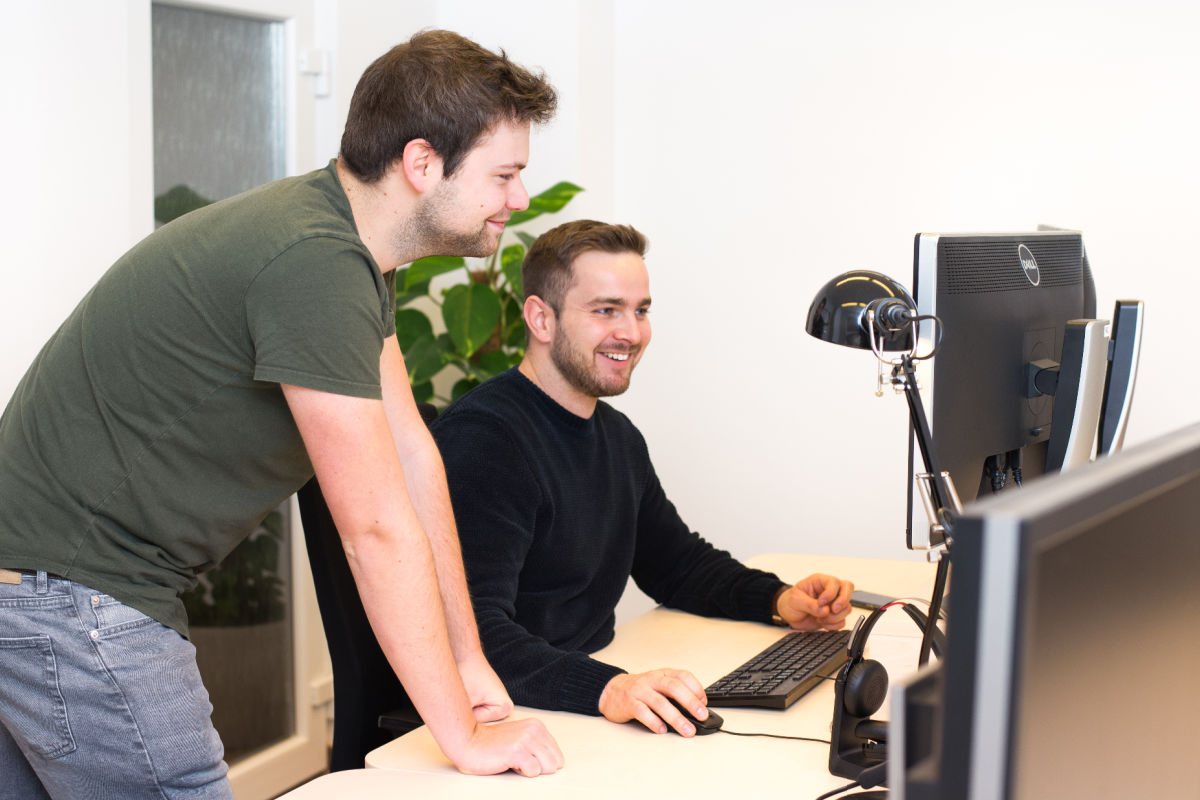


What does an IT Business Consultant do? Gabika will tell you

Gabika came to insurance consulting from her tester job. She likes to move forward and learn new things. That’s why she accepted the offer to try the IT Business Consultant job and to cover the project topic from a professional point of view. Since she was on the team for a short time, this opportunity was a challenge for her, but one for which she is grateful, as she enjoys the combination of mentoring and testing more. IT Business Consultant job offer is open also now. Read this interview and get inspired by Gabika!

How long have you been with msg life Slovakia?

“I joined msg life Slovakia in February 2015.”

What job were you recruited for?

“I was hired as an IT Software Tester.”

What is your current job position?

“I have accepted a job offer as an IT Business Consultant, but I am still close to testing.”

How did you get into testing and counselling?

“I came to testing at msg life Slovakia and to counselling through testing, basically by accident. I was testing a topic whose consultant was leaving for another project and I was asked if I could cover the topic from a professional point of view. I was in the company for a short time and we only had consultants in Germany, so this offer was for me an honour and a challenge at the same time. I’ve always enjoyed pushing myself and learning new things, so I agreed. I have to say I’m glad I did it, because the combination of the counselling and testing is more interesting to me than testing itself.

I did not study IT, but international financial management in German language organised by the University of Economics in Bratislava in cooperation with Martin Luther University Halle-Wittenberg. I learned the basics of IT that I needed to know pretty quickly during the training and the ISTQB-certification.

As time went on, my IT skills at work have expanded. There are always new things popping up, but I know that if I don’t know how to deal with something in IT, I can contact our administrators, developers or another colleague and they will help me with that technical issue. I certainly can’t compare myself to someone who has studied IT, but what I know is enough for me to do my job fully, and the work of a consultant is not technically that demanding.”

What attracted you to working at msg life Slovakia? Why did you choose us?

“After I graduated, I didn’t have a very clear idea of what I wanted to do. I was recruited by several companies and I decided to go with msg life because I got a good reference from a friend about this company. The interview was in a good atmosphere, the emphasis was on German and the financial compensation was also good.”

How is working for us different from previous work experience?

“As this is my first permanent job, I can only compare it to part-time jobs I had during my studies, and that’s not quite adequate. Although I worked in the service sector, I came into contact with a much wider range of customers who were changing. It was interesting, dynamic and I was also much more in motion. The work at msg life is office based, behind a computer, the customer is in Germany, so we communicate mostly online. The financial and non-financial remuneration is of course incomparable and I really like the company culture and the human approach.”

What does your normal working day look like?

“Every day is different and teaches me something new. When I work from the office, I start at seven in the morning and finish before four in the afternoon, it’s because of the traffic but also to enjoy the day after work. I check my emails first thing in the morning, and my next activity is based on that. If a bug comes out of production, it is a top priority to resolve it. Otherwise, I’m mostly studying, analyzing and creating the specification. I often answer questions from development or testing about the concept. I have regular and irregular meetings and other test related tasks. Every day I look forward to having lunch or coffee with my colleagues. That’s about the only thing I miss during home office.”

Business Consultant job
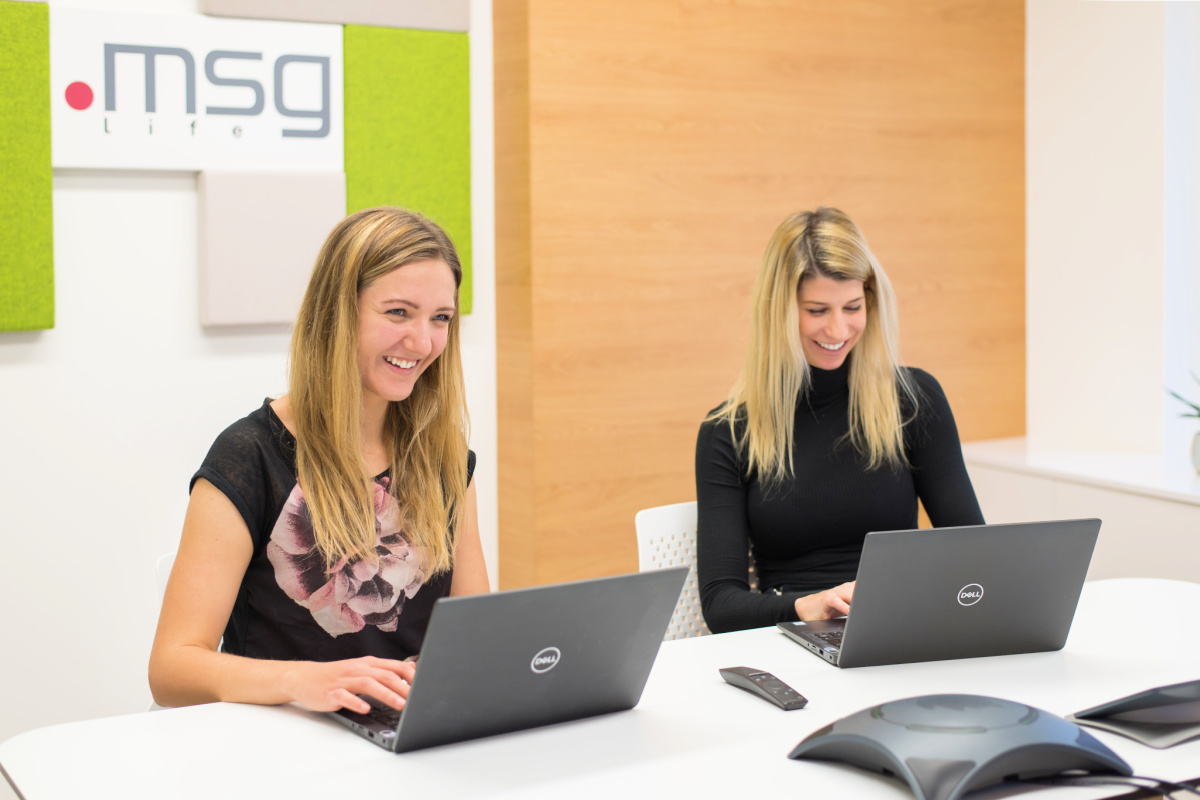
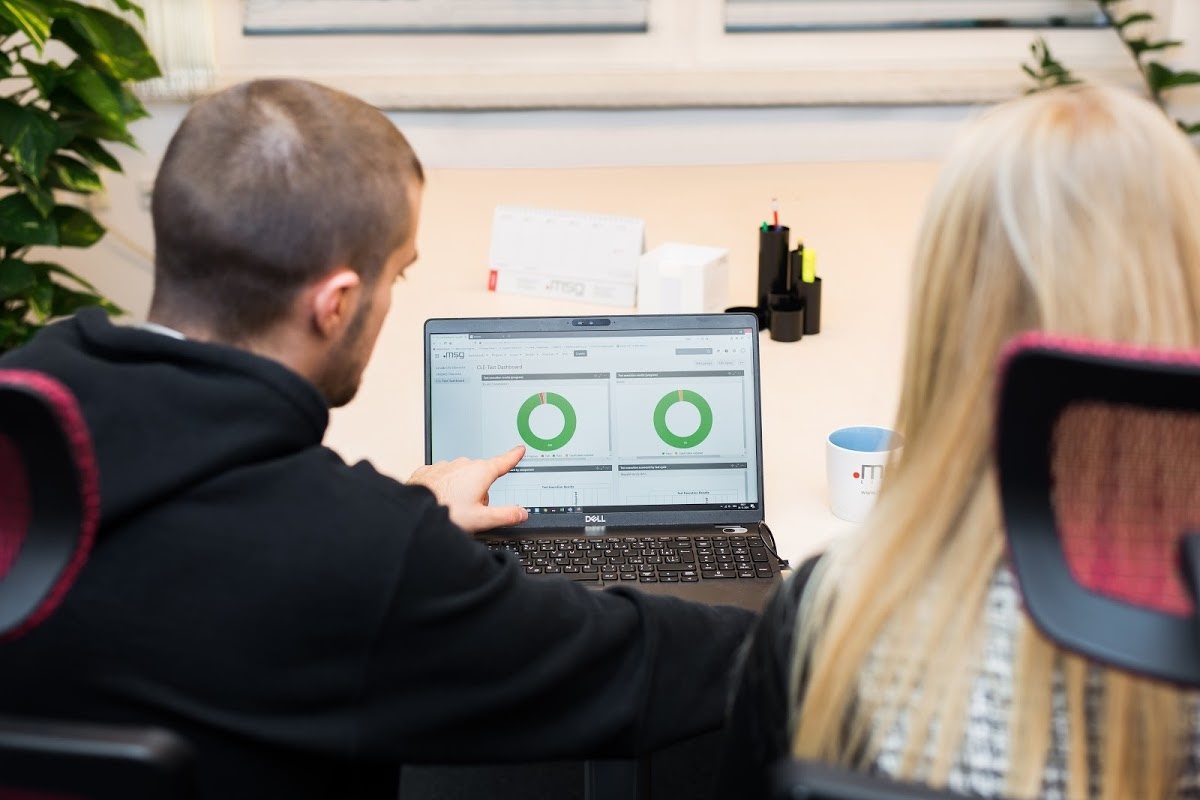
Gabika also participates in working meetings with colleagues from the Test department.

What is your job?

I would define the work of a business consultant as a link between development and customers. The main task is to create a professional concept. I am in charge of conducting concept and customer requirements analysis, performing various consultations and presentations when creating a specification or introducing new functionality. Part of my job is to support and advise our customers on production issues, bug analysis, creating test cases and supporting the onboarding of new colleagues.

I am currently working on the topic Simulationsberechnung. This is a functionality for simulating the evolution of production contracts so that predictions can be made for annuities. At the same time, I test and conceptualize various other topics that I am in charge of and I run a test between our ZVK Factory system and the ZV-system (Zulagenverwaltung).”

IT Business Consultant
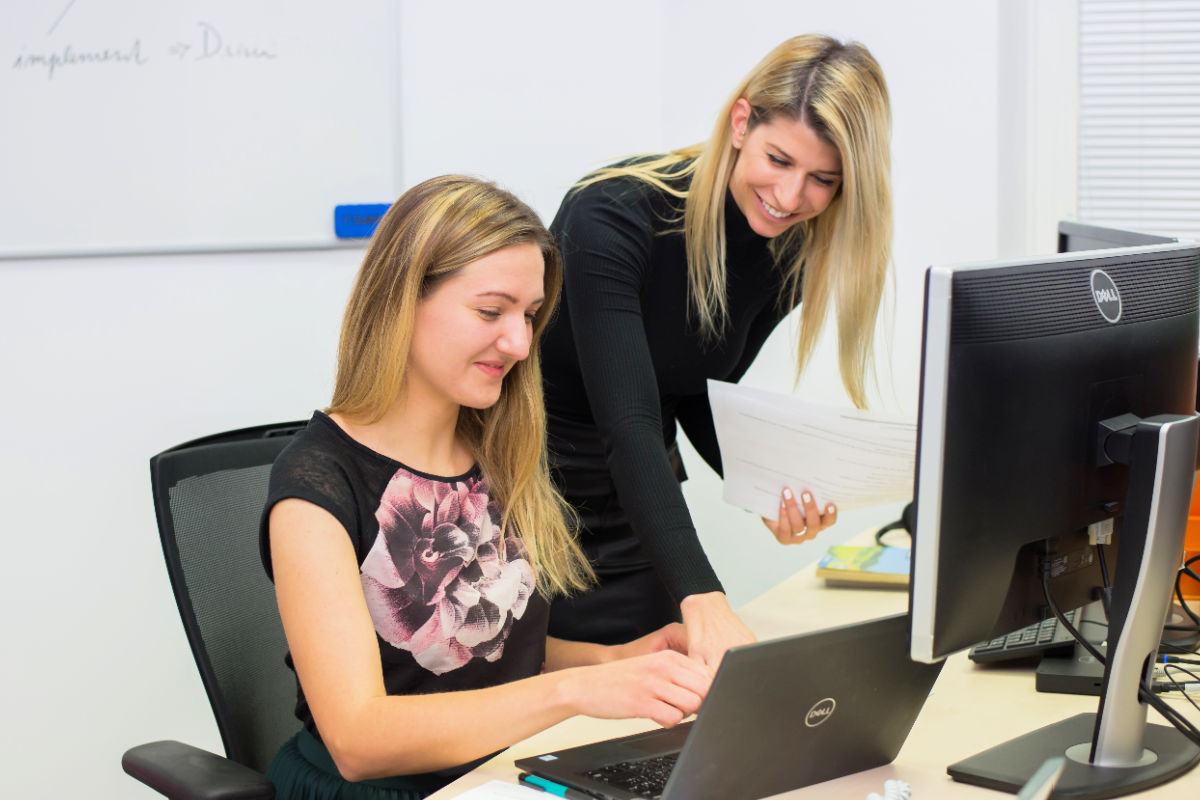
Gabika analyses the concept and customer requirements in the German market.

Who do you communicate with to solve problems?

“I interact with the project manager and test manager, other consultants, colleagues in manual and regression testing, development, customers, and with colleagues in other departments in both our own and the parent company. It’s really a wide range of people.”

What project are you working on right now?

“I am working on a project called ZVK Factory. We are developing a programme for insurance companies operating in the public sector in Germany.”

What apps do you use at work?

“I use classic MS Office and Teams, Unify for calls, SQL Developer for database work, ARIS for concept modelling, but we also have a lot of concept documents in Word and Excel. I use PowerPoint along with Quick Slide to present each technical topic. On the project we manage tickets in JIRA, create test cases in Zephyr Scale and collect sql-selects in OneNote. We have our own ERP system to record attendance. I analyze the inputs and outputs of the test in one of the Notepad programs and compare them in, for example, BeyondCompare. I take notes in Sticky Notes, and Greenshot often makes my job easier.”

What skills are important for your job?

“German, analytical thinking, reading comprehension, effective communication, reliability and independence. As the consultant writes the concept, they need to write the content concisely, clearly and accurately.”

What do you like most about your job?

What I like most is that I am always pushing myself knowledge-wise, that I have to find solutions to different interesting tasks, can implement my own ideas and manage my own working time. I also really like coffee and lunch time spent with my colleagues. What I don’t like is to repeat a longer test multiple times or prepare the test automation documentation.”

What are your colleagues like?

“They are nice, helpful, funny and professional.”

What qualities should your new colleague have to fit in?

“They should be a team player, like to learn new things, have logical thinking and a sense of humour. Conscientiousness and precision is welcome in every field and proficiency in German or English is a given with us.”

Three things that come to mind when you hear msg life Slovakia?

“Concept, software, family atmosphere.”


Are you interested in Gabika’s work? Do you have experience in software testing or would you like to work as an IT Business Consultant? See our job offers:

Workouts, lectures and workshops. How was our online Health Awareness Month?

Health Awareness Month took place at msg life Slovakia despite the lockdown. Online lectures, workshops and workouts enrich our colleagues’ daily schedule at their IT work. Health and healthy lifestyle is one of the key areas we have supported for a long time in our employee benefits program. April, the month of health, is therefore very special for us and on this occasion we organize various interesting activities every year. This year, 2021, was no exception, even during lockdown-home-office mode. Lectures on healthy lifestyle, workshops and examinations directly from an expert were moved to the online sphere and even this year we did not forget about the health of our colleagues.

Solid health and strong immunity are more important than ever at this time. They go hand in hand not only with a good physical, but also mental state. Sedentary work is often associated with negative effects on muscles, eyes, digestion and frequently we are also concerned about how to handle stress at work. Therefore, we decided not to skip the Health Awareness Month event this year and we moved all activities online. On the occasion of World Health Day, set by the WHO on 7 April, our colleagues were able to take part in an event packed with interesting activities.

All anyone had to do was fill in a short questionnaire with their preferences and everyone could choose an area of interest. The event also included a small surprise. Normally, we provided our colleagues with plenty of fresh fruits and healthy juices in addition to a pleasant mood. During the pandemic, however, we tried to replace these benefits with purchase vouchers at various stores. Our employees can use the vouchers for one year to purchase vitamins, healthy foods or nutrition and supplements for athletes.

From healthy sitting to procrastination

The event also included interesting online lectures on various topics, such as how not to procrastinate, how to eat well and follow a nutritional strategy and how our work environment affects our performance. Our colleagues learned what the musculoskeletal system is, how to sit properly at the computer, when the first germs of procrastination occur, what are its consequences or how to calculate the amount of calories we should take in daily. Employees could choose not only the course, but also the preferred time to take the lecture.

The event also included online workshops
Interesting lectures in the field of personal development, healthy sitting or nutritional consultancy

To make World Health Day not just about theory, we decided to include interactive workshops in the programme. It was possible to participate in the morning or in the afternoon. The first course was called Workout at Home, where we learned how to warm up properly, why timer is important in training and what exercises are suitable for women and men. There was also a course called Workout for a Healthy Back, which helped us to relax our cervical spine, as well as a workshop on positive thinking, where we went through practical advice on how to maintain optimism, how to deal with expectations or self-motivation. The last course called Time Management talked about tips on how to avoid procrastination and manage multitasking and stress.

Online yoga exercises or exercises for a healthy back
The online workout was aimed to relax the spine and stiff muscles

Under professional supervision

The last item on the agenda was an eye examination. Computer eye strain, red eyes or tearing are common when working at a PC. They can lead not only to a deterioration in the quality of vision, but also to other health problems such as migraines. As part of the Health Month event, our colleagues chose the nearest clinic, where they underwent a basic visual acuity test, which was complemented by OCT, intraocular pressure and perimeter examinations. Visiting the clinic with our voucher is possible at any time of the year and the employee can have the examination on a pass during working hours.

Professional eye examination
Eyes suffer when working at the PC, which is why a professional examination is important

There is only one World Health Day, but we have also arranged regular workout classes for our colleagues. These were aimed not only at the body, but also at the mind. Our colleagues could take one course each week, which differed in topic. On offer was healthy back, yoga, healing meditation and Mindfulness Sound Healing. Each week, employees were able to take an online course in the morning or afternoon under expert supervision. A bonus was meditation or relaxation with agreeable music, which could be done for four days in a row. We have summarized various tips on how to maintain mental and physical health at work in our article on work-life balance, or about digital detox.

Are you interested in our Health Awareness Month event? Join our team and take advantage of our rich employee program. See also our other employee benefits. Find out more about our latest job offers in the Career section.

Eye strain, computers and digital devices. How to protect your eye health?

Computer eye strain, eye pain, redness or itching are common symptoms of tired eyes when working with a computer. How to keep your eyesight healthy when working sedentary and at the risk of digital fatigue? Just follow a few tips for eye health.

Staring at a monitor all day can be exhausting, not only for our minds, but also for our eyesight. When working in the office, many people experience eye strain, redness or tearing. These symptoms can lead to a worsening of the quality of vision, but also to other health problems such as migraines. Find here some tips on how to prevent tired eyes and maintain good eyesight for as long as possible.

Work that requires long hours in front of device screens often causes blurred vision, a lighting difficulty known as computer eye strain syndrome, which is referred to as CVS – Computer Vision Syndrome. Several other factors contribute to it, but there are also ways that can eliminate it.

It all starts with healthy lifestyle

The eyes are part of the body and their quality is influenced by many factors. The health of our eyes and eyesight is influenced by diet, hygiene, but also by bad habits such as smoking. This can cause cataract, damage to the optic nerve or, in some cases, complete blindness. It is therefore recommended to stop smoking completely. Carrots, fish, leafy vegetable, berries, citrus fruits, nuts, beans and egg yolks should be our preference. They contain nutrients that benefit the eyes. But here too, everything in moderation. We should not forget about good hygiene, especially if we wear contact lenses or if we often touch our eyes with our hands. Cosmetics that irritate the eyes and are not suitable for them should be avoided.

Healthy diet and eyesight
Carrots, fish, leafy greens and berries boost eye health.

Eye protection should not be underestimated

Sight is one of the senses that we use to perceive about 80% of the information about the world, and we should therefore protect it properly. To mitigate the effects of blue radiation from digital screens and devices, also called digital eye strain, it is advisable to get glasses (even without any diopters) with a filter to block blue radiation. Blue light itself is not necessarily evil, but it does tend to create eye fatigue and strain when in contact with a screen for long periods of time. High-quality sunglasses with UV protection should not be underestimated either. An exception are not even ski goggles, because the eyesight is much more strained in the white, snowy environment. Special glasses also exist for driving. If we use contact lenses, we should definitely take care of them by replacing them regularly. You can thus avoid various infections and deterioration.

Regular breaks and proper sitting

TV, monitor, tablet and smartphone. We use all these on a daily basis and it affects our eyesight and our eye health. However, if you work on a computer, you probably can’t avoid regular contact with the screen. A good habit is therefore to take a regular break from these devices. These should be at least 4 per day and last at least 5 minutes. Don’t forget to reduce the brightness and contrast of the screen, or use the eye-saving mode. Proper sitting in front of the screen is also important. Make sure you sit at least 80 cm away from the monitor.

The screen should be positioned slightly lower than your eyes, the inclination of the screen should be the same as the viewing angle. This will not only help your eyesight, but also your spine and neck. When working with a computer, pay attention to your body posture. The right way of sitting will reduce your susceptibility to both back pain and carpal tunnel syndrome. Don’t forget a suitable light source in the room. No harsh light should enter your eyes. It is therefore better to position your desk in a way when your eyes are not strained.

Preventive health check-ups are important

If you wear glasses or contact lenses, it’s important to see your ophthalmologist regularly to see if your vision is getting worse. You should have your vision checked once in a while, even if you don’t have a problem with your eyes but you often work with a computer. The sooner you know a potential problem, the better. That is why msg life Slovakia offers its employees the opportunity to take advantage of a free eye examination as part of Health Awareness Month. Before visiting the doctor, we should also inquire with the family about hereditary diseases, not only eye diseases. For example, diabetes can affect the quality of eye health. If possible, we should prefer glasses to lenses. Eyes stressed by the monitor should be moistened regularly with drops and remember to blink.

Examination of eyesight
Whether you have an eye problem or not, regular eye examinations are important, especially if you often work on a computer.

Eye gymnastics

Just like our body, our eyes need regular exercise. This will prevent short-sightedness or longsightedness. Just set aside time every day for so-called eye yoga or eye gymnastics. The short exercise consists of three phases. Every twenty minutes, we look at an object about six metres away for twenty seconds. This distance is ideal for the eyes not to strain or focus unnecessarily, and to relax. It doesn’t take much time, but the effect is visible after just a few exercises. Playing tennis is also a good exercise. Concentrating on the ball, which is constantly moving away and closer, practices our focus.

Eye damage can be caused not only by looking at a monitor, but also, for example, by long-term reading of books in poor light. We often strain our eyes by focusing only on one central point just in front of us. This can also lead to a deterioration of peripheral vision. Even with the eyes, if we don’t use certain muscles, they will weaken and lose their functionality over time. Taking breaks from the monitor, having an eye examination and exercising your eyes are therefore the best ways to keep your eyesight healthy for as long as possible.

Home office ideas for efficiency and motivation

Even working from home can be interesting and motivating. Read our tips on how to make it easier to work from home and not lose motivation and drive to get ahead. The pandemic period has brought with it many changes. The comfort of the office has been replaced by the comfort of our homes. Many feared declining productivity when working from home and how effective remote teams would be at collaborating. But few thought about motivation and how much we would need it in the pandemic period.

Although a home office may not suit everyone, working from home can also motivate and bring positive changes. You just need to know how to do it. The environment around us, communication within the team and taking care of our health and well-being all play a role. If you too are wondering how to manage working from home and not lose your momentum and drive, we have some useful tips for you.

Create the right working environment

The home environment may not be as ideal as the work one, especially if it is not adapted for work. There are many distractions lurking at home that can not only make us nervous, distract us, but also hinder our work. It’s no wonder that tasks that took you a few minutes at work can drag on for up to half an hour at home. By wasting time, we get the feeling that we are not keeping up, which in turn stresses us out. Stress is a common demotivating factor.

That’s why it’s important to create an effective working environment at home. One simple but effective tip is to clear your desk and put away all the things that could in any way distract you from your work. If you live with other people at home, it is very important to set boundaries with them about the need to be undisturbed and to set a part of your day when you will be 100% dedicated to work. This prevents disturbances that can cause mistakes at work.

Don’t forget to take regular breaks from work

I’m sure you’ve experienced a day during this period when all you wanted to do after all the online meetings and computer work was just to fall into bed and get a good night’s sleep. You are not alone in this. More and more people in this period have a problem with a phenomenon called “Zoom fatigue”, which is slang for fatigue and exhaustion caused by video calls. Virtual interactions give our brains a hard time. In addition, we may tend to be online around the clock while working from home. We work on the computer, we communicate via it and many times we spend time on the Internet during our leisure time. The brain is thus continuously exposed to a large amount of information that it has to process and does not have enough time to rest.

So don’t forget to take regular breaks from devices. While it is difficult for someone to maintain constant attention for twenty minutes, another can manage to work for an hour without a break. So the ratio of how much you work to how much you rest should be adapted to your preferences and attention span. During the break we should give our brain a real rest. Instead of browsing the Internet, we should choose to take a short walk, exercise or listen to our favourite music, for example.

We should not forget about our body. Long hours on the computer can also take a toll on your physical health, so make sure you get plenty of exercise during the day. Even a short walk in nature can kick you up more than coffee. In addition, it will refresh your mind and restore your focus.

Take breaks from your PC while you work
During the break we should give our brain a rest.

Communication, praise and recognition

Managing remotely can be challenging. Much of the responsibility shifts into the hands of the employees, who not only have to create their own schedules, but also deal with any technical issues that arise in their at-home work environment. Many people may find it difficult to maintain a work-life balance, which has a negative impact on family relationships or stress levels. The whole situation is made worse by the lack of personal contact and the lack of opportunity to discuss problems with a manager or colleague. This is why maintaining good communication within the team should be key.

Employees need support at this time more than ever. It is through communication that we are able to get this information and make sure that our colleagues have sufficient support. Communication also creates a space for feedback, which we can use not only to direct team members, but also to encourage them and show them that we value their work and contribution. Praise and recognition is one of the easiest and most underrated tools we have to motivate each other. Showing appreciation can increase not only motivation, but also commitment or trust in the team. So let’s certainly not forget about praise and proper communication.

Maintaining communication within the team
The lack of direct contact with a colleague or supervisor also affects motivation.

Stay in touch

Teamwork helps us achieve common goals. At the same time, it creates a certain sense of belonging and positively influences our motivation. It’s not just about the tasks and responsibilities that my colleagues and I deal with, but also about informal shared activities, such as team building events or casual conversation over a coffee on a lunch break. These are activities that not only help build good interpersonal relationships, but also allow employees to relax. In addition, low interaction among team members can negatively impact problem solving, the search for new ideas and jeopardize the overall team culture.

Therefore, stay in contact with your colleagues, even unofficially. Find a time when you don’t just spend time together on work-related duties and tasks, but also keep space for informal communication. If you’re used to taking lunch breaks together, you can now join up with your colleagues to create a shared online coffee break, for example. Interesting team-building activities can also be created in the online space, for example through online games or joint exercises. Just get inspired.

Sometimes it can be challenging to stay motivated all the time. Especially on days when nothing is going well and we feel like the whole world is against us. It’s good to pause then and realize that these days are also part of our lives and they won’t last forever. Sometimes you just need to change your perspective, look at the problem positively, remind yourself of your goals and things suddenly look completely different.

Tips for skills to put in your CV, resume

What should a CV for a job look like? How to write a good CV? What qualities should a CV have? What skills and knowledge to put in it? These are questions that trouble not only job seekers but also recruiters. During the decision-making process, they have to navigate through hundreds of CVs and select the right candidate, so even they sometimes have a dilemma about which job candidate is the right one. We’ll give you an advice on how to write a resume, how to spruce up your CV or online CV to impress recruiters and give you a better chance of getting hired. So we’ve written down ten tips you should follow.

1. Which required skills do you have?

How to write a CV for a job? In particular, focus on the skills and knowledge that are relevant to the specific job and are listed in the job description. Highlight them and point out your qualities and experience. These are the qualities that belong in a CV and should be the alpha and omega of a good CV that will help you find a job. It could be language skills or computer skills, for example. List your knowledge and skills in your CV in order from the most to the least important.
A recruiter will admit during the reading of a good description of your skills and abilities that you really have them and that you are interested in improving them further. Be detailed and describe which skills set you apart from other applicants. Show yourself in the best light, don’t be afraid to show off.

TIP: Forget about the existence of one-size-fits-all resume that would be suitable for every position. There are still candidates who send the same CV to every company they would like to work for. This is a mistake because every company is specific and requires different skills and abilities from employees.

2. What is the level of your skills?

The answer to what a CV should look like is clear: don’t forget to include the level of your skills. The skills and knowledge on your CV will immediately carry a different weight. There is a big difference between basic and advanced levels, for example in the case of different programs. Don’t be afraid to talk about your skills and give examples of your work to show what you can do. Recruiters like to see realistic outputs to help them choose the ideal candidate. Thus, a simple CV without details may not always be successful.

Answer three important questions:

  • To what extent and in what ways did you use your skills?
  • What kind of tasks and for whom did you work?
  • Who did you communicate or collaborate with while working on the assignments?

Be clear, to the point and describe your achievements. In what ways have you been an asset to the company. Did you come up with an innovative concept? Have you worked on projects that have given you new expertises, skills and abilities? Give specific examples or situations that confirm your triumphs.

3. Be interesting at the interview and try to be original

Similar to writing an essay, divide your “promo” into three parts – introduction, body and conclusion.

  • The introduction will serve to catch attention.
  • In the middle you show your own value. You’ll point out why you’re special and why they should choose you.
  • In the conclusion, there should be evidence of your experience that serves to gain the recruiter’s trust.

    Proven tips for writing a good CV
    Create a CV that sets you apart from other candidates.

4. Think about the length of your work experience

Don’t forget to mention how much time you spent working with certain tools or systems. List not only the time you invested in your work, but also highlight the time you spent on your own projects. Have you taken courses, gone on internships or gained experience through self-study? Be sure not to leave this information out, it will add extra value to your CV.

Did you know that…

… You should also highlight your soft skills on your CV? Soft skills, also known as transferable skills, are abilities acquired in any job and developed over time. Examples include teamwork, problem solving, conflict management and time management.

5. What skills would you like to learn in your new job?

Job descriptions list skills that are an advantage and increase your chances of being selected. Recruiters don’t expect you to know every single one of them perfectly. What’s more, in your new job, you’ll encounter new tasks that will help you acquire or improve these skills.

The willingness to learn and educate is a plus. Don’t you have any of the experience listed in the job description? Don’t get discouraged by it. You can mention in your CV that it is a positive challenge for the future and you’re happy to learn anything new.

6. Why do you want to improve your skills?

If you have the basics of a skill and are constantly working on improving it, be sure to mention it. Also list the skills you are really interested in and want to improve. Describe what you are currently doing to move forward. This information will make your interesting CV stand out from the rest.

It’s also a great idea to include a reason why you want to learn these skills in the job you’re interested in. Every recruiter wants to know if you are interested in long-term cooperation and if you can imagine your future in the profession or industry you have expressed interest in. You can add similar information at the end of your CV.

7. Don’t underestimate yourself in your CV or at the interview

It happens in CVs that a candidate unwittingly reveals why they are unsuitable for the job. Incomplete or inadequate description of the experience gained is also a flaw, as is little mention of work experience. Sometimes applicants have this experience, but for various reasons they just don’t add it to their CV. Many times it is because they don’t believe in themselves.

It is common for applicants to underestimate themselves and to indicate in their CVs a lower level of knowledge than they actually have. This concerns in particular the level of knowledge of foreign languages. Recruiters may only discover these skills after recontacting the candidate, which is rarely the case. If it’s an attractive job offer for which many people apply, HR managers will select only the best and most experienced. You could miss out on a golden opportunity just because you underestimate your skills.

CV creation and adequate time
Try our 10 tips for writing a good CV.

8. What shouldn’t you put in your CV?

Recruiters often have to evaluate many CVs. Some of them are full of inappropriate, unnecessary or even too personal information. They are also confronted with long and overly detailed descriptions of work experience, which, moreover, is not even related to the actual job offer.
Employers aren’t interested in your hobbies and interests anyway, but in your professional life. Do not put interests in your CV. Not even if it’s a student resume and you have nothing to put on it. If the recruiter is interested in what kind of person you are and what you enjoy, they will probably ask you about it at the interview. A list of hobbies takes up too much valuable space in a resume. The exception is if your hobbies and interests include volunteering or an interesting project that is relevant to the job you are applying for. Then be sure to include such interests in your CV.
Don’t comment on the salary preferences either, you will discuss that in person at the interview. You can find out how much a developer earns on the internet and you can always refer to the amount that is stated in the advertisement.

TIP: A good CV should not have more than two A4 pages. Try to be clear, concise and to the point.

9. The most important question you should answer

A proper CV should answer one important question in particular. It’s not just the listed knowledge and skills, but why are you the right fit for the position you are interested in? Work this question throughout your CV, as every single section you put in your CV should be related to it. This is one way to write a job application successfully. There are many ways to write a resume, but answering this question will set you apart from the competition.

10. Three pieces of information to remember to include in your CV

Levels of language skills

Knowledge clearly belongs in a CV and language is no exception! The levels of language skills on a resume are among the most critical factors. They should not be absent from a developer’s CV. If you speak foreign languages, for each language, please indicate the level of proficiency. Feel free to indicate a beginner level (A1) if you have been studying the language for some time. In our company we accept people with German language at A2 level, which is the key to admission. You then have the opportunity to continue to improve your language skills through company training courses, some of which also fall into working hours. This gives you the opportunity to improve your German language skills. Read more about our employee benefits.

Active proficiency in a language is defined as having a B2 level of proficiency. If a little help is all you need to communicate and you can actively speak the language, don’t underestimate yourself. If you are not very good at the foreign language, are unsure of the pronunciation or do not have a wide vocabulary, please indicate no more than B1 level in your CV. If you are an advanced speaker, understand the language and can express yourself easily, we recommend level C1. For the greatest language experts, the C2 level, which is close to mother tongue proficiency, is used.

Read our article on this topic: German language level in the CV. When to declare a B2 or C1 level?

Educational achievements, courses, certificates and training

What does the CV look like in the upper part? There is information on education. Please list your skills and knowledge in your CV below, at the top mention the courses you have taken and the schools you have studied at together with workshops, training or certificates you have obtained. Always give a realistic timeline, including the start date, end date and the number of hours you spent on a particular course or training.

If you went to university but didn’t finish, write that down too. You can describe what you learned or what you did during your studies. You can also indicate the topic of the thesis you worked on during your studies. Mention it especially if it is related to your career path and job title.

Work experience

How to write a CV correctly and what to write in a CV? List work experience in descending order, so write the most recent at the top. Please include the name of the company you worked for, the job title and the time span. It is best to give the entire start and end dates of the employment. If you worked part-time, mention this too. In case you had a period when you did not work, mention it clearly as well.

For each work experience, list five responsibilities you had during this job. They may seem simple and unnecessary, but think of them as an essential part during the evaluation of your CV. If you think five points are not enough, you can add more, but don’t itemize them unnecessarily and highlight only the most important ones. This is another piece of advice on how to write a CV properly.

Conclusion

Now you know how to write a CV that will be worthwhile and increase your chances of getting an interview invitation or a job. The most important part is to show your own value and why you are the ideal candidate.

Why should they choose you out of all the applicants? Put the qualities that answer this question in your CV and you’ll see that you’ll get a lot more interview invitations and eventually your dream job. For example here at msg life Slovakia! Browse our latest job offers and get interviewed!


Home office with children: fellow “supermoms” advise how to manage it

Working from home during a pandemic was challenging for working mothers of preschool and school-age children. Our female colleagues from msg life Slovakia shared their experience on how to set up time management and manage home office work with kids. To have a tidy apartment, cook lunch, take care of children, find time for a partner, manage work responsibilities and in addition to all this, to devote a few moments to yourself. This is what a normal day looks like for many women. That’s why they came to be called “supermoms”. However, with the arrival of the COVID-19 pandemic and the lockdown, there was one more thing to manage: handle all this while being closed at home during home office. On the occasion of Mother’s Day, we asked our female colleagues how they manage working from home and what advice they would give to other women in a similar situation.

It is often said that a woman can do several things at once. This ability comes into full play during maternity leave, which often turns from a leave into a constant cycle of responsibilities. In addition to herself or the household, a woman suddenly has to take care of a baby that keeps her busy 24/7. Taking care of a child or children requires a lot of energy and finances.

How do we support families at msg life Slovakia?

Many of our colleagues have been working at msg life Slovakia for many years. The low turnover rate shows that the company values its employees and supports families with several employee benefits. On the occasion of a wedding or the birth of a child, our colleagues will receive a financial allowance. For unexpected events or long weekends with family, they have 5 extra days of leave. Moreover, there are also fathers who have taken parental leave for a period of time to help their partner get back to work.

How did our female colleagues manage working from home during lockdown?

“It depends: sometimes we drew, played or watched TV, other times the kids required more attention. Once in a while we sent our child to grandparents’ house. Still, I admit that my child has learned to be more independent since we both worked and needed to focus,” says Zuzana, the office manager.

Some colleagues admit that they got up very early to work or, on the contrary, worked in the evenings. “When my son saw me in my home office, he always asked me if I was working. He either sat with me for a while or let me work, depending on what kind of day he was having,” says our tester Lucka about working from home. Zuzka, office manager of project management, has a similar experience: ‘It took my younger daughter a while to understand what home office means. For her it was a clear equation. When Mum is at home and we don’t go to nursery, it means I’m on holiday and we’re going to play.”

Our tester Adka from the Zilina office admits that these times were demanding: “I had my time management set up well, but I still found the situation tiring in the long run, as I hadn’t worked this way before. However, I am grateful for the conditions the company has created for us.

Home office with children
Although the children were missing their friends, the time spent together during the home office came in handy for most of my female colleagues.

It’s hard to do without help

Many female colleagues appreciated that their partner, family or friends often helped them to coordinate work and private responsibilities. “Sometimes my husband does things his way, but I appreciate it. Without his help, I wouldn’t be able to keep up with anything,” admits Zuzana, the office manager. Some female colleagues managed the home office with their children mostly on their own, as their husbands went to work, but they add that they always helped them after work, either with the household or with the children. Other moms said they tried to keep in a routine even during lockdown: “My son is very sociable, he told me every morning who to come for him at nursery. If our work duties allow us, we tend to take turns,” said Lucka, the tester.

Nevertheless, many claim that they have already got used to the new routine. “I think it suited us all well to be together. Sometimes we spent our work breaks hugging, or playing or talking with the baby for a while,” says Zuzka, the office manager. Others, however, missed the old times: “The children missed school and nursery and I would only welcome the occasional home office. I also missed my office, my colleagues and especially the feeling when I close the door and go home after work.” Adka was especially devoted to her son, a fifth grader: “My 10-year-old son was the one I was most involved with, as he was moving on to a fifth grade and distance learning had not been very good for him.” Testers Lenka and Lucka see the home office positively: “Working from home suits me, as I often turn on the computer while still in my pyjamas. That way I save time that I would otherwise spend preparing or moving to work,” says Lucka.

Patience and multitasking

Many of my colleagues admitted that they learned a lot during the home office, for example patience. Others have revealed the negative relationships that exist between children at school and managed to intervene early in their education. The tester Lenka admitted that she is learning to be a supermom and got to know her new abilities: “During the pandemic, I was given additional roles that needed to be reconciled. Teacher, aupair, cook, employee, mother, wife. It was not easy for me. At the end of the day, I still felt like I didn’t handle any role well enough.”

And how do mothers manage to juggle all the activities? “It’s a question of priorities. There is no need to focus on perfection, you have to compromise and then everything can be managed. If I have to choose between doing laundry and spending time with my family after a long day at work, the laundry can wait,” admits Zuzana, the office manager. The home office taught Zuzka, the PMO, to better manage multitasking and time management. “Working 100 per cent from home, taking care of the household and the children has made parents into little superheroes. Sometimes during meetings you can hear children’s screams and noise among colleagues and I always enjoy it very much. It’s not that I’m gloating, it’s more that I know I’m not alone in this,” she says. Other female colleagues admit that they managed their housework during their lunch break thanks to the home office.

Working from home with kids
The children’s voices in the background of the meetings reassure Zuzka that she is not alone in this situation.

Some tips from our female colleagues

The office manager Zuzana: “You don’t need to do everything on hundred percent, you also need to relax, enjoy your free time with your family and the moments together. You have to accept the situation as it is and adjust things to suit yourself.”

The PMO Zuzka: “Divide the household chores among family members, don’t be too hard on yourself, even when you order lunch through a delivery service. Occasionally raising your voice at naughty children is not the end of the world. Inform your supervisor of your situation and call your colleagues. You’ll see that they’re in a similar situation. Mom is just a person too!

Tester Lucka: “Spend an hour a day just for yourself, whether in the form of sports, painting, reading books or meditation.”

Tester Adka: “Don’t forget to think positively, plan pleasant activities you can look forward to, and be grateful for your health or the opportunity to spend more time with your children.”

Tester Simone: “Don’t forget to have enough things at home to entertain the kids and teach them something at the same time.”

Working in IT – 5 reasons to work in IT insurance

Thanks to modern technology and digitalization, IT and insurance are deeply interconnected. Here are the reasons why IT jobs are in demand for the insurance industry. The insurance industry has a long history in the world, but it is definitely not a thing of the past. Even today, we are talking about a highly desirable, relevant and thriving industry. The development of the insurance industry is accompanied by the advent of new technologies and digitalization. As a result, there is a growing demand for IT professionals who focus specifically on the insurance sector. Wondering if this is the right career field for you? The experience of people who have been working in it for many years will help you decide.

1. Your work will be meaningful

Doing a job you enjoy requires not only good pay, benefits or a pleasant working environment, but also a deeper meaning that will motivate you in the long term. Developments in the insurance industry and insurance products clearly have it. The work of our developers, consultants and testers results in products used in everyday life situations. Thanks to them, insurers can provide help to those who need it most. You can also contribute to this, for example by developing software that is essential for the proper functioning of insurance companies or by testing its functionalities. Every successful product gives us a legitimately good feeling about our work.

2. You will be part of something big

The insurance and financial services industry is one of the most diversified sectors in the world. This is proven by the large companies that have been operating in this sphere for many years. Examples are well-known companies such as Uniqa, Generali or Axa, which have been active in insurance since the 19th century. Both companies are long-standing clients of ours, along with more than thirty other companies for whom our team develops and improves software. We are delighted to be trusted by the big players and to have the opportunity to be involved in their flawless, day-to-day operations.

3. You will contribute to the innovation of the insurance segment

Although the idea of regularly paying small sums of money in case of emergency dates back to the last centuries, it was not quite sufficient. Even such a ground-breaking idea needs to be further shaped and adapted to the pace of technology development. The constant automation of processes that once took forever is now a necessity. This is aided by intelligent software or the latest artificial intelligence. Our teams in the software development and testing department also deal with these terms on a daily basis.

4. Experience diversity and flexibility

In order to be sustainable and competitive, it is essential to adapt to market demands. There is a wide target group in the insurance industry, so news come from all sides. Hand in hand with them goes the development of new products, which must be well thought out and functional, but at the same time easy to apply in practice. Fulfilling these requirements is the daily mission of our teams in Bratislava, Zilina and Kosice, who often have to understand not only the demands of the client, but also of the end customers. With rapid changes and continuous improvements, we never get bored at work.

5. Gain new experience and insight

At msg life Slovakia you can avoid the problems that many small and start-up companies face. You don’t have to worry about your employer bombarding you with impossible demands on the first day. At the beginning, you will undergo training and then become part of a team of professionals who have been working in the IT and insurance industry for a few years.

Your colleagues are always happy to give you advice. Thanks to this, you can gain new, time-tested experience that will enrich not only your CV but also your personality in the future. So, are you in? Don’t wait and see current job offers where you can make the most of your IT and insurance experience. We look forward to seeing you!

What does a Test Manager do? Patrik will tell you

Patrik joined msg life Slovakia as a Tester/Consultant two and a half years ago. In this short time, he has worked his way up to Test Manager. Find out what motivates him and what a Test Manager does. Patrik became interested in software testing after his friends described the job to him. Soon he took the job of IT Tester at msg life Slovakia. In two and a half years he has worked his way up to Test Manager and today he manages one of our teams. In addition to the relaxed atmosphere, what he likes about his job is that he can implement his ideas and participate in the direction of the products.

How long have you been with msg life Slovakia?

“I joined the company in December 2017.”

What job were you recruited for?

“I took up the position IT tester – Consultant.”

What is your current job position?

IT test manager.
I was given the opportunity to further develop myself and move from the position of IT tester consultant to the position of Test Manager. So I am currently managing a test team of five colleagues for one of our customers. In addition, I am also part of the hiring process where I do the last round of interviews for the position IT tester consultant.”

How did you get into testing?

“I was inspired by two of my friends who don’t work in msg life, but have a lot of experience in a similar field. They described the job in such an interesting way that I considered it as an option for my career path. Then I came across an offer from msg life Slovakia and my plans became a reality. Moving up to the Test Manager position was a long-term goal when I applied for the Tester/Consultant position in December 2017 and I’m glad I got this opportunity.”

What attracted you to working at msg life Slovakia? Why did you choose us?

“First of all, I was interested in the opportunity to use a foreign language as an IT tester with German, another factor was the job description, because I wanted to become a tester, and finally I was convinced by the first impressions I got during the whole interview process. From the premises, through interesting company benefits up to the first contacts with different workers. Last but not least, I was impressed by the financial evaluation. I would call it a complete package of first impressions that appealed to me.”

How is working for us different from previous work experience?

“I can’t compare because this is my first time working as a tester/consultant. But I like that I have more opportunity to put my hand to the work and my ideas or “tweaks” are taken into account and implemented.”

What does your normal working day look like?

“My normal working day as a Test Manager looks much different than when I was a tester. It all depends on the tester’s approach to their work. The tester can work on the tasks from the Test Manager, or can proactively work on other topics or expand their knowledge. It is very individual. In addition, my work day also includes studying specifications, performing test cases, ticket training, smoke-tests, customer consultations and many other tasks.

Software Test Manager
Pato’s responsibilities include the planning process as well as communication with the customer.

What is your job? What are you currently working on?

“My the work brought a lot of tasks and responsibilities at the same time. These include, for example, active involvement in the planning process, whether at the level of the entire project or within the test team, as well as the opportunity to communicate or meet the customer in person. In this way, it is possible to get the best view of the entire development process from the other side, which is the customer, i.e. the insurance company. There is room for reporting, which is intended to offer everyone involved the opportunity to get a better understanding of the current situation in which the entire test team finds itself.”

Who do you communicate with at work and solve problems?

“My communication is divided into internal and external. External includes communication with the customer, whereas internal includes communication with colleagues from the company or from the project I am working on. The jobs that colleagues do are varied, we have expert testers, testers, Java programmers, integrators, managers.”

What project are you working on right now?

“I’m working on an Irish-German project called Canada Life Europe. This is multinational company providing services in the field of insurance with a focus on the German market.”

Do you have experience with other projects within msg life Slovakia?

“I have experience with a variety of projects, both direct and indirect. As we have a large number of nice people working in our company, it is common to exchange knowledge and experience from other projects. In this way one gets a picture of other areas of work in msg life.”

What apps and programs do you use at work?

“Our company actively uses external programs that help us to streamline our work. These include JIRA, a ticket management program, or Zephyr Scale for test case management. The rest of the tools are more internal, various automated programs for front-end and back-end tests.”

What skills or knowledge are important for your job?

“I think that German is a basic language and the desire to learn something new is also important. There is a lot of knowledge that one can acquire. The same applies to internal programs that the test manager must learn to work with. However, in our country everything is taken into account and a new colleague learns everything in the training process. A subtle dose of scepticism is also important, as the tester should question what they see and look critically at what they are dealing with in their working hours. He is then better able to spot bugs that were not picked up in earlier phases of the development cycle.”

What do you like most about your job?

What I like most is the friendly atmosphere that colleagues create.
The opportunity to grow in my career and broaden my knowledge, and also to ‘put my hand to the work’.”

Who are your colleagues?

“Kind, friendly and helpful. That wasn’t always the case in my previous jobs, so I appreciate it more now.”

What qualities should your new colleague have to fit in?

“I think
it’s not hard to fit in with our team. A new colleague should have basic qualities such as a friendly demeanour and a willingness to help. That defines most of my colleagues. Therefore, I think that if a candidate has these qualities, he or she will definitely fit in with us.”

What comes to mind when you hear msg life Slovakia?

“Insurance – honesty – stability.”


Are you interested in Patrik’s work? Do you have experience in software testing or would you like to try something new?

See our latest job offers for consulting and testing.

What does a Software Developer do at msg life Slovakia? Michal will tell you

Michal’s career as a software developer started during his master’s studies. Two years ago he decided to change jobs. What attracted him to work at msg life Slovakia was not only the financial evaluation, but also the human approach. He enjoys assignments where he can fully realize his potential and appreciates flexibility in working hours.

How long have you been with msg life Slovakia?

“In September this year it was two years since I joined the company.”

What job were you recruited for?

“I was recruited as a software developer for the actuarial field.”

How did you get into programming?

“I got into programming at university. After my secondary school-leaving exam, I had to choose whether I wanted to study management or IT. I was given a unique opportunity to personally talk to the dean of the Faculty of Informatics and Information Technologies of the Slovak Technical University in Bratislava about the opportunities offered by the faculty, and I finally chose it. Even though I wasn’t sure what I wanted to do in the future, I got a job as a salesforce developer while I was still studying for my master’s degree. That’s where my career as a software developer began. A year after school I joined msg life Slovakia.”

What attracted you to working at msg life Slovakia? Why did you choose us?

“I was approached by a staffing company with multiple Java developer offers. I was still employed at the time, but I decided to make a change. What convinced me the most, besides the salary, was the fact that it was a much smaller company and not a corporation. Plus, all the other offers were too process-driven and I felt like they cared more about the company than the people.”

How is working for us different from previous work experience?

“In my previous job I had a good team, but I didn’t know people outside it. Actually, I didn’t know anyone closely. Here, I have a good team and I know most of my colleagues personally.”

What does your normal working day look like?

“I usually have quiet working days. In the morning I have breakfast, have a cup of coffee and chat with my colleagues. Then I go through my emails and start working on the tasks I have planned in advance. Of course there is a break for lunch and afternoon coffee. If I need to switch off my head, I go to the company gym or book a massage. Occasionally a meeting appears on the calendar. Sometimes the days are a little more challenging: a problem arises that needs to be addressed and fixed urgently. That’s when I have to leave my work and scheduled tasks aside and get straight to the problem. What happens then is that I don’t get to finish my scheduled stuff. Fortunately, such days are few.”

What is your job? What are you currently working on?

“I am currently working on an internal project. My task is to work on a component for msg.Life Factory. I detect and correct found or reported errors, and implement requirements. We create this component from scratch, configure it and set up its development environment. However, I also do problem-solving analysis, that is, I find out what options exist to solve specific problems. I am also tasked with analysing ways to migrate data.”

Who do you communicate with at work and solve problems?

“I am working on this internal project with two colleagues in Bratislava and a team leader in Germany. Sometimes I also communicate with the project architect, who is also from Germany. We report bugs internally as we don’t have testers. On a previous project, I also communicated with testers who reported bugs to us in Jira.”

What project are you working on right now?

“I am working on an internal IAM – Identity Access Management project. It’s basically a project to create a security component for our product.”

Software Developer in msg life Slovakia
Michal is currently working on an internal project.

Do you have experience with other projects within msg life Slovakia?

“Yes, I worked on a ZVK project, it was a project for two German insurance companies that used a very similar system to manage their insurance.”

What apps and programs do you use at work?

“I mostly use Java and Eclipse. I use Maven for code development and my apps run on Jboss and Wildfly.”

What skills or knowledge are important for your job?

“As a developer, I definitely need to have knowledge of Java, and of course also knowledge of databases and SQL. On a previous project I needed German, currently I’m using more English. In addition, precision and analytical thinking are also important.”

What do you like and dislike most about your work?

“I like our benefits, I go to the gym regularly and get massages. Currently at the home office I miss our coffee very much. Flexibility in working hours, teambuilding and language courses are also important to me, currently the courses are online.”

What are your colleagues like?

“My colleagues are cool, they are happy to help and some of them are also active in sports. When we have time, we go for a run or sign up for a sporting event, and that makes me very happy..”

Developer Michal
Michal misses our coffee the most at the home office.

What qualities should your new colleague have to fit in?

“They should be kind, patient, helpful, communicative. We are a good team here, it is not difficult to fit in.”

3 words that come to mind when you hear msg life Slovakia?

“Gym. Approach. Insurance.”


Are you interested in Michal’s work?

Do you have experience with Java programming and do you enjoy mathematics? See our latest job offers in IT development: